

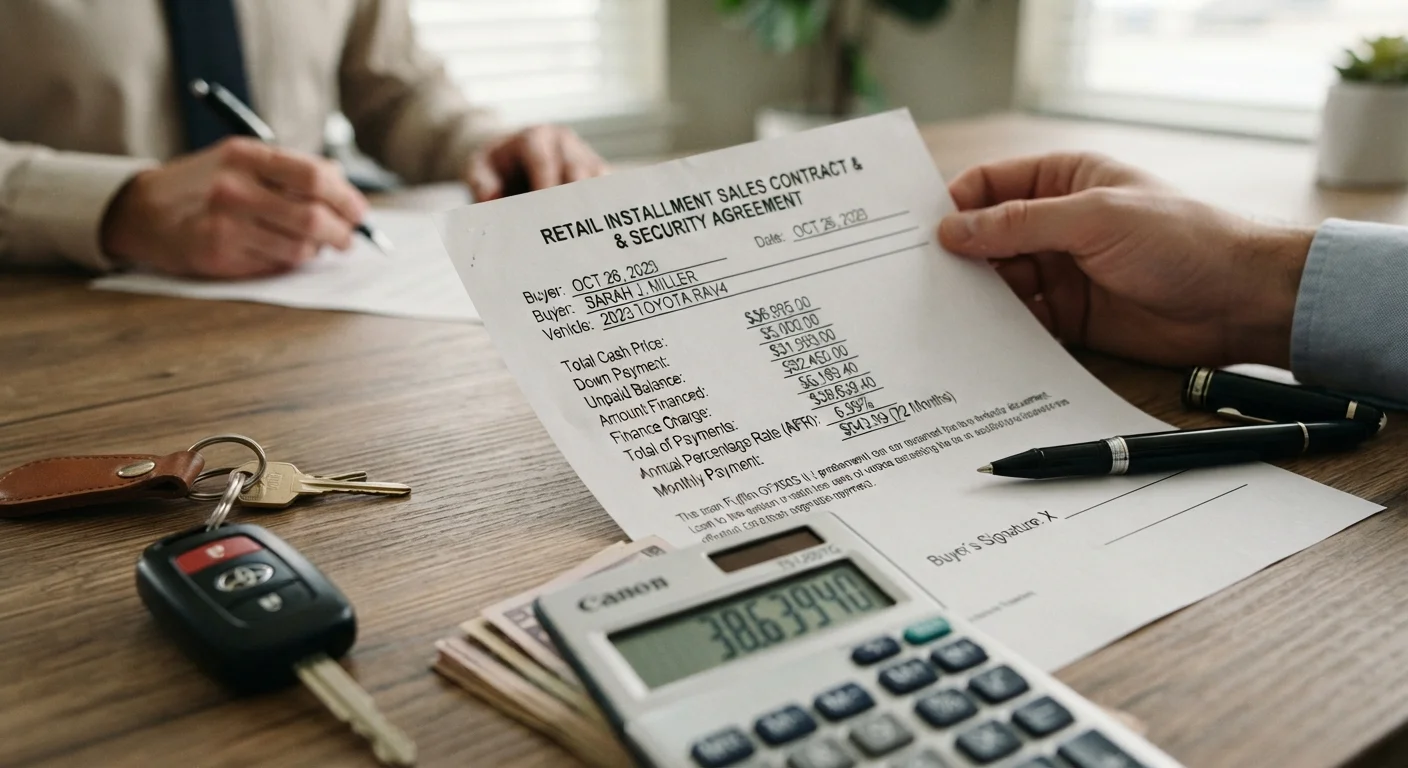
The Core Terms on Every Loan Offer
A car loan contract can feel like a foreign language the first time you read one. But the core concepts are straightforward once you see them explained without jargon. Here's what each key term actually means.
| Most common auto loan terms | 48, 60, 72, and 84 months (Consumer Financial Protection Bureau) |
| Average new vehicle loan term | Approximately 68-72 months (Experian State of the Automotive Finance Market reports) |
| APR vs. interest rate | APR includes fees; interest rate does not |
| Negative equity risk | Higher with long terms and low down payments |
| Prepayment penalty | Not universal - always verify in contract |
Principal
This is the base amount you're financing - the vehicle's negotiated price minus any down payment or trade-in value, plus any fees rolled into the loan. Every dollar of interest you pay is calculated on the outstanding principal balance.
APR (Annual Percentage Rate)
APR is the most useful number for comparing loan offers because it captures the full cost of borrowing for one year, including the interest rate and lender fees. A loan with a low stated interest rate but high origination fees may have a higher APR than one that initially looks more expensive. This same logic applies across other loan types - for a broader look at how financing terminology works, see our personal finance terms glossary.
APR vs. Interest Rate: Not the Same Thing
A lender might advertise a low interest rate, but the APR - which folds in origination fees and other costs - tells the fuller story. When comparing loan offers, always compare APRs side by side rather than interest rates alone. This is the same principle that applies to mortgage comparisons, as explained in our mortgage pre-approval guide.
Loan Term
Loan term is the repayment window, usually 48 to 84 months. A shorter term means higher monthly payments but less total interest paid. A longer term stretches payments out but means you pay more over time and risk negative equity as the vehicle depreciates faster than you're paying down the principal.
Terms That Affect What You Actually Pay
Beyond the headline numbers, a handful of additional terms shape your real cost of borrowing. Understanding them before you sign can prevent surprises mid-loan.
Principal
The original amount of money you borrow to purchase a vehicle, not including interest or fees. Your monthly payments chip away at the principal over the life of the loan.
APR (Annual Percentage Rate)
The true yearly cost of borrowing, expressed as a percentage. APR includes both the interest rate and any lender fees, making it a more complete comparison tool than the interest rate alone.
Loan Term
The agreed-upon length of time you have to repay the loan, typically expressed in months (e.g., 48, 60, or 72 months). Longer terms lower monthly payments but increase total interest paid.
Amortization
The process of spreading loan repayment across equal installments over time. Early payments are weighted heavily toward interest; later payments shift more toward reducing principal.
Down Payment
An upfront cash amount paid toward the vehicle's purchase price at the time of sale. A larger down payment reduces the loan amount and may lower your monthly payment and total interest cost.
Capitalized Cost
In a financing context, this is the total financed amount - essentially the vehicle price plus any rolled-in fees, minus any down payment or trade-in credit applied.
LTV (Loan-to-Value Ratio)
The loan amount divided by the vehicle's market value, expressed as a percentage. Lenders use LTV to assess risk; a high LTV means you owe close to or more than the car is worth.
Prepayment Penalty
A fee some lenders charge if you pay off your loan ahead of schedule. Not all auto loans carry this clause, but it's worth checking your contract before making extra payments.
Negative Equity
Also called being 'underwater' or 'upside-down,' this occurs when you owe more on your loan than the vehicle is currently worth. It commonly results from long loan terms or small down payments.
Dealer Reserve
A markup that a dealership adds to the lender's base interest rate when arranging financing. The dealer keeps the difference between the rate you're quoted and the rate the lender actually requires.
Amortization Schedule
Auto loans are typically fully amortizing, meaning each payment covers both interest and principal in a fixed ratio that shifts over time. In the early months, a larger share of each payment goes toward interest. As the balance drops, more goes toward principal. Lenders are required to provide an amortization breakdown on request.
Dealer Reserve and the Rate You're Quoted
When a dealership arranges financing through a third-party lender, the rate you receive may include a dealer markup known as dealer reserve. The lender approves you at one rate; the dealer may quote you a higher rate and keep the difference. This is legal in most states, which is why obtaining a pre-approved loan offer from a bank or credit union before visiting the dealership gives you a concrete comparison point.
Negative Equity and Long-Term Risk
Vehicles depreciate - often quickly in the first few years. If your loan term extends well beyond the vehicle's initial depreciation curve, you may owe more than the car is worth for a significant portion of the loan. This matters if you need to sell or trade in before the loan is paid off. A meaningful down payment helps cushion this risk, similar to how down payment size affects mortgage equity, as covered in our down payment guide.
This article provides general financial education and is not personalized financial or legal advice. Consult a qualified financial professional before making borrowing decisions based on your individual circumstances.
The content on this site is provided for informational purposes only and should not be considered a substitute for professional advice. While we strive to provide accurate and up-to-date information, we make no guarantees regarding its completeness or accuracy. Always consult a qualified professional for advice specific to your circumstances before making any decisions