

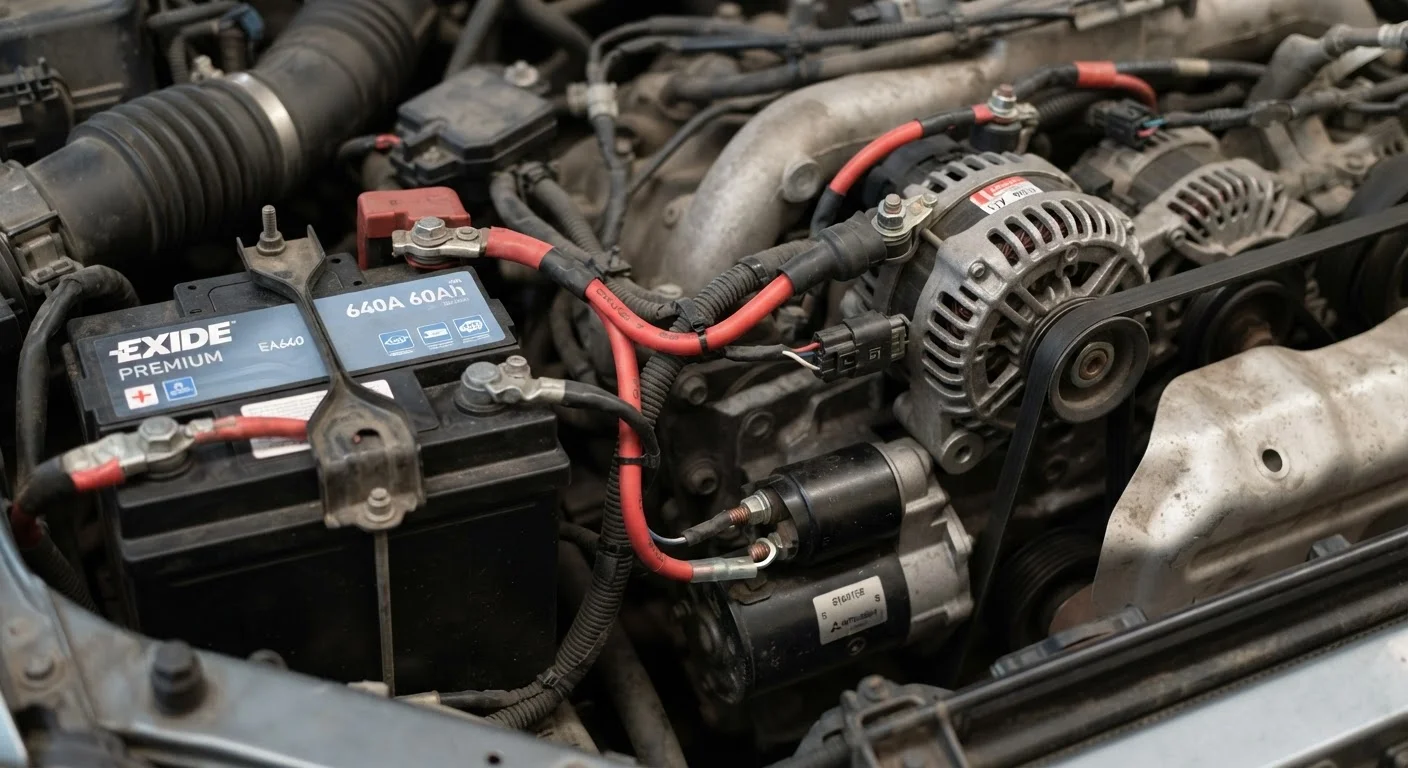
The Battery: Your Car's Power Reserve
The battery is the foundation of the starting system. It stores chemical energy and converts it to electrical energy on demand - delivering a large surge of current the moment you turn the ignition key or push the start button. Without this initial power burst, neither the starter nor the fuel system can activate.
Car batteries are rated in cold cranking amps (CCA), which measures how much current they can deliver in cold temperatures - typically the most demanding condition for starting. A battery that's sufficient in summer may struggle on a frigid winter morning as CCA capacity decreases with temperature.
Beyond starting the engine, the battery also acts as a voltage stabilizer for the car's electronics. It buffers fluctuations in the electrical system and provides power when the engine is off - for lights, the clock, and memory settings in the vehicle's computer.
Test Before You Replace
Most auto parts stores and repair shops can test your battery and charging system output for free or at low cost. Getting a proper load test before purchasing a new battery or alternator ensures you're addressing the actual problem - not just the most obvious suspect.
If you're new to vehicle ownership, understanding basic electrical system health fits naturally into a broader maintenance routine. See our practical guide for new drivers for a solid starting point.
The Alternator: Keeping Everything Charged
Once the engine is running, the alternator takes over as the primary power source. Driven by a belt connected to the engine's crankshaft, the alternator generates electricity through electromagnetic induction - spinning internal magnets around coils of wire to produce current.
This current serves two purposes simultaneously: it powers the car's electrical systems (headlights, climate control, infotainment, ignition) and it recharges the battery to restore what was used during starting. A healthy alternator typically produces between 13.5 and 14.5 volts at the battery terminals while the engine idles.
When the alternator weakens or fails, the battery absorbs the load until it's fully depleted. This is why a car with a bad alternator may start fine in the morning but fail to restart later in the day after the battery has drained down.
3-5 years
Typical car battery lifespan
Industry guidelines from automotive testing organizations suggest most 12-volt lead-acid batteries last three to five years under normal conditions.
13.5-14.5V
Healthy alternator output at idle
A reading outside this range at the battery terminals - with the engine running - is a reliable indicator that the charging system needs professional inspection.
80,000+ miles
Common alternator service life
Many alternators last well beyond 80,000 miles, though heat exposure, high electrical loads, and belt condition can shorten service life significantly.
The Starter Motor: Turning the Engine Over
The starter motor is a small but powerful electric motor that physically spins the engine's crankshaft fast enough for combustion to begin - a process called cranking. When you turn the key to the start position, the battery sends current to a relay (called the starter solenoid), which then engages the starter gear with the engine's flywheel ring gear.
The starter only operates for a fraction of a second during each start attempt, but it draws an enormous amount of current - often 100 to 200 amps or more. That's why battery condition is so directly tied to starter performance. A weak battery may not deliver enough current for the starter to turn the engine over at an adequate speed.
Once the engine fires and runs on its own, the starter automatically disengages. Holding the key in the start position after the engine is running can damage the starter gear, which is why modern vehicles use start-stop systems that cut starter power the moment the engine catches.
How the Three Components Work Together
These three components function as a closely linked system rather than three independent parts. A problem in one almost always affects the others:
- A weak battery forces the starter to work harder and may not provide enough voltage for the alternator's internal voltage regulator to operate correctly.
- A failing alternator leaves the battery chronically undercharged, which shortens battery life and causes premature starter wear from repeated hard-cranking attempts.
- A worn starter draws excessive current, which can damage battery plates over time.
When diagnosing a no-start or hard-start condition, a mechanic will typically test all three components using a dedicated battery and charging system tester. This prevents the common and costly mistake of replacing one part only to discover the real failure lies elsewhere.
When to See a Qualified Mechanic
Electrical starting system diagnosis requires specialized testing equipment to accurately pinpoint failures. Attempting to test or replace components - particularly the starter, which involves working near the battery and high-current wiring - without proper tools and knowledge carries a risk of electrical injury or vehicle damage. A licensed mechanic has the diagnostic tools to identify the exact point of failure quickly and safely.
Understanding the symptoms - slow cranking, clicking sounds, warning lights, or electronics flickering during startup - helps you communicate clearly with a mechanic and avoid unnecessary repairs. Accurate diagnosis depends on proper testing equipment, so electrical starting system issues are generally best left to a qualified technician.
Frequently Asked Questions
Common signs include slow engine cranking, dimming headlights when starting, a battery warning light on the dashboard, and the need for frequent jump-starts. Most batteries last three to five years, depending on climate and usage.
Yes. If the alternator isn't charging the battery while the engine runs, the battery will deplete trying to power the car's electronics on its own. You may notice dimming lights, electrical glitches, or a sudden no-start situation even with a relatively new battery.
A failing starter often produces a single loud click or a rapid clicking sound when you turn the key, without the engine turning over. A grinding noise during starting can also indicate a worn starter gear.
Alternators generally last between 80,000 and 150,000 miles, though this varies by vehicle and driving conditions. Heat, electrical load, and belt condition all affect alternator lifespan.
Not necessarily. A qualified mechanic can test each component individually to pinpoint the actual failure. Replacing parts that are still functional adds unnecessary cost, so targeted diagnosis is the better approach.
It's not recommended. A warning light means the charging system isn't functioning correctly, and you risk a complete power loss while driving. Have the vehicle inspected by a mechanic as soon as safely possible.
The content on this site is provided for informational purposes only and should not be considered a substitute for professional advice. While we strive to provide accurate and up-to-date information, we make no guarantees regarding its completeness or accuracy. Always consult a qualified professional for advice specific to your circumstances before making any decisions