

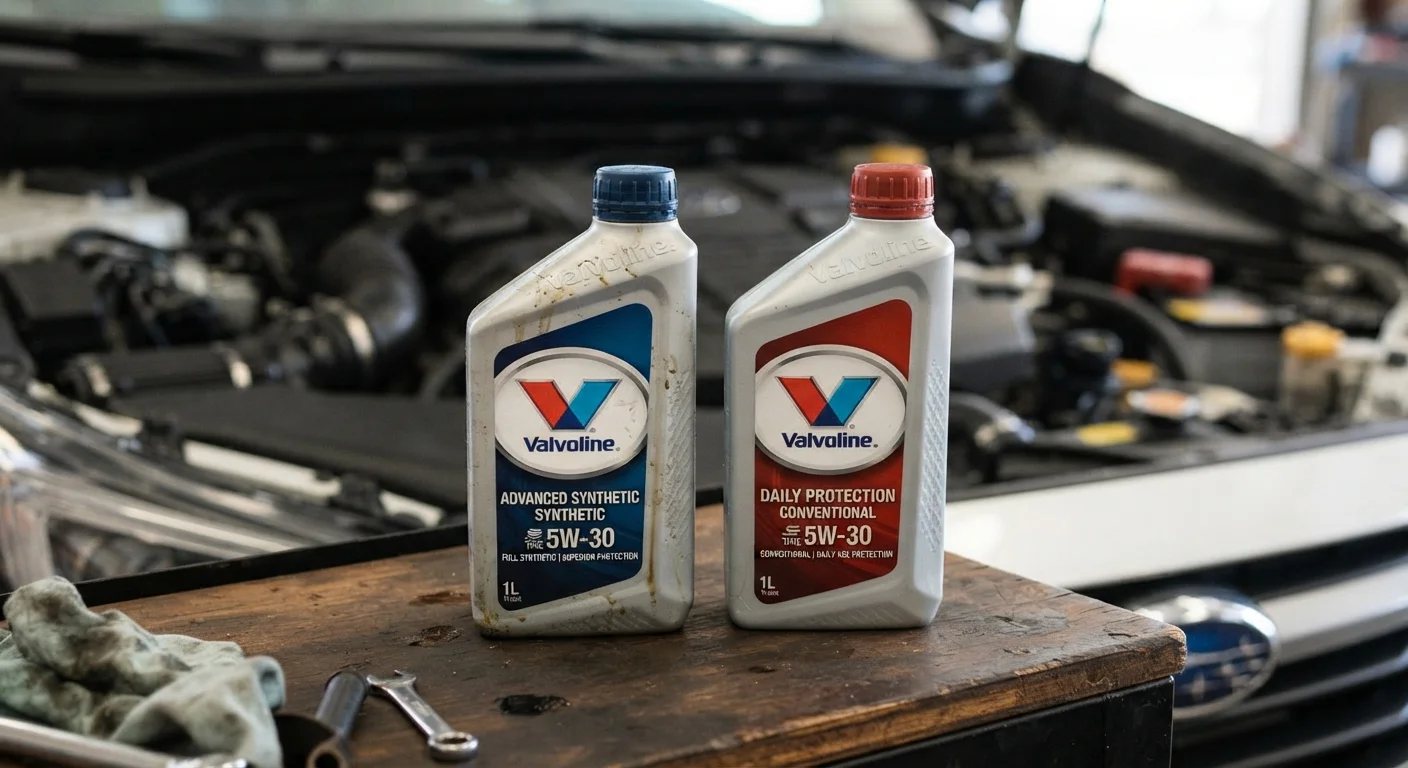
Option A
Synthetic Motor Oil
The engineered, high-performance formulation.
Best for: Drivers with turbocharged engines, vehicles operated in extreme temperatures, or anyone seeking longer intervals between oil changes.
Option B
Conventional Motor Oil
The time-tested, refined petroleum standard.
Best for: Owners of older vehicles with simple engine designs that operate under normal driving conditions and low-to-moderate mileage.
What Sets These Two Oil Types Apart at the Source
The core difference between synthetic and conventional motor oil comes down to origin and manufacturing. Conventional motor oil - sometimes called mineral oil - is derived by refining crude petroleum. That refining process removes many impurities, but the resulting product still contains a natural mix of hydrocarbon molecules of varying sizes and shapes.
Synthetic motor oil, by contrast, is built through a controlled chemical process. Manufacturers start with a base stock - often derived from natural gas or highly refined petroleum - and construct uniform, precisely sized molecules designed to perform specific functions. The result is a more consistent product with fewer impurities than its conventional counterpart.
This structural difference is why synthetic and conventional oils can behave so differently inside an engine, even when they carry the same viscosity grade (such as 5W-30). Viscosity grades - a measure of an oil's thickness and flow rate at different temperatures - are standardized by the Society of Automotive Engineers (SAE) and apply to both types.
What About Synthetic Blends?
A third option exists between the two: synthetic-blend motor oil, which mixes conventional base stock with a portion of synthetic. Blends are designed to offer some of synthetic's performance advantages at a cost closer to conventional oil. They are a middle-ground option that some manufacturers and mechanics recommend for vehicles that don't strictly require full synthetic but operate in moderately demanding conditions. As always, check your owner's manual before selecting any oil type.
Performance Differences That Matter in Real Driving
For most everyday drivers, the performance gap between synthetic and conventional oil shows up most clearly in three scenarios: extreme temperatures, high engine stress, and extended drain intervals.
Temperature resilience: Synthetic oil retains a more stable viscosity across a wider temperature range. In cold weather, it flows to engine components faster at startup - a period when much engine wear occurs. In high heat, it resists breaking down and thinning out more effectively than conventional oil.
Engine stress: Turbocharged engines, towing applications, and stop-and-go traffic all put extra heat and mechanical stress on oil. Synthetic oil's engineered molecular structure handles this punishment more consistently over time.
Change intervals: Because synthetic oil degrades more slowly, many manufacturers specify longer change intervals for vehicles using it - often in the range of 7,500 to 10,000 miles or more, depending on the engine and driving conditions. Conventional oil typically requires changes closer to every 5,000 to 7,500 miles, though your owner's manual should always be the final authority. You can learn more about common misconceptions around oil change frequency in our guide to popular car maintenance myths.
| Criterion | Synthetic Motor Oil | Conventional Motor Oil |
|---|---|---|
| Origin | Chemically engineered base stock | Refined crude petroleum |
| Molecular consistency | Uniform, precisely structured | Variable natural molecule mix |
| Cold-weather flow | Faster, more reliable at low temps | Slower to flow in extreme cold |
| Heat resistance | High stability under heat stress | More prone to viscosity breakdown |
| Typical change interval | 7,500-10,000+ miles (varies by vehicle) | 5,000-7,500 miles (varies by vehicle) |
| Cost per quart | Generally higher | Generally lower |
| Best engine fit | Turbocharged, modern, high-stress engines | Older, simpler naturally aspirated engines |
How to Choose the Right Oil for Your Vehicle
The single most important factor in this decision is your vehicle manufacturer's specification, found in the owner's manual. Manufacturers engineer engines around particular oil types and viscosity grades, and using the wrong one can affect warranty coverage and engine longevity.
If your manual specifies synthetic, use synthetic - there is no cost-saving workaround that compensates for using an oil the engine wasn't designed for. If your manual permits conventional oil and your engine is straightforward and low-mileage, conventional oil is a perfectly sound choice.
Drivers considering a switch from conventional to synthetic mid-vehicle-life should consult their mechanic. While modern seals and gaskets are generally compatible with both oil types, a qualified technician can assess whether the change makes sense for a given engine's age and condition.
70%+
New U.S. vehicles specifying synthetic oil
Industry analysts estimate that the majority of new passenger vehicles sold in the U.S. now leave the factory with a synthetic or synthetic-blend oil specification.
~30%
Engine wear that can occur during cold startup
Automotive engineering literature notes that a significant proportion of engine wear happens in the first moments after a cold start, before oil fully circulates - an area where synthetic oil's fast-flow properties offer an advantage.
Ultimately, motor oil choice is not a one-size-fits-all decision. It depends on your specific vehicle, your driving environment, and the intervals at which you can realistically maintain your car. Understanding the difference between these two formulations puts you in a much stronger position to make that call confidently.
The content on this site is provided for informational purposes only and should not be considered a substitute for professional advice. While we strive to provide accurate and up-to-date information, we make no guarantees regarding its completeness or accuracy. Always consult a qualified professional for advice specific to your circumstances before making any decisions