

Why Right-of-Way Misconceptions Are So Dangerous
Right-of-way rules exist to create predictable, orderly traffic flow - but they only work when every driver understands them correctly. The problem is that many drivers operate on assumptions formed years ago, often mixing up what they vaguely remember from driver's ed with habits picked up from watching others on the road.
These misunderstandings aren't trivial. Intersection-related crashes account for a significant share of serious traffic injuries each year in the United States, and a substantial portion involve at least one driver who incorrectly believed they had the right of way. Overconfidence in who "has it" creates a dangerous gap between expectation and reality.
Even experienced drivers aren't immune. Familiarity with roads can breed complacency, and ingrained habits are hard to question. The myths below represent some of the most widespread and consequential misconceptions about right-of-way - corrected with what traffic law and safe driving practice actually require.
Myth
If I have a green light, I automatically have the right of way and can proceed without checking cross traffic.
Fact
A green light permits you to proceed, but it does not override your duty to avoid a collision with vehicles lawfully still in the intersection.
Green lights indicate permission to go - they don't guarantee the intersection is clear. Drivers running red lights, pedestrians still crossing, and vehicles completing legal left turns can all be legally present when your light turns green. Traffic law in virtually every U.S. state holds that a driver must still exercise reasonable care even with a favorable signal. Proceeding blindly through a green is called "signal complacency," and it contributes to T-bone collisions at intersections daily.
Myth
Pedestrians in a crosswalk always have the right of way, so I don't need to slow down until they step off the curb.
Fact
In most states, pedestrians have the right of way once they have entered a crosswalk - not just when they step off - and drivers must yield before the pedestrian reaches the vehicle's lane.
Many state laws require vehicles to stop for pedestrians who are in any portion of the crosswalk on the driver's side of the road, or close enough to be in danger. Waiting until someone has fully committed to crossing before slowing is both legally insufficient in many jurisdictions and physically dangerous given stopping distances at even low speeds. Pedestrians at unmarked crosswalks - where two roads intersect - also typically retain right-of-way protections, a fact many drivers don't realize.
Myth
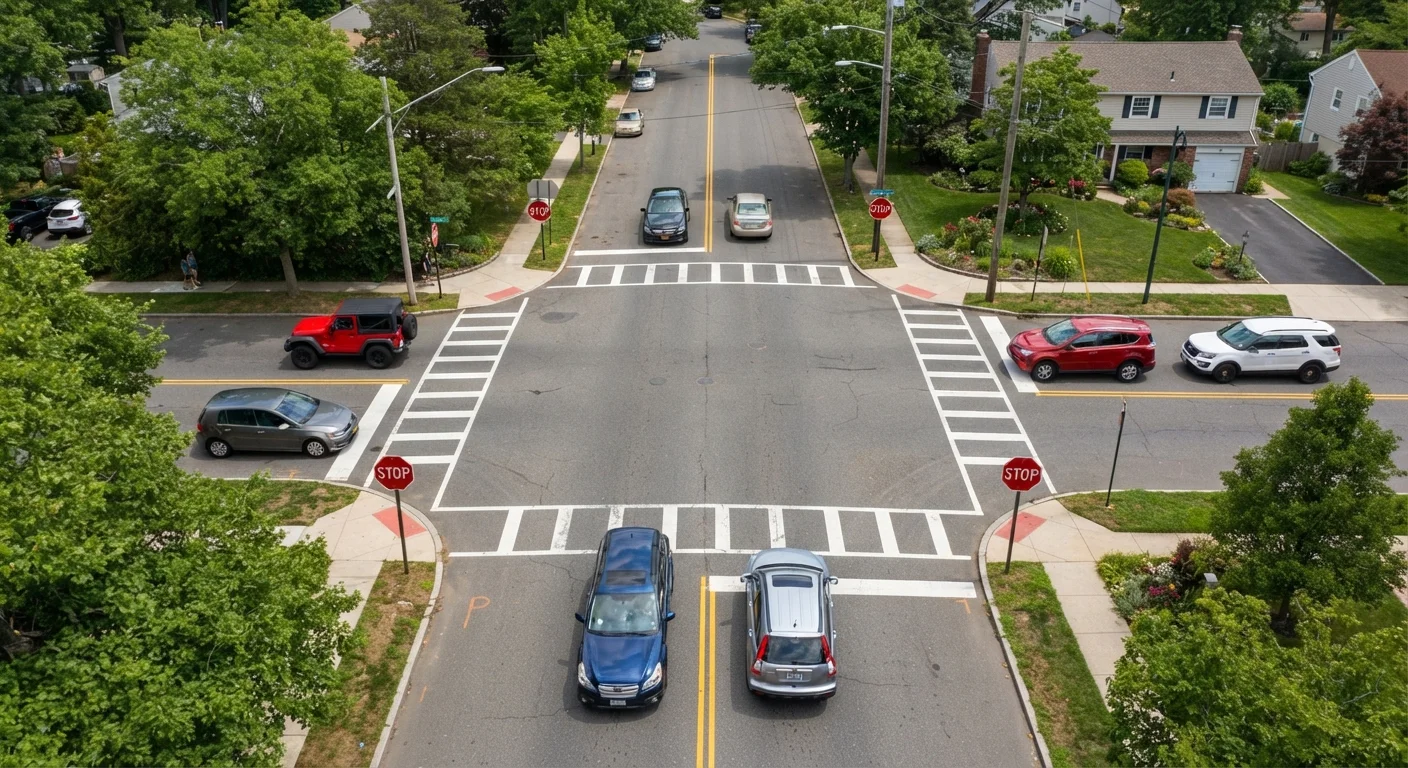
At a four-way stop, the largest or fastest-approaching vehicle goes first.
Fact
At a four-way stop, the driver who arrived first proceeds first. When vehicles arrive simultaneously, the driver to the right has the right of way.
Vehicle size, speed approaching the stop, or perceived urgency have no bearing on four-way stop rules. The law is clear: first to stop, first to go. When two vehicles arrive at the same time, the tie-breaker is position - the vehicle on the left yields to the vehicle on the right. When three or four vehicles arrive simultaneously, the rules become more complex and require careful communication, often through eye contact or slight hand gestures. Aggressive entry into the intersection based on size or speed is a violation of traffic law, not a reasonable shortcut.
Myth
Once I'm already merging onto a highway, the vehicles already on the highway have to let me in.
Fact
Drivers entering a highway via an on-ramp must yield to traffic already traveling on the main roadway - not the other way around.
This is one of the most commonly inverted right-of-way beliefs in American driving. Highway traffic has the established lane and the right of way. Merging drivers are responsible for adjusting their speed and finding a gap - through vehicles on the highway are sometimes courteous enough to shift lanes or adjust speed to help, they are not legally required to do so. Assuming they will can lead to dangerous forced merges. For a deeper look at where this goes wrong, see our coverage on common merging mistakes on highways.
Myth
Emergency vehicles with sirens don't apply to me if I'm in the middle of an intersection with a green light.
Fact
All drivers must yield to emergency vehicles using lights and sirens, regardless of their current signal status or position in the intersection.
Federal and state laws universally require drivers to pull over and yield to emergency vehicles - fire trucks, ambulances, and police cars - when they are operating lights and sirens. Being mid-intersection on a green does not suspend this obligation. The correct response is to complete your passage through the intersection safely, then promptly pull to the right and stop. Blocking an emergency vehicle's path, even unintentionally, can be a ticketable offense and, more importantly, can cost lives.
Myth
If I'm already partially into an uncontrolled intersection, I automatically have the right of way over cars arriving after me.
Fact
Entering an uncontrolled intersection first generally gives you priority, but you are never fully exempt from the responsibility to avoid a collision.
At intersections without signals or stop signs, the general rule is that the vehicle that entered the intersection first has the right of way. However, "entering" means being clearly committed to the crossing - not edging forward slightly. Additionally, no driver is released from the duty to use reasonable care. If a collision is foreseeable and avoidable, the law expects you to avoid it. Claiming right of way after a crash does not automatically eliminate shared or full liability, particularly if witnesses or camera footage show you had time to react.
Staying Safer by Knowing the Actual Rules
Understanding right-of-way correctly isn't just about passing a driving test - it's about making split-second decisions that prevent collisions. One practical habit: always confirm that other drivers are actually yielding before you proceed, even when you clearly have the right of way. Assuming compliance can be fatal.
Never Assert Right-of-Way Against an Inattentive Driver
Even when you are legally correct about who has the right of way, proceeding into a conflict with an inattentive or non-yielding driver puts you at serious risk. Traffic law determines fault after a crash - it cannot prevent one. If another driver appears to be ignoring a stop sign, red light, or yield requirement, treat it as a hazard and adjust accordingly. Your safety is worth more than being legally right.
New drivers are especially vulnerable to these misconceptions because they haven't had the repetition needed to internalize the rules under pressure. Our article what new teen drivers need to know covers the gaps that formal instruction often leaves unfilled.
Highway situations introduce additional complexity. Merging traffic, lane changes, and on-ramp behavior each carry their own right-of-way considerations that many drivers get wrong. Improper merging is among the most common causes of highway crashes, often rooted in the same kind of assumption-based thinking this article addresses.
The core principle to carry with you: right-of-way is something you yield, not something you assert. No signal, sign, or road position removes your legal and moral responsibility to avoid a collision if one is foreseeable. That mindset, more than any specific rule, is what separates defensive drivers from reactive ones.
The content on this site is provided for informational purposes only and should not be considered a substitute for professional advice. While we strive to provide accurate and up-to-date information, we make no guarantees regarding its completeness or accuracy. Always consult a qualified professional for advice specific to your circumstances before making any decisions