

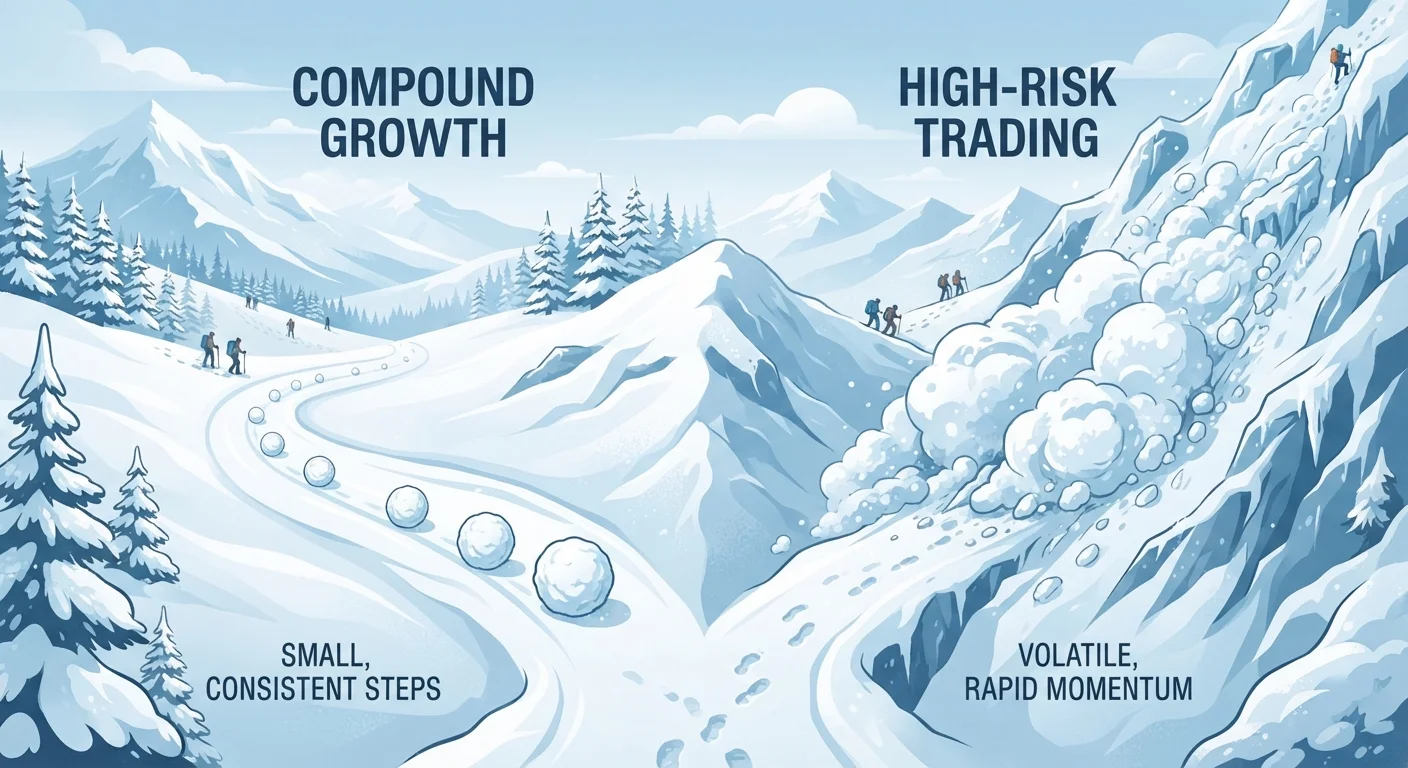
Option A
Debt Snowball Method
The momentum-driven approach built on quick wins.
Best for: People who need visible progress to stay motivated and want fast psychological rewards early in their debt payoff journey.
Option B
Debt Avalanche Method
The mathematically optimal path to minimum interest paid.
Best for: People who are disciplined and patient, and want to minimize the total interest they pay over the life of their debts.
How Each Method Works
Both the snowball and avalanche methods follow the same core structure: you make minimum payments on all your debts every month, then direct any extra money toward one specific debt at a time. Where they differ is in how they rank which debt gets that extra attention.
With the debt snowball, you order your debts from the smallest balance to the largest - regardless of interest rate. You throw every extra dollar at the smallest balance until it's gone, then roll that freed-up payment into attacking the next smallest, and so on. The name comes from the idea that your repayment power grows like a rolling snowball.
With the debt avalanche, you order your debts from the highest interest rate (APR) to the lowest - regardless of balance size. Extra payments hit the most expensive debt first, reducing the rate at which interest compounds across your portfolio. Once that debt is eliminated, you move to the next highest rate.
For a deeper look at how different debt types factor into these strategies, see The Complete Picture on Personal Debt in America.
| Criterion | Debt Snowball | Debt Avalanche |
|---|---|---|
| Payoff order | Smallest balance first | Highest interest rate first |
| Total interest paid | Typically higher | Typically lower |
| Time to first debt eliminated | Usually faster | Can take longer initially |
| Psychological motivation | High - quick wins | Moderate - slower early progress |
| Best for | Motivation-driven individuals | Discipline-driven individuals |
| Complexity | Simple to understand | Requires rate comparisons |
| Debt count reduction | Accounts close quickly | Accounts may linger longer |
The Real Cost Difference
From a pure math standpoint, the avalanche method almost always results in paying less total interest over time. By eliminating high-rate debt first, you slow the rate at which interest compounds on your most expensive balances. The difference can range from modest to substantial depending on your specific interest rates and balances.
The snowball method, by contrast, may leave high-interest debt untouched longer. That means interest continues accruing on those balances while you pay off lower-rate accounts. Over months or years, this can add up to meaningfully more interest paid in total.
~$6,000
Average American credit card balance
According to Federal Reserve data, average revolving credit card balances among US households carrying debt have remained in the thousands of dollars in recent years.
20%+
Typical credit card APR range
The Federal Reserve tracks average credit card interest rates, which have exceeded 20% annually in recent periods - making high-rate debt particularly costly to carry long-term.
That said, the avalanche's mathematical advantage only materializes if you stick with the plan. Research in behavioral finance suggests that people who feel they're making progress are more likely to continue a repayment strategy. If the snowball's early wins keep you on track while the avalanche's slower start causes you to give up, the snowball becomes the more cost-effective choice in practice.
Choosing the Right Fit for You
There's no universally correct answer - and anyone claiming otherwise is oversimplifying. The right method depends on your financial picture, your personality, and your track record with sustained financial commitments.
Consider the avalanche if:
- You have one or two debts with significantly higher interest rates than the rest.
- You're comfortable delaying visible results in exchange for long-term savings.
- You have a consistent track record of following through on financial plans.
Consider the snowball if:
- You have several small balances that feel cluttered and overwhelming.
- You've abandoned debt payoff efforts in the past due to lack of progress.
- Removing individual accounts from your budget will simplify your financial life.
Some people also use a hybrid approach - clearing one or two tiny balances upfront for an immediate win, then switching to avalanche order for the remaining debts. This isn't a textbook strategy, but it reflects a practical reality: motivation and math can both influence your outcomes.
If you're also weighing how to build savings while paying down debt, Savings Goals and Debt Repayment: Finding the Right Balance walks through how to approach both at once without losing ground on either front.
What About Debt Consolidation?
Some borrowers combine a repayment method with debt consolidation - using a personal loan or balance transfer to simplify or reduce interest costs before applying snowball or avalanche ordering. These tools work differently and carry their own trade-offs. For a side-by-side look, see Personal Loans vs. Balance Transfer Cards for Paying Off Debt.
This article is for general informational and educational purposes only and does not constitute personalized financial advice. Consult a qualified financial professional for guidance specific to your situation.
The content on this site is provided for informational purposes only and should not be considered a substitute for professional advice. While we strive to provide accurate and up-to-date information, we make no guarantees regarding its completeness or accuracy. Always consult a qualified professional for advice specific to your circumstances before making any decisions