

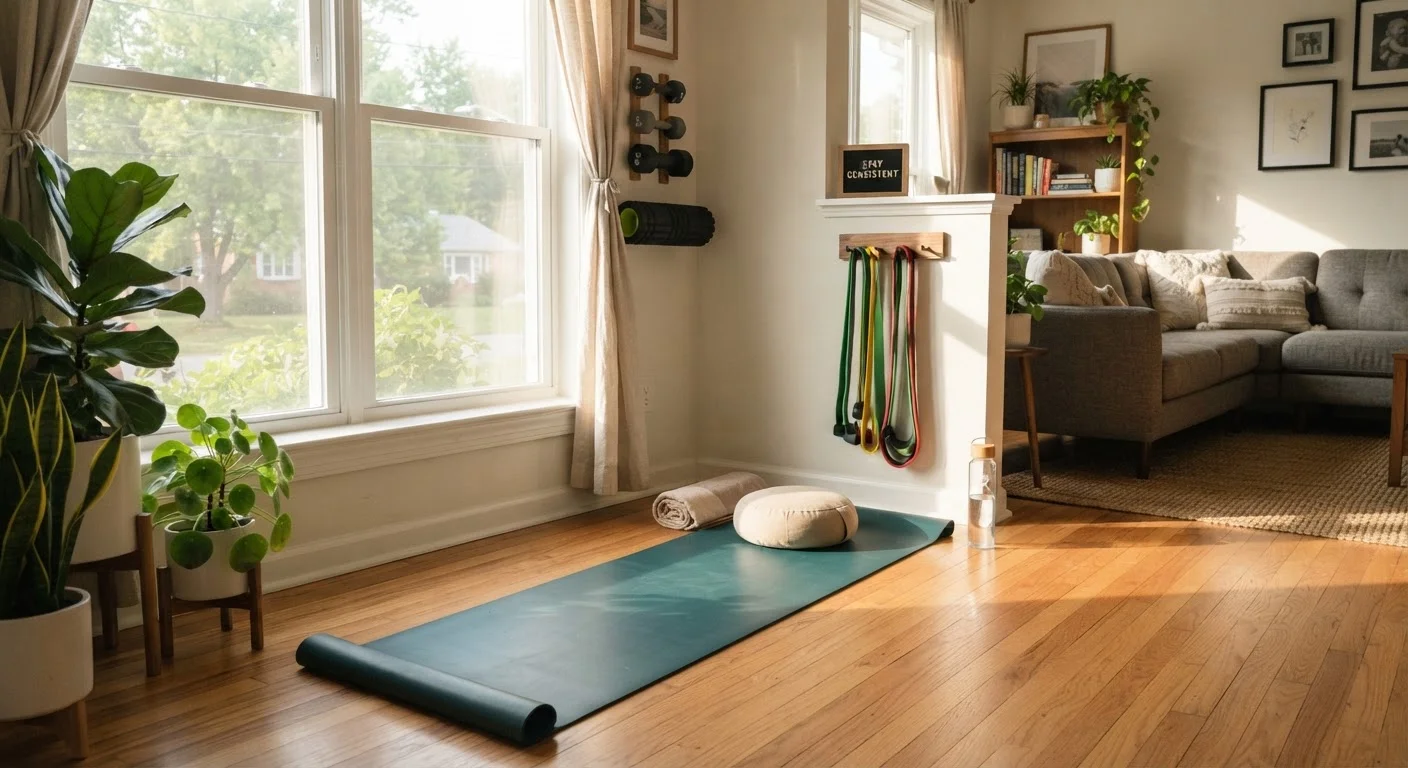
Why Home Workouts Deserve a Real Strategy
Exercising at home is easy to start and notoriously easy to abandon. The difference between a short-lived attempt and a lasting routine almost always comes down to structure. Without a plan - specific days, specific movements, a clear progression - home workouts default to whatever feels manageable in the moment, which steadily shrinks until sessions stop altogether.
The good news: the physical requirements for an effective home workout are genuinely modest. Research consistently shows that bodyweight training performed with adequate intensity and frequency produces measurable improvements in strength, cardiovascular fitness, and overall physical function. A gym membership and specialized equipment are useful but not prerequisites for meaningful progress.
What follows is a practical framework you can begin applying this week, regardless of your current fitness level.
What you will need
What You'll Need
The list of necessary equipment is shorter than most people expect. The items below cover everything from a bare-minimum start to a slightly enhanced setup:
Yoga or exercise mat
Provides cushioning for floor-based exercises and defines your workout zone.
Resistance bands
Adds variable resistance to bodyweight movements without requiring weights or significant storage space.
Interval timer app
Automates work-to-rest ratios so you can focus on movement rather than watching a clock.
Sturdy chair or couch edge
Supports exercises such as incline push-ups and tricep dips, already available in most homes.
If you are starting from a very low activity level, begin with just the mat and your own bodyweight. Add tools only once you have established the habit of showing up consistently.
New to Exercise? Start Smaller Than You Think
If you have never had a consistent routine, beginning with just two sessions per week is a legitimate and effective strategy. Our guide for complete beginners walks through sustainable habit formation from the ground up. Building frequency before intensity reduces injury risk and dramatically improves long-term adherence.
Step-by-Step: Building Your Routine
Check In With Your Doctor First
Before beginning any new exercise program, consult a qualified healthcare professional - especially if you have an existing health condition, injury, or have been sedentary for an extended period. This article provides general fitness education, not personalized medical advice. See our pre-exercise readiness checklist for a practical starting framework.
Assess your available space and time honestly
Walk through your home and identify the largest clear area you can access consistently - a living room, bedroom, or even a hallway works. Measure roughly to confirm you have at least a 6×6-foot footprint. Then look at your weekly schedule and locate two or three time blocks of 20-30 minutes that you can protect from interruption. Treat these blocks as non-negotiable appointments.
Choose a workout format suited to your goal
Two formats work well in small spaces and short windows: circuit training (cycling through several exercises back-to-back with minimal rest) and interval training (alternating brief high-effort bursts with recovery periods). Circuit training is ideal for building muscular endurance; interval training is efficient for cardiovascular fitness. Most home routines benefit from combining both. See our breakdown of strength training versus cardio if you want deeper guidance on balancing the two approaches.
Build your movement library from bodyweight fundamentals
Focus on exercises that require no equipment and minimal space. A solid starting library includes:
- Lower body: squats, reverse lunges, glute bridges
- Upper body: push-up variations (standard, incline, wide), tricep dips on a chair
- Core: planks, dead bugs, mountain climbers
- Cardio-style: jumping jacks, high knees, step-taps (low-impact alternative)
Select three to five movements per session - this is enough to produce a meaningful training stimulus without overwhelming a beginner schedule.
Structure a sample weekly schedule
A balanced three-day-per-week template for beginners might look like this:
| Day | Focus | Duration |
|---|---|---|
| Day 1 | Full-body strength circuit | 20-25 min |
| Day 2 | Rest or light walking | - |
| Day 3 | Cardio intervals + core | 20 min |
| Day 4 | Rest | - |
| Day 5 | Full-body strength circuit | 25-30 min |
| Day 6-7 | Active rest (walk, stretch) | - |
Rest days are not optional extras - they are when muscular repair and adaptation occur.
Apply progressive overload over time
Your body adapts to repeated stress, so your routine must evolve to continue producing results. Progressive overload means gradually increasing the challenge - not necessarily by adding weight. In a home setting, you can progress by: adding one to two repetitions per set each week, shortening rest periods, slowing the tempo of each movement (e.g., a four-second lowering phase in a squat), or introducing a harder exercise variation (e.g., moving from standard push-ups to decline push-ups). Track your sessions in a simple notebook or phone note so you know what you did last time.
Build accountability and protect the habit
Consistency matters far more than intensity in the early weeks. Set a specific intention before each session - even writing down your planned exercises the night before increases follow-through. If you miss a session, resume the next scheduled day without trying to compensate by doubling up. Understanding why people abandon fitness routines can help you recognize and sidestep the most common traps before they derail your progress.
Staying on Track After the First Few Weeks
The initial motivation that launches a new routine typically fades within two to three weeks - this is normal and not a sign of personal failure. What sustains a routine past that point is behavioral design, not willpower. Reduce friction wherever possible: keep your mat unrolled, lay out your workout clothes the night before, and schedule sessions at the same time each day so the decision-making load is minimal.
Periodically reassessing your routine every four to six weeks also prevents plateaus and maintains engagement. Ask yourself: Are the sessions still feeling somewhat challenging? Are you recovering adequately between days? Has your goal shifted? Adjusting your approach based on honest answers to these questions keeps progress moving without requiring a complete overhaul.
Pain Is Not Progress
Muscle fatigue and mild soreness 24-48 hours after exercise are normal. Sharp, joint-specific, or persistent pain during or after a session is not. Stop the movement causing discomfort and consult a healthcare professional before continuing. Do not push through pain in hopes that it resolves on its own.
This article is for general informational and educational purposes only and does not constitute medical advice. Consult a qualified healthcare professional before beginning a new exercise program, particularly if you have any health conditions, injuries, or concerns.
The content on this site is provided for informational purposes only and should not be considered a substitute for professional advice. While we strive to provide accurate and up-to-date information, we make no guarantees regarding its completeness or accuracy. Always consult a qualified professional for advice specific to your circumstances before making any decisions