

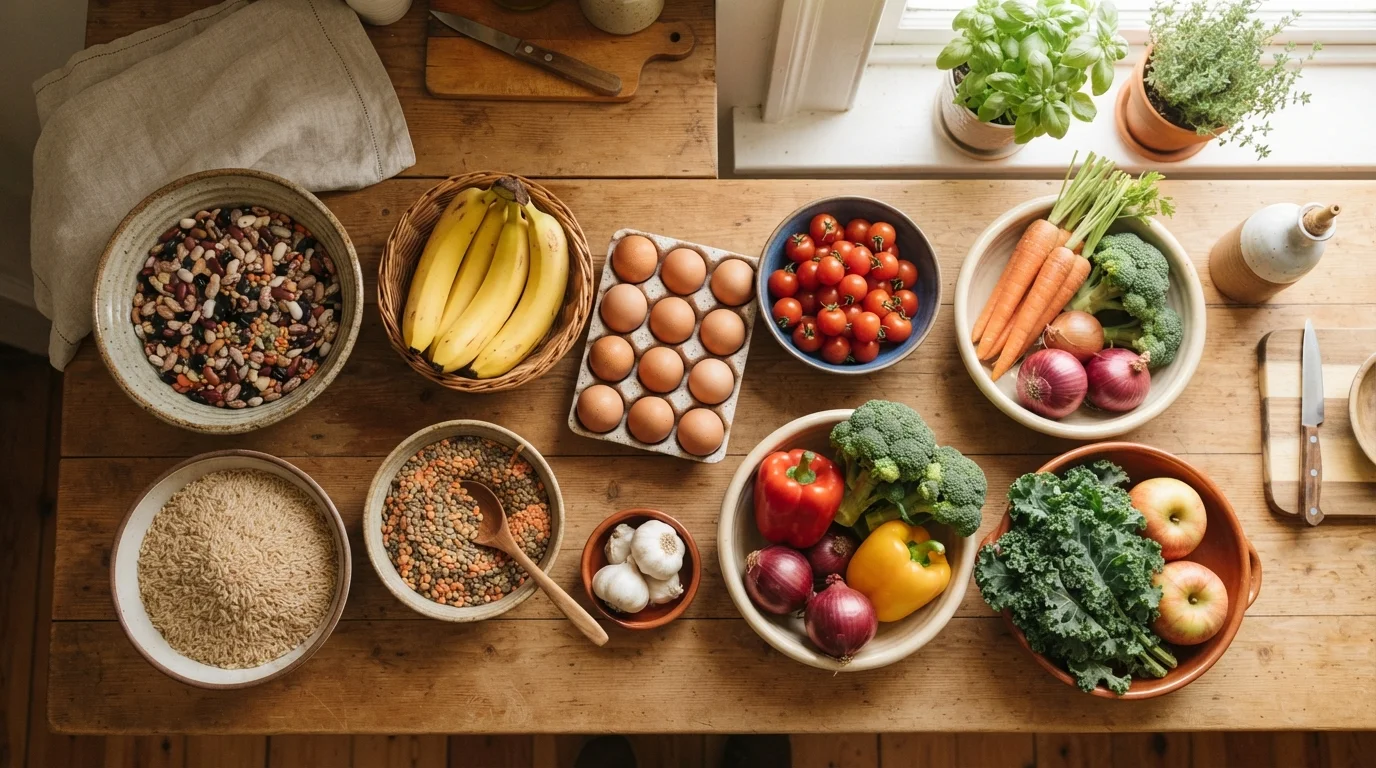
The Real Cost of Eating Well
A common assumption is that eating healthily is inherently expensive - reserved for households with ample grocery budgets. Research consistently challenges this idea. A 2013 analysis published in BMJ Open found that a healthier diet costs roughly $1.50 more per day than an unhealthy one, on average. That gap is real, but it is also manageable with deliberate habits. Many of the most nutrient-dense foods available - dried lentils, canned beans, oats, eggs, frozen spinach - are also among the most affordable items in any supermarket.
The challenge is rarely the food itself. It is more often the absence of a plan. Without structure, grocery shopping becomes reactive: grabbing whatever is convenient, discarding unused produce, and defaulting to processed options when time runs short. Addressing those habits closes the cost gap faster than hunting for specialty deals. For a broader look at how meal structure supports nutrition, see our practical guide to building a balanced plate.
Core Practices for Budget-Friendly Nutrition
The following evidence-backed practices form a reliable foundation for eating well without overspending. None require culinary expertise or a premium grocery store.
Plan meals for the week before writing your grocery list.
Unplanned shopping is the primary driver of food waste and impulse purchases. Knowing what you will cook for each meal narrows your list to only what you need, reducing both overbuying and the last-minute takeout habit. The USDA estimates that American households waste between 30-40% of their food supply, much of it avoidable.
Anchor meals around legumes and whole grains as primary protein and carbohydrate sources.
Dried beans, lentils, chickpeas, and whole grains like brown rice and oats are calorie-dense, fiber-rich, and protein-containing - and cost a fraction of most animal proteins per serving. Diets rich in legumes are associated with reduced risk of cardiovascular disease and improved blood sugar regulation, according to research cited by the American Heart Association.
Choose frozen and canned vegetables over fresh when cost or shelf life is a concern.
Frozen vegetables are typically harvested and flash-frozen at peak ripeness, which preserves most of their vitamins and minerals. The Academy of Nutrition and Dietetics notes that frozen and canned produce can be nutritionally comparable to fresh - and sometimes superior when fresh produce has traveled long distances. Canned options with no added salt or reduced sodium are widely available.
Cook in large batches and portion meals for later in the week.
Batch cooking reduces the per-meal effort and cost compared to cooking fresh daily, while eliminating the conditions - fatigue, time pressure - that drive people toward expensive convenience options. A single session of two to three hours can produce most of a week's lunches and dinners.
Buy store-brand staples and shop seasonal produce.
Store-brand dry goods, canned items, and frozen foods are often produced by the same manufacturers as name brands, with equivalent ingredient profiles at lower prices. Seasonal produce is harvested closer to sale and typically costs less than out-of-season items that require long-distance transport or greenhouse production.
This article is for general informational and educational purposes only and is not a substitute for personalized nutrition or medical advice. Consult a qualified healthcare professional before making significant changes to your diet, especially if you have an existing health condition.
Starting Small: Wins You Can Apply This Week
Overhauling an entire grocery routine at once is rarely sustainable - and research on habit formation consistently supports incremental change. The evidence on why restrictive diets often fail reinforces this: small, consistent shifts outlast dramatic overhauls. The quick actions below are designed to fit into an existing routine without requiring a complete reset.
~$1.50
Daily cost difference: healthy vs. unhealthy diet
A 2013 meta-analysis published in BMJ Open estimated that a healthier dietary pattern costs approximately $1.50 more per person per day than a less healthy one.
30-40%
Estimated food wasted by U.S. households
According to the USDA Economic Research Service, between 30 and 40 percent of the U.S. food supply goes to waste, with household-level waste representing a significant share.
If food spending feels like a broader budgeting challenge, the framework for building a flexible personal budget offers practical structure for understanding where grocery dollars actually go.
The content on this site is provided for informational purposes only and should not be considered a substitute for professional advice. While we strive to provide accurate and up-to-date information, we make no guarantees regarding its completeness or accuracy. Always consult a qualified professional for advice specific to your circumstances before making any decisions