

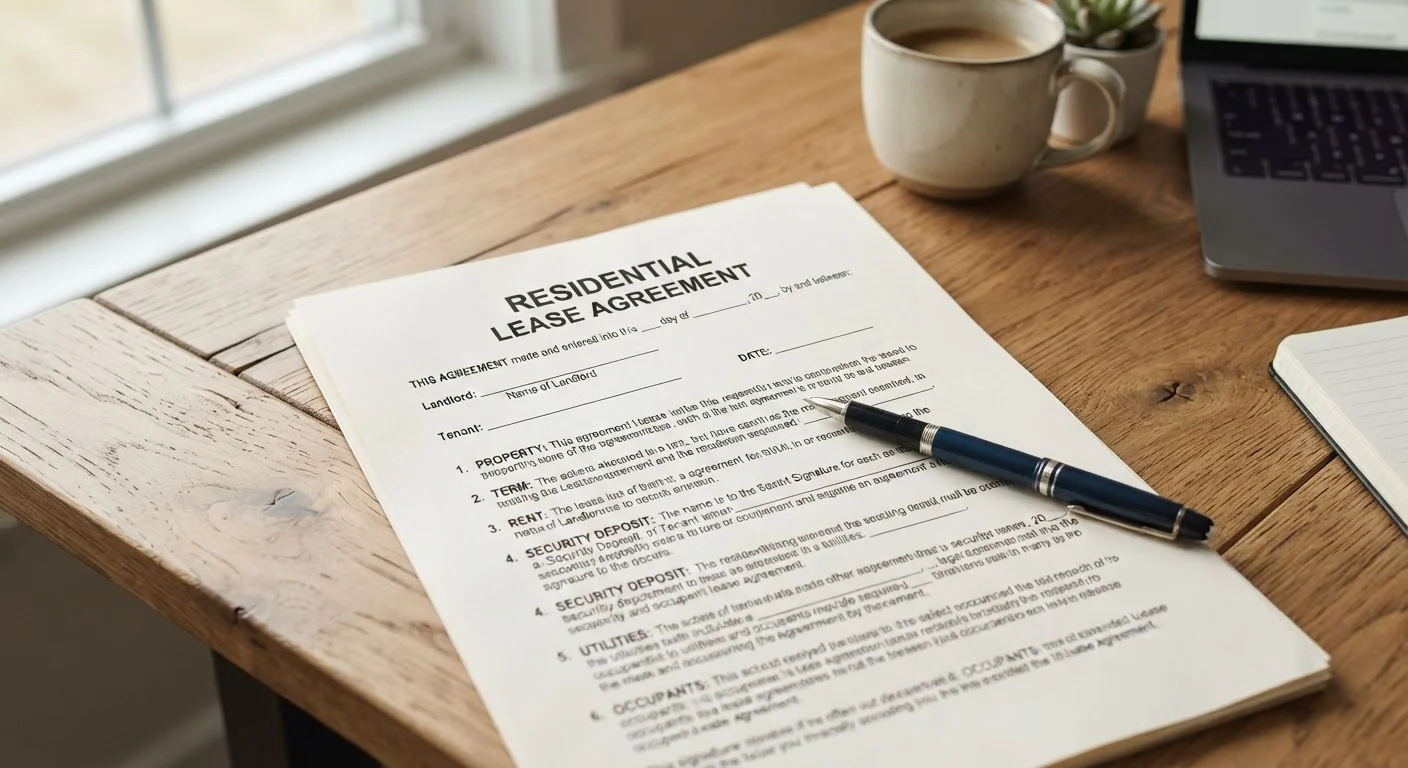
What a Lease Actually Does
At its core, a lease converts an informal arrangement - someone letting you live in their property - into a documented, enforceable agreement. It defines two parties' obligations: the landlord's duty to provide a habitable space and the tenant's duty to pay rent and abide by the rules.
Most standard residential leases in the U.S. cover the same essential ground: the rental amount and due date, the lease term (start and end date), the security deposit amount and conditions for its return, occupancy limits, pet policies, and maintenance responsibilities. If any of these elements are missing or vague, that's worth clarifying in writing before you sign.
If you're new to renting, our guide to renting your first apartment walks through move-in costs and key questions to ask a landlord before committing.
State Law Can Override Lease Clauses
A lease clause that conflicts with your state's landlord-tenant law is generally unenforceable, even if you've signed it. For example, a clause waiving a landlord's duty to maintain habitable conditions is void in virtually every state. Knowing your state's basic tenant protections is worthwhile before you review any lease.
Clauses That Carry the Most Weight
Not every paragraph in a lease carries equal risk, but certain clauses deserve especially careful reading.
- Rent escalation clauses: Some fixed-term leases allow rent to increase mid-lease under specific conditions. Know whether yours does.
- Security deposit terms: State law governs how long a landlord has to return your deposit and what deductions are permissible. A lease cannot legally override stronger state protections.
- Subletting and assignment: Many leases prohibit subletting without landlord approval. Violating this clause can be grounds for eviction.
- Early termination: Look for whether the lease specifies a buyout option or simply states you owe all remaining rent. The latter can be costly.
- Renewal and notice requirements: Leases often require 30-60 days' written notice if you don't plan to renew. Missing this window can lock you into another term or convert your lease to month-to-month.
For a deeper look at terminology you'll encounter throughout housing documents, the Key Rental Terms Glossary is a useful reference.
Always Get Changes in Writing
If a landlord agrees to modify any lease term - a pet exception, a different move-in date, a repaired appliance - ask for a written addendum before you sign the main lease. Courts and arbitrators give written lease language priority over verbal promises, so an undocumented agreement offers little protection if a dispute arises later.
What's Negotiable - and How to Approach It
Many renters assume a printed lease is non-negotiable. In practice, landlords - particularly individual property owners rather than large management companies - often have flexibility on certain terms.
Items that are frequently open to discussion include the lease start date, parking arrangements, pet deposits (separate from the security deposit), and who is responsible for minor maintenance like changing air filters. In slower rental markets, landlords may also negotiate on rent itself or offer incentives such as a free first month.
The key is to make requests in writing and get any agreed changes added as a written addendum to the lease. A verbal promise from a landlord carries very little legal weight once a dispute arises.
If you're planning to share a unit, the lease structure matters even more. Renting with roommates introduces joint liability, meaning each tenant can be held responsible for the full rent if others don't pay.
~44M
Renter households in the United States
According to the U.S. Census Bureau's American Community Survey, approximately 44 million households in the U.S. are renter-occupied.
1-2 months
Typical security deposit required
Most states cap security deposits at one to two months' rent, though the specific limit varies by state law.
14-30 days
Typical landlord window to return security deposit
Most states require landlords to return security deposits within 14 to 30 days of move-out, accompanied by an itemized list of any deductions.
Fixed-Term vs. Month-to-Month: Choosing What Fits
A fixed-term lease - most commonly 12 months - gives both parties stability. Your rent is locked in, and the landlord cannot ask you to leave without cause during that period. The trade-off is reduced flexibility: if your circumstances change, leaving early carries legal and financial consequences.
A month-to-month rental agreement renews automatically each month. It's easier to exit on short notice, but it also means the landlord can raise rent or choose not to renew with relatively short notice, depending on your state's rules.
The right choice depends on how certain you are about staying in an area. If your job, family situation, or finances are in flux, the flexibility of a month-to-month arrangement may outweigh its cost premium. If you've found a place you're confident about, a fixed-term lease protects you from mid-year rent increases.
This article is for general informational purposes only and does not constitute legal advice. Lease agreements are legal contracts and state laws vary significantly. Consider consulting a qualified attorney or tenant advocacy organization if you have questions about your specific lease or tenancy rights.
Frequently Asked Questions
Generally, no. A signed lease is a binding contract, and its terms cannot be unilaterally changed mid-lease. Changes can only take effect at renewal or with the written agreement of both parties.
Early termination typically triggers penalties outlined in the lease, which may include paying remaining rent or a flat fee. Some states require landlords to make reasonable efforts to re-rent the unit, which can limit how much you owe.
Verbal agreements can be legally enforceable in some states, but they are extremely difficult to prove and offer little protection to either party. Always insist on a written lease.
Yes - many lease terms are negotiable, particularly in softer rental markets. Common negotiable items include the lease start date, pet policies, parking, and minor maintenance responsibilities. Landlords are not obligated to agree, but asking is reasonable.
A lease typically runs for a fixed term, most commonly 12 months, locking in rent and terms for that period. A rental agreement is usually month-to-month, offering more flexibility but less stability for both tenant and landlord.
The content on this site is provided for informational purposes only and should not be considered a substitute for professional advice. While we strive to provide accurate and up-to-date information, we make no guarantees regarding its completeness or accuracy. Always consult a qualified professional for advice specific to your circumstances before making any decisions