

Why This Phrase Means Less Than You Think
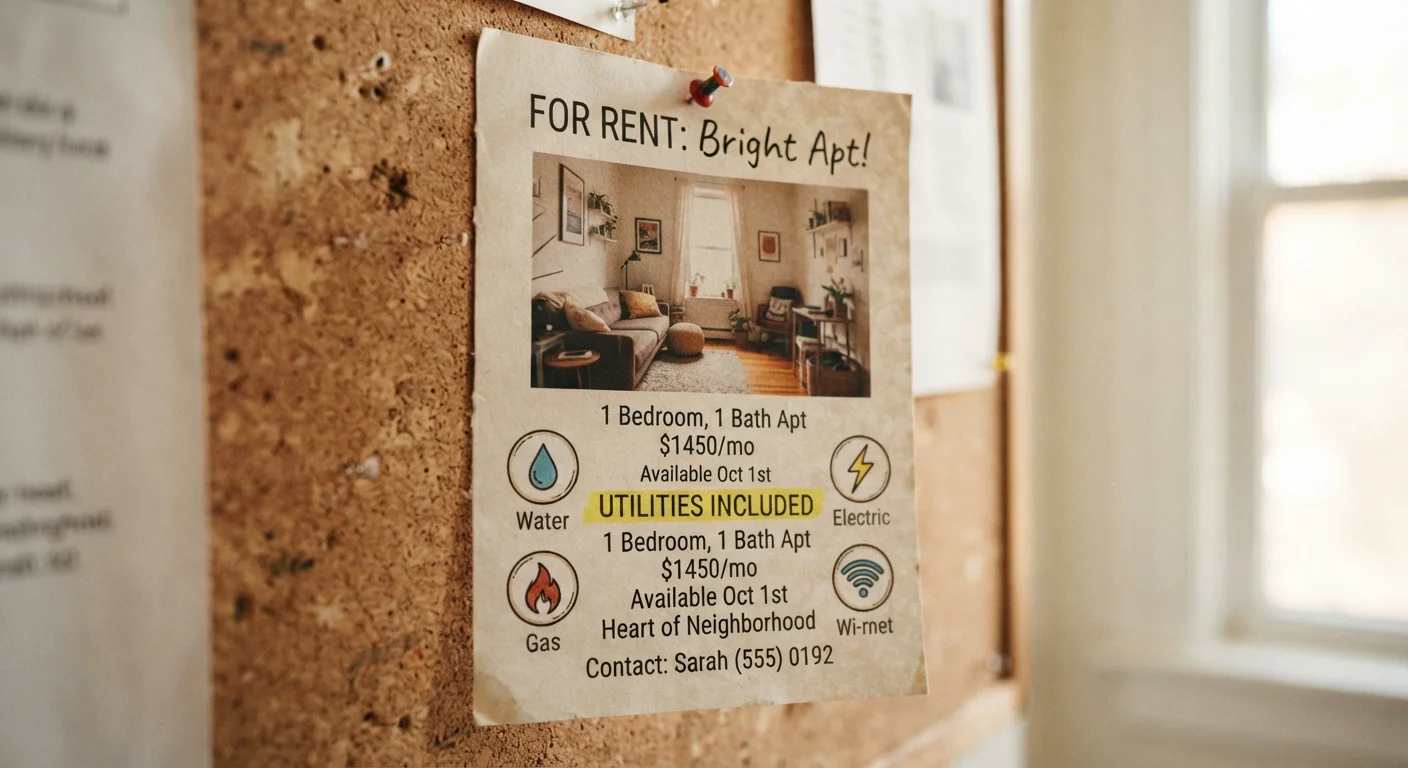
When a rental listing says 'utilities included,' it sounds like a clear, complete offer. In practice, it's one of the most inconsistently used phrases in housing advertisements. There is no legal or industry-wide standard defining which utilities must be covered when a landlord uses this language. One building might include water, trash, and heat. Another might include only water. A third might mean a basic cable package leftover from a bulk contract. The phrase tells you something, but not nearly enough.
Before you factor that phrase into your budget - or, worse, sign a lease based on it - you need a specific, itemized answer from the landlord or property manager. See our guide to reading rental listings without being misled for a broader look at how listing language can obscure important details.
Why Listings Use This Phrase Loosely
Rental listings are marketing documents, not legal contracts. Landlords and listing platforms are not required to define 'utilities included' in a standardized way. This means the same phrase can describe very different arrangements depending on the property, the market, and the individual landlord's billing setup. Always treat the listing as a starting point for a conversation, not a definitive statement of terms.
The Utility-by-Utility Breakdown
Understanding which utilities are commonly included - and which are typically your responsibility - gives you a baseline for what to expect and what to ask.
Water and Sewer
This is the most frequently included utility in rental properties. Because water usage in an apartment building is often on a single master meter, landlords frequently absorb this cost rather than set up individual billing. Don't assume, though - ask explicitly.
Trash and Recycling
Trash pickup is commonly bundled into rent, particularly in multifamily buildings where service is contracted at the property level. This one is easy to overlook but worth confirming.
Gas and Heat
In older apartment buildings - especially in colder parts of the country - heat may be included, sometimes because a single boiler system serves the whole building and individual metering is impractical. If gas is included, clarify whether that covers heat only, or also cooking appliances and hot water.
Electricity
Electric is the least likely utility to be included in rent. It's individually metered in most units, and costs vary enough by tenant behavior that most landlords don't absorb it. If a listing claims electric is included, scrutinize that claim closely - it may mean a RUBS allocation system or a cap-based arrangement.
Internet
Some newer apartment complexes and co-living properties include bulk internet service in rent. If so, find out what speed is provided and whether you can supplement or replace it. Questions to ask before committing to any internet plan apply here too, even when the landlord is the subscriber.
~35%
Rentals where water is landlord-paid
According to the U.S. Census Bureau's American Housing Survey, roughly a third of rental units have water costs paid by the landlord.
<10%
Rentals where electricity is landlord-paid
Electricity is individually metered in the vast majority of U.S. rental units, making it one of the least commonly included utilities.
The 'Reasonable Use' Trap
Even when a lease explicitly lists utilities as included, some landlords add language that limits coverage to 'normal' or 'reasonable' usage. This clause can allow the landlord to bill tenants for usage that exceeds an undefined threshold - creating a gray zone that can lead to unexpected charges.
Before signing, ask whether the lease contains any usage caps tied to included utilities, and if so, what the threshold is and how overages are calculated. For context on the kinds of fine print that can affect ongoing costs, what your ISP contract actually says offers a useful model for reading any service agreement carefully.
Put Every Utility Agreement in Writing
Before signing your lease, ask the landlord to amend or annotate it to specifically name each utility that is included. A general clause saying 'utilities included' is harder to enforce than a line that reads 'landlord provides water, sewer, and trash removal.' This small step protects you from disputes after move-in.
How to Get a Straight Answer Before You Sign
The right moment to clarify utility coverage is before you apply, not after you've handed over a security deposit. Here's a practical approach:
- Ask for a written list of every utility the landlord covers. If they hesitate or only give a verbal answer, that's a red flag.
- Confirm each service is named in the lease. 'Utilities included' as a general phrase in a lease offers weaker protection than a specific line item listing water, sewer, and trash.
- Ask about billing structure. Is each utility metered individually, or is it a RUBS allocation split among tenants? The latter can lead to higher bills if neighbors use more than average.
- Request recent utility bills if any utilities are not included, so you can estimate your monthly costs accurately.
If you're navigating your first rental, our article on what to know before signing your first apartment lease walks through the broader set of questions worth raising with a landlord. And for definitions of terms you may encounter in the process, the key rental terms glossary for tenants is a reliable reference.
Frequently Asked Questions
No. Electricity is one of the more expensive utilities, so landlords frequently exclude it even when other services are included. Always ask specifically whether electric is part of the package and confirm it in the lease.
Sometimes, particularly in larger apartment complexes or co-living buildings. However, the service provided may have speed limitations or be a basic shared connection. Always ask what speed tier is included and whether you can upgrade independently.
It depends on your lease. Some landlords include language about 'reasonable use' and can bill for usage above a threshold. Review your lease carefully for any usage caps tied to included utilities.
Water, sewer, and trash removal are the most frequently included services. Heat (gas or oil) is sometimes included in older buildings. Electricity and internet are the least commonly covered utilities.
Absolutely. Verbal promises from a landlord are difficult to enforce. Any utility that is represented as included should appear explicitly in the lease agreement before you sign.
Research average utility costs in your area for a unit of similar size. Add those estimates to a lower non-inclusive rent and compare the total to the 'utilities included' asking price. This gives you an apples-to-apples comparison.
The content on this site is provided for informational purposes only and should not be considered a substitute for professional advice. While we strive to provide accurate and up-to-date information, we make no guarantees regarding its completeness or accuracy. Always consult a qualified professional for advice specific to your circumstances before making any decisions