

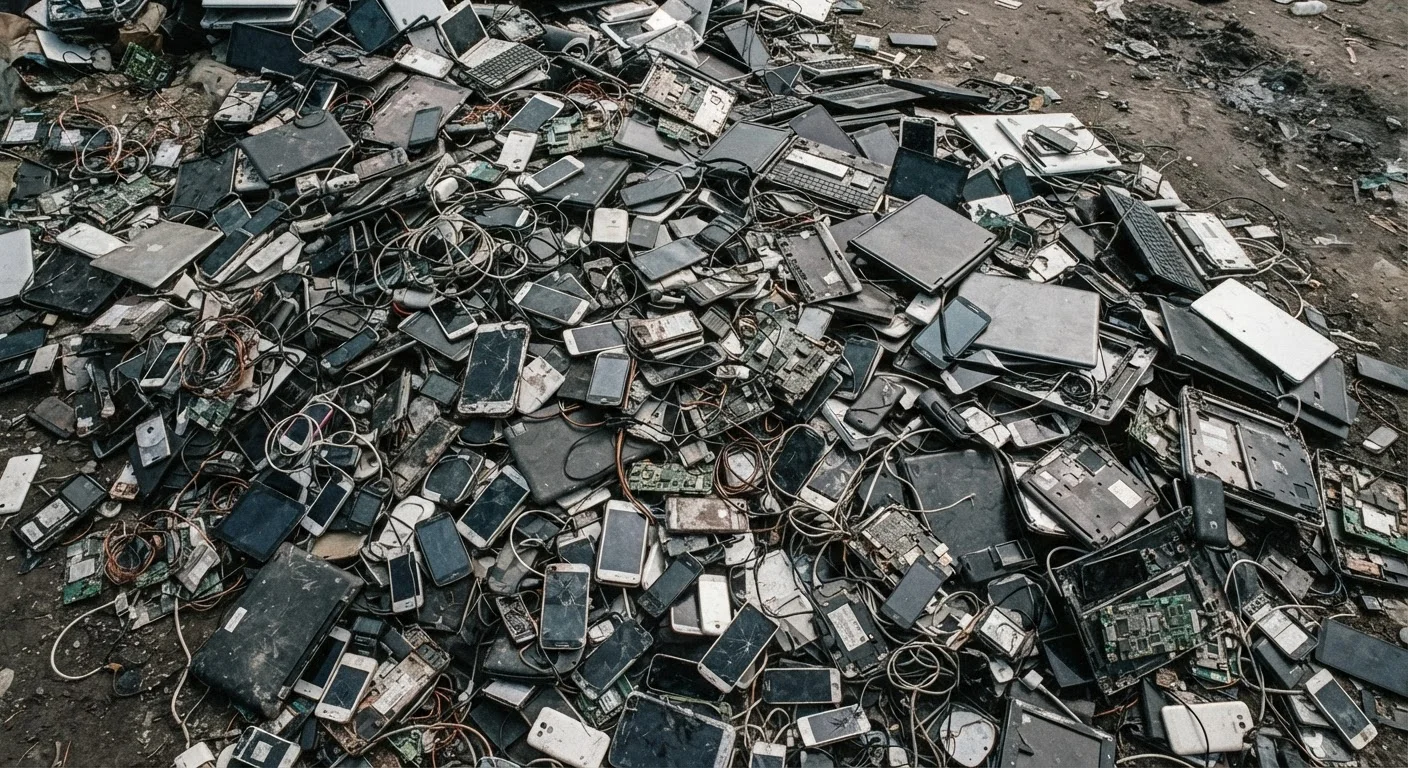
Where Old Devices Actually Go
When most people throw away an old phone, laptop, or tablet, the assumption is that it disappears - handled by someone else in the waste system. The reality is more complicated and more consequential.
The majority of e-waste that enters the regular trash stream goes to municipal landfills. There, devices slowly break down, and the materials inside - including lead from circuit boards, mercury from older displays, and lithium from batteries - can leach into surrounding soil and eventually into groundwater. Some waste is incinerated, which can release toxic compounds into the air if not handled at a facility equipped for hazardous materials.
A significant portion of e-waste collected through informal or uncertified channels gets exported overseas, often to countries in West Africa or Southeast Asia. Workers in these locations - sometimes including children - manually dismantle devices in conditions with little environmental or health protection, burning cables to recover copper and using acid baths to extract precious metals.
59.4M
Metric tons of e-waste generated globally per year
According to the Global E-waste Monitor, global e-waste generation has grown steadily over the past decade.
~17%
Share of global e-waste formally recycled
The Global E-waste Monitor has reported that only a small fraction of e-waste worldwide enters formal, certified recycling streams.
57+
US states and territories with some e-waste laws
The majority of US states have enacted legislation addressing the disposal or manufacturer take-back of certain electronic devices.
What Responsible Recycling Actually Looks Like
Certified e-waste recycling is a different process entirely. Facilities with recognized certifications - such as R2 (Responsible Recycling) or e-Stewards - are audited to ensure they handle materials safely, don't export waste illegally, and properly destroy stored data on devices.
Inside a certified facility, devices are sorted, disassembled, and processed to recover materials. Copper wiring, aluminum casings, steel frames, and even small amounts of gold and silver from connectors and circuit boards can be extracted and returned to manufacturing supply chains. Batteries are handled separately under strict protocols due to their fire and chemical hazard risks.
The process isn't perfect or infinitely efficient - some materials are too costly to recover at scale - but it dramatically reduces the harmful impact compared to landfill disposal.
Look for Certified Recyclers
When choosing an e-waste recycler, look for facilities certified under the R2 or e-Stewards standards. These certifications indicate the recycler has been independently audited for environmental and data-security practices. Your local government's waste management site is often the easiest starting point for finding certified options nearby.
How to Dispose of Your Old Tech Responsibly
The first step before disposing of any device is data security. Factory reset your phone or computer, sign out of all accounts, and if possible remove or physically destroy storage media (like a hard drive) from older computers. Don't skip this - simply handing a device to a recycler doesn't guarantee your data is gone.
For finding a drop-off point, start with your local city or county waste management website. Many areas hold periodic e-waste collection events, and some have permanent drop-off sites. A number of large electronics retailers also operate take-back programs at their store locations - check manufacturer websites as well, since many brands have trade-in or recycling programs for their own products.
If your device still works, consider donating it. Functioning smartphones, laptops, and tablets are often welcomed by schools, libraries, and nonprofit organizations that refurbish and redistribute them. This extends the device's useful life and delays it from becoming waste at all.
A family upgrades their smartphones and wants to get rid of three old models that no longer hold a charge well.
A small business replaces a batch of older office laptops with newer models.
A college student has a working but outdated tablet they no longer use.
Why This Matters More Than You Might Think
E-waste is one of the most rapidly growing waste categories globally. The environmental footprint of manufacturing a new device is substantial - mining rare earth metals, consuming large amounts of water and energy, and generating industrial waste. Responsible disposal and recycling helps recover some of those embedded resources rather than losing them to landfill forever.
Beyond the environment, there are personal stakes. Improperly discarded devices are a real vector for identity theft, since deleted files aren't always truly erased without a proper wipe or reset. Taking a few minutes to handle disposal correctly protects both your information and the environment.
Making a habit of responsible e-waste disposal doesn't require significant effort - it mainly requires knowing where to look and taking a small amount of planning before your next upgrade.
State Laws Vary Widely
E-waste regulations differ significantly by state. Some states require manufacturers to fund take-back programs; others place the responsibility on consumers or retailers. A handful of states have few formal requirements at all. Check your state's environmental agency website to understand what rules and resources apply where you live.
Frequently Asked Questions
No. Standard curbside recycling programs are not equipped to handle electronics. Old devices contain hazardous materials and complex components that require specialized processing. Use a dedicated e-waste drop-off program instead.
It's technically possible in some states, but generally inadvisable. Phone batteries can be a fire hazard in compaction trucks, and the toxic materials inside can contaminate landfills over time. Dedicated recycling is the safer choice.
Many major retailers, electronics manufacturers, and local municipalities offer free e-waste collection events or permanent drop-off locations. Check your local government's waste management website for options near you.
Simply recycling a device does not erase your data. You should factory reset the device and, where possible, remove or wipe the storage before handing it over to any recycling program or reseller.
Quality varies. Certified recyclers - those with R2 or e-Stewards certification - follow strict environmental and data-destruction standards. Uncertified programs may export devices to countries with weaker environmental protections.
Yes, if the device still functions. Schools, nonprofits, and community organizations often accept working electronics. Just make sure to wipe your personal data thoroughly before donating.
The content on this site is provided for informational purposes only and should not be considered a substitute for professional advice. While we strive to provide accurate and up-to-date information, we make no guarantees regarding its completeness or accuracy. Always consult a qualified professional for advice specific to your circumstances before making any decisions