

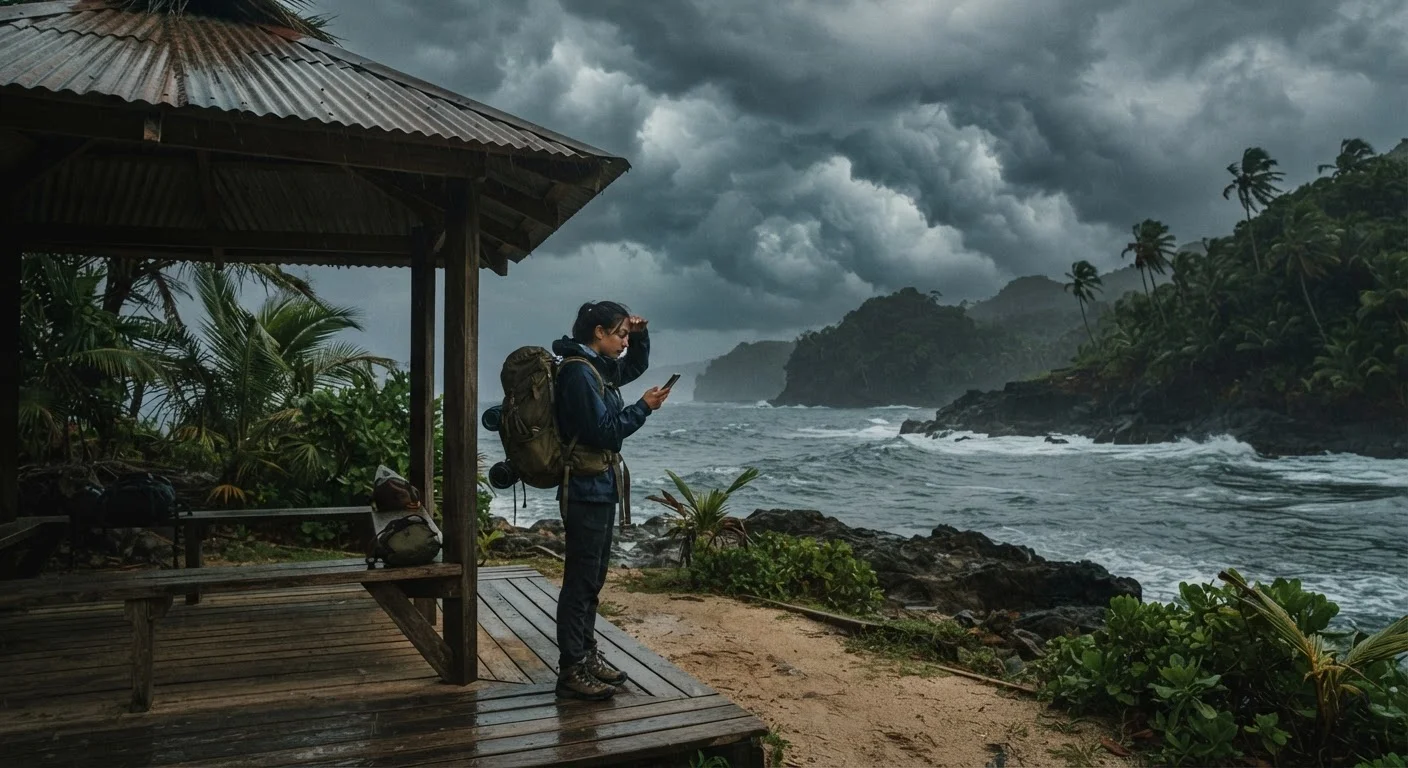
Why Environmental Risk Deserves the Same Attention as Crime or Health
Most travelers invest real effort in researching neighborhood safety or vaccination requirements before a trip. Environmental hazards - earthquakes, tropical cyclones, flash floods, wildfires - often receive far less systematic attention, yet they affect millions of travelers each year and can escalate with little warning.
The practical challenge is that natural disaster risk varies enormously by geography and season, and conditions can change after a trip is booked. A beach destination that's calm in February may sit squarely in a hurricane corridor by August. A hiking region that looks serene can be subject to sudden seismic activity or rapid snowmelt flooding.
Understanding this dynamic - and building it into your planning process rather than treating it as an afterthought - is the foundation of sound travel safety. This is also an area where common traveler assumptions create real risk: assuming a destination is safe because it looks calm on arrival is one of the most frequent planning errors.
What you will need
What to Do Before You Go: Tools and Preparation
Effective preparation for environmental risk uses the same general framework as other travel safety planning, with some destination-specific additions. The steps below walk through the full process - from initial hazard research through active monitoring during your trip.
U.S. State Department Smart Traveler Enrollment Program (STEP)
Registers your trip so the nearest U.S. embassy can contact you during emergencies, including natural disasters.
National Weather Service or destination-country meteorological agency
Provides real-time weather forecasts, severe weather watches, and official storm tracking for your region.
Offline mapping application
Enables navigation to shelters, evacuation routes, or airports without requiring cellular or internet connectivity.
Travel insurance policy with natural disaster and evacuation clauses
May cover trip cancellation, medical evacuation, or additional lodging costs caused by declared natural disasters.
Portable battery pack (power bank)
Keeps devices charged during extended power outages common after earthquakes, hurricanes, and floods.
Physical copy of emergency contacts and documents
Provides access to critical information when devices are lost, dead, or damaged during an emergency.
Research the hazard profile of your destination
Before you finalize any booking, identify what natural hazards are geographically or seasonally relevant to your destination. Coastal regions may face hurricane or typhoon seasons. Destinations along tectonic fault lines carry earthquake risk. River valleys and mountainous terrain can be prone to flash flooding or landslides.
Use your government's official travel advisory portal as a starting point - the U.S. State Department's travel.state.gov publishes condition summaries by country. Supplement this with information from FEMA's international counterparts or the destination country's civil protection agency. Understanding a region's baseline risk helps you make informed decisions about timing, routes, and contingency planning.
Enroll in official alert systems before departure
Register your trip with your government's traveler enrollment program. U.S. citizens can use the State Department's Smart Traveler Enrollment Program (STEP), which allows embassies and consulates to reach you with emergency alerts and assistance during crises. This takes only a few minutes and costs nothing.
Additionally, identify the official meteorological or civil emergency alert system for your destination country and note how alerts are communicated locally - some countries use mobile broadcast systems, others rely on radio or sirens. Understanding the local alert infrastructure before you arrive removes guesswork during a fast-moving event.
Build a destination-specific emergency plan
Map out the nearest hospital, evacuation shelter, and your country's nearest embassy or consulate relative to your accommodations. Write these down physically - do not rely solely on a saved browser tab or an app that requires connectivity.
Identify at least two evacuation routes from your lodging: one primary and one alternative in case the first is blocked. Discuss your plan with travel companions so everyone knows the rally point and communication protocol if the group becomes separated. Our guide on emergency contacts and resources covers what to keep accessible during serious disruptions.
Review your travel insurance for weather and evacuation coverage
Not all travel insurance policies treat natural disasters the same way. Some cover trip cancellation only if a disaster is officially declared by local authorities; others exclude coverage for events the traveler was aware of at the time of purchase. Review your policy's specific language before departure rather than assuming coverage exists.
Key clauses to look for include: trip interruption due to named storms, emergency medical evacuation coverage, and additional accommodation expenses caused by travel disruptions. If your policy terms are unclear, contact your insurer directly for written clarification. This is general guidance - consult your policy documents and, if needed, a licensed insurance professional for advice specific to your situation.
Pack a compact emergency kit suited to your destination
A destination-appropriate emergency kit doesn't require heavy gear - it requires thoughtful selection. A portable power bank, a water purification method (tablets or a compact filter), a small first-aid kit, a whistle, and a flashlight cover most acute situations. In earthquake-prone regions, include a dust mask. In flood-prone areas, know the location of higher ground near your lodging.
Keep critical documents - passport copies, insurance information, and emergency contacts - in both a waterproof physical format and a secure cloud storage location. The travel safety preparation checklist is a useful reference for verifying you've covered the essentials before departure.
Monitor conditions actively during your trip
Preparation doesn't end at departure. During your trip, check local weather and civil alert sources at least once daily, particularly if conditions are unsettled. Many experienced travelers make a habit of briefly reviewing conditions each morning as part of their routine - a practice consistent with habits that keep experienced travelers out of trouble.
If conditions deteriorate, act on official guidance promptly rather than waiting for certainty. Flash floods and storm surges can develop within hours. Maintain awareness of your surroundings: rising river levels, rapidly darkening skies, and unusual animal behavior can all serve as early warning signals in natural environments.
Always Follow Official Evacuation Orders
If local authorities issue an evacuation order, follow it immediately without waiting to assess conditions yourself. Delaying departure - even briefly - can close escape routes or place you in active danger. Do not rely solely on hotel staff or tour operators for this determination; monitor official government and emergency management channels directly.
Download Offline Maps Before You Arrive
Cellular networks and internet infrastructure are among the first services disrupted during major weather events and earthquakes. Downloading offline maps for your destination before you travel ensures you can navigate evacuation routes even without connectivity. Many mapping applications offer this functionality at no cost.
Staying Informed When Conditions Change Mid-Trip
Even a well-prepared itinerary can be affected by unexpected environmental events. The travelers who navigate these situations most effectively tend to share a few consistent habits: they know where to get authoritative information, they've identified their fallback options in advance, and they act on official guidance rather than waiting for visual confirmation that a threat is serious.
Don't Rely on Social Media for Hazard Alerts
During rapidly evolving weather events, social media platforms often circulate unverified, outdated, or outright false information about conditions and closures. Always cross-reference any alert you see on social platforms with official sources such as the U.S. National Weather Service, your destination country's meteorological agency, or the U.S. State Department's Smart Traveler Enrollment Program (STEP) alerts.
If severe weather or seismic activity affects your destination while you're there, your first priority is to locate yourself relative to your emergency plan - shelter, evacuation route, or rally point. Contact your embassy or consulate if you require assistance, and notify your emergency contacts at home when it's safe to do so. For travelers who drive during their trip, conditions like flooding and ice introduce additional specific hazards; the guide on driving in severe weather conditions covers adaptive approaches for each scenario.
Finally, recognize that environmental disruptions often affect health infrastructure and supply chains. In extended disruption scenarios, health risks abroad - from waterborne illness to medication access - become more acute. Build health contingency thinking into your environmental preparedness planning from the start.
This article provides general travel safety information for educational purposes. Conditions, regulations, and emergency procedures vary significantly by destination and may change without notice. Always verify current conditions with official government sources and local authorities before and during travel.
The content on this site is provided for informational purposes only and should not be considered a substitute for professional advice. While we strive to provide accurate and up-to-date information, we make no guarantees regarding its completeness or accuracy. Always consult a qualified professional for advice specific to your circumstances before making any decisions