

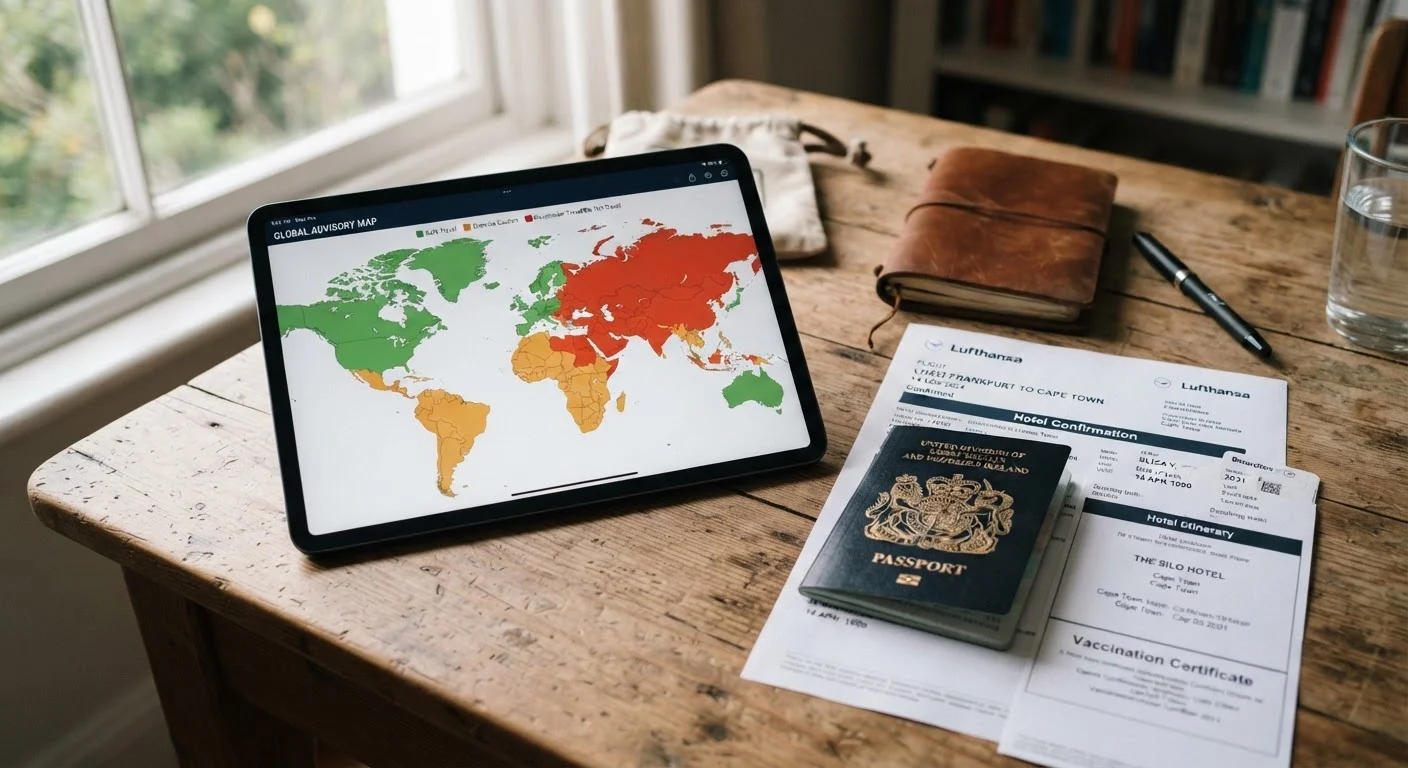
The Four-Level Advisory System, Explained
The U.S. State Department ranks every country on a scale of one to four. Each level has a specific meaning - and a specific implication for how travelers should respond.
- Level 1 - Exercise Normal Precautions: The lowest advisory. Conditions are broadly safe for travel, though no destination is entirely without risk.
- Level 2 - Exercise Increased Caution: Some risk is present - often crime, petty theft, or localized political tension. Travelers should research specific conditions and take reasonable precautions.
- Level 3 - Reconsider Travel: Serious risks exist that may affect traveler safety. The State Department recommends thinking carefully before going and having a clear contingency plan.
- Level 4 - Do Not Travel: The highest level, reserved for destinations with life-threatening dangers such as active armed conflict, terrorism, or severe civil unrest. U.S. government personnel may themselves be restricted in these areas.
It's important to read the advisory text, not just the level number. The text explains what the risk is, where in the country it's concentrated, and who is most likely to be affected - which is far more useful than a headline rating alone.
Advisory Levels Are Not Travel Bans
Even a Level 3 advisory does not legally prohibit Americans from traveling to a destination. It is a recommendation informed by risk assessment, not a restriction. The exception is a small number of countries where the U.S. government has revoked passport validity for travel - a rare measure distinct from the standard advisory system. Always check travel.state.gov for the most current status.
Why the Same Level Can Mean Very Different Things
A Level 2 advisory on a small island nation with isolated petty theft is not the same as a Level 2 advisory on a large country with a specific region experiencing political violence. The number is a starting point, not a verdict.
Most large countries have regional breakdowns embedded within their advisory page. Mexico, for example, carries an overall Level 2 rating nationally, but individual states within the country range from Level 1 to Level 4. A traveler heading to Mexico City faces a very different advisory picture than one visiting certain border regions - yet both fall under the same national-level headline.
This is why reading the full advisory text matters. Look for the "Areas to Avoid" sections and any state- or region-specific subcategories. Then cross-reference with your specific itinerary, not just the country name. For a broader look at how assumptions about destination safety can mislead travelers, see our guide on common thinking errors that create real risk.
4 levels
U.S. State Department advisory tiers
The State Department's four-level system covers every country in the world, with regional subcategories available for larger nations.
~200
Countries with active State Dept. advisories
The State Department maintains advisory pages for nearly every country globally, updated as conditions warrant.
Level 2
Rating held by many popular tourist destinations
A significant number of widely visited countries, including parts of Europe, Latin America, and Asia, carry a Level 2 advisory at any given time.
When Advisories Should Directly Change Your Plans
Not every elevated advisory warrants canceling a trip, but a few situations generally do call for reconsidering or postponing:
- Active armed conflict or widespread civil unrest in your specific destination area - Level 4 ratings exist for a reason, and government consular services may be limited or suspended.
- A sudden escalation - an advisory that jumps from Level 1 to Level 3 after you've booked is a meaningful signal, not background noise.
- Health-specific notices from the CDC that overlap with your travel dates, particularly for destinations with limited medical infrastructure.
In contrast, a stable Level 2 advisory that has been in place for years in a well-traveled destination - citing general crime risk common to many urban environments - is unlikely on its own to justify cancellation. Context matters enormously.
One practical consequence of advisory levels is their effect on insurance. Understanding how advisories interact with policy terms is worth doing before you book. Our overview of what travel insurance actually covers walks through those details.
How to Monitor Advisories Before and During Travel
Checking advisories once during trip planning isn't enough - conditions can change. A practical monitoring routine looks like this:
- Check travel.state.gov when you first research a destination, when you book, and again within a week of departure.
- Enroll in the STEP program (Smart Traveler Enrollment Program) before you leave. This free service sends alerts directly to travelers and lets the nearest U.S. embassy know you're in the country.
- Compare U.S. advisories against those from Canada (travel.gc.ca) or the UK (gov.uk/foreign-travel-advice) for additional perspective - diverging assessments between governments can highlight nuance worth investigating.
- Once abroad, stay connected to local news and monitor communications from your country's embassy.
Health risks are a separate but parallel concern. The CDC's travel health notices address disease outbreaks, vaccine requirements, and local medical conditions that the State Department advisory may not cover in depth. Our article on health risks travelers frequently underestimate covers what's worth knowing before departure.
Travel advisories are one tool in a broader safety toolkit - not a substitute for good preparation. They work best when paired with solid trip planning, appropriate insurance, and an understanding of destination-specific risks. Always verify safety- and entry-related information directly with official government sources before traveling, as conditions can change and no advisory is a guarantee of what you'll encounter on the ground.
Frequently Asked Questions
The U.S. Department of State issues travel advisories for American citizens traveling abroad. These are published on travel.state.gov and updated as conditions change. The Centers for Disease Control and Prevention (CDC) also issues health-specific travel notices that complement State Department advisories.
Not necessarily. Level 2 - 'Exercise Increased Caution' - simply means there are elevated risks that warrant awareness, such as crime or political tension in some areas. Many popular destinations, including parts of Western Europe and Mexico, carry Level 2 ratings. The advisory text explains the specific concerns.
Yes, in some cases significantly. If the State Department raises a destination to Level 3 or 4 after you've booked, many policies with 'Cancel for Any Reason' or specific advisory clauses will pay out. However, if you book after an advisory is already in place, most standard policies treat that risk as 'known' and won't cover it. Always read the policy terms carefully.
There's no fixed schedule - the State Department updates advisories when conditions change meaningfully. During major events like political unrest, natural disasters, or disease outbreaks, updates can come within hours. Routine reviews happen periodically, but travelers should check within a few days of departure.
Yes. Canada, the United Kingdom, and Australia all publish their own travel advisory systems, and comparing them alongside the U.S. State Department's assessment can give you a fuller picture. Differences between national advisories for the same destination are common and worth noting.
Enroll in the State Department's STEP program (Smart Traveler Enrollment Program) before departure - it sends automatic alerts to registered travelers and helps the embassy locate you in an emergency. Monitor local news, follow embassy guidance, and know the location of the nearest U.S. embassy or consulate.
The content on this site is provided for informational purposes only and should not be considered a substitute for professional advice. While we strive to provide accurate and up-to-date information, we make no guarantees regarding its completeness or accuracy. Always consult a qualified professional for advice specific to your circumstances before making any decisions