

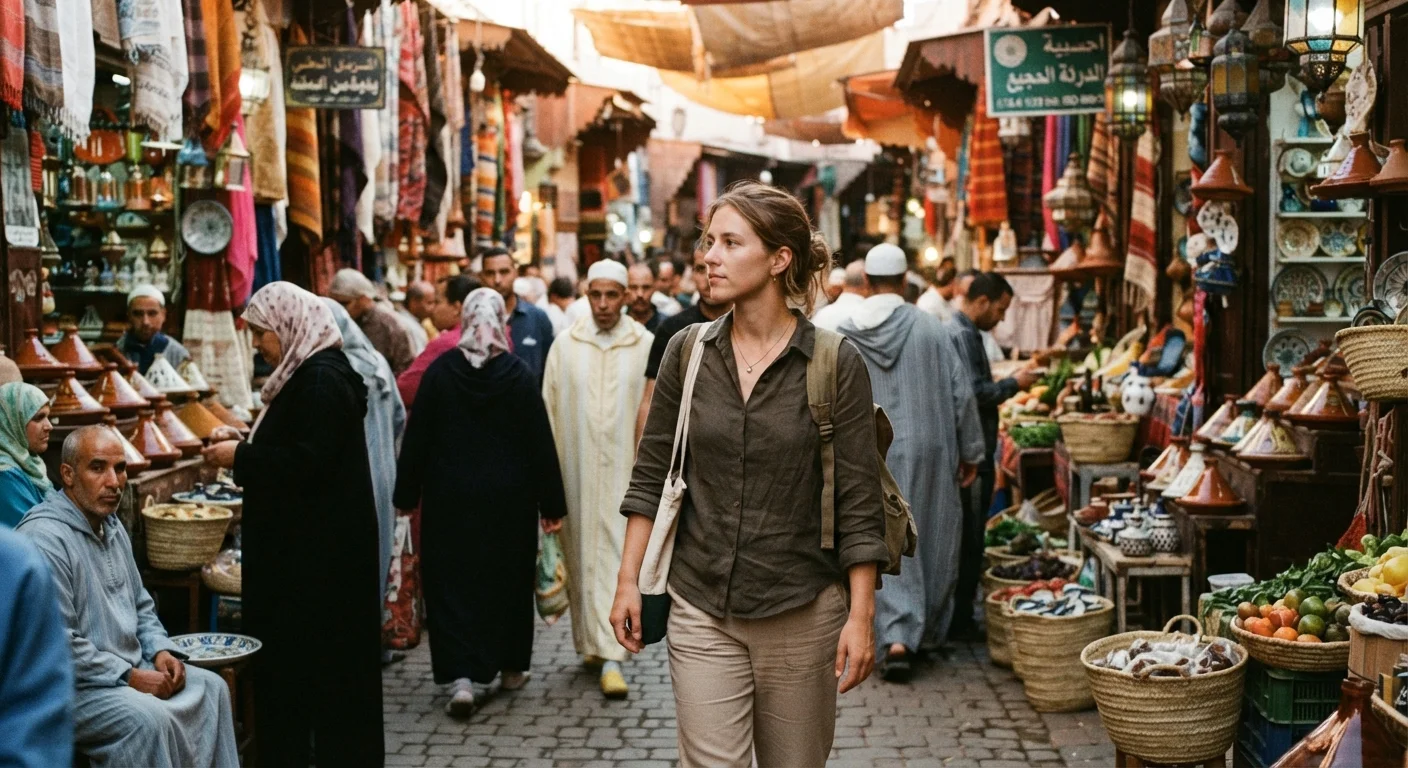
The Problem With Looking Like a Tourist
In most destinations, tourists are perfectly safe. But in high-traffic areas - busy transit stations, crowded markets, popular plazas - the visible markers of tourist status can make someone a predictable target for petty theft, scams, and price manipulation. Opportunistic crime rarely involves careful planning; it relies on reading cues quickly. A traveler with a large camera dangling around their neck, a rolling suitcase covered in airline tags, and a phone held up to navigate is broadcasting a useful set of signals to anyone watching.
Low-profile travel addresses this not by asking travelers to stay indoors or avoid experiences, but by encouraging them to move through spaces in a way that doesn't announce vulnerability. It's one of the consistent habits covered in guides like the habits that keep experienced travelers out of trouble.
Low-Profile Travel Is Not Fearful Travel
Adopting these habits doesn't mean approaching every destination with suspicion or anxiety. Most travel, in most destinations, is uneventful. These are practical calibrations - closer in spirit to locking your car door than to expecting a break-in. The goal is awareness, not alarm.
What Low-Profile Travel Actually Looks Like in Practice
The concept is simpler than it sounds. It breaks down into a few practical categories:
- Clothing: Dressing in neutral tones that match local norms, avoiding logos associated with American brands or wealth, and dressing modestly where cultural context calls for it. This isn't about costumes - it's about not standing out unnecessarily.
- Navigation: Studying maps and routes before leaving the hotel rather than stopping mid-sidewalk to stare at a phone screen. Confusion and hesitation are readable signals in any city.
- Gear management: Keeping expensive cameras, jewelry, and devices out of sight when not actively in use, especially in crowded or unfamiliar environments.
- Body language: Moving with purpose rather than drifting and looking uncertain. This doesn't require confidence you don't feel - it means slowing down your decision-making before you enter a new area rather than during it.
None of these adjustments require sacrificing any planned experiences. They are habits layered onto a trip, not restrictions on it. A well-structured itinerary - see building a travel itinerary that doesn't leave you exhausted - actually supports this approach by reducing the scrambling and uncertainty that make travelers look lost.
Prepare Your Route Before You Leave
Screenshot your maps and study your route before stepping out each day. Knowing roughly where you're going - even in general terms - means you'll walk with purpose rather than stopping to orient yourself in public. This single habit removes one of the most readable tourist signals from your body language.
Cultural Respect and Safety Often Point the Same Direction
One underappreciated dimension of low-profile travel is that many of its habits overlap directly with cultural respect. In conservative religious destinations, modest dress isn't just a safety tactic - it's a basic courtesy. In neighborhoods outside the tourist center, behaving like a respectful guest rather than a spectator changes how residents interact with you. These aren't abstract observations; they shape practical experiences on the ground.
Travelers who invest in understanding local norms before departure also tend to avoid the kind of assumptions that get travelers into trouble - like assuming a neighborhood is safe because it looks fine at the surface, or that local customs don't apply to them.
~80%
Of tourist-targeted crimes are opportunistic
Security researchers and law enforcement broadly estimate the large majority of crimes against tourists involve opportunity rather than premeditation, underscoring the value of not broadcasting vulnerability.
Top 3
Locations for pickpocketing: transit, markets, crowds
European police crime data consistently identifies train stations, outdoor markets, and large public gatherings as the environments where tourist-targeted petty theft concentrates.
When Low-Profile Habits Matter Most
These practices aren't equally important everywhere. In well-monitored, low-crime destinations they add minimal value. Where they matter most:
- Dense, high-traffic urban environments where pickpocketing is common
- Areas with significant income disparity between tourists and locals
- Transportation hubs - airports, train stations, and bus terminals - where travelers carry valuables and are often distracted
- Night travel in unfamiliar areas
- Countries where the U.S. Department of State has issued elevated travel advisories
The calculus also shifts depending on your budget. Travelers managing a tight trip budget - already navigating hidden costs that quietly blow travel budgets - face a different risk profile than those staying in secured resort properties with private transfers. Understanding your own trip structure helps you prioritize where to be cautious.
This article is for general informational purposes only. For destination-specific safety guidance, always consult current travel advisories from official government sources such as the U.S. Department of State before traveling.
Frequently Asked Questions
It means making deliberate choices to avoid broadcasting your tourist status publicly. This includes how you dress, how you navigate, what gear you carry visibly, and how you behave in unfamiliar surroundings. It's a practical safety habit, not a form of social camouflage.
No. Even in generally safe cities, standing out as a tourist can attract pickpockets, scammers, or inflated pricing in informal markets. The habits apply broadly, though the stakes vary by destination.
Not at all. The key is being mindful of when and where you photograph. Pulling out expensive equipment in crowded transit hubs or at night in unfamiliar neighborhoods carries more risk than using it at a landmark during the day.
Neutral colors, modest cuts appropriate to local norms, and avoiding branded American sportswear or flashy logos are common starting points. Researching what locals typically wear before departure is the most reliable guide.
Not at all. Low-profile travel is about how you move through a destination, not where you go. You can visit the same sights while simply being more measured about how you present yourself in transit and in crowds.
The U.S. Department of State's travel advisory pages are a reliable starting point for destination-specific risk. For general habits and mindset, travel safety guides focused on situational awareness are widely available.
The content on this site is provided for informational purposes only and should not be considered a substitute for professional advice. While we strive to provide accurate and up-to-date information, we make no guarantees regarding its completeness or accuracy. Always consult a qualified professional for advice specific to your circumstances before making any decisions