

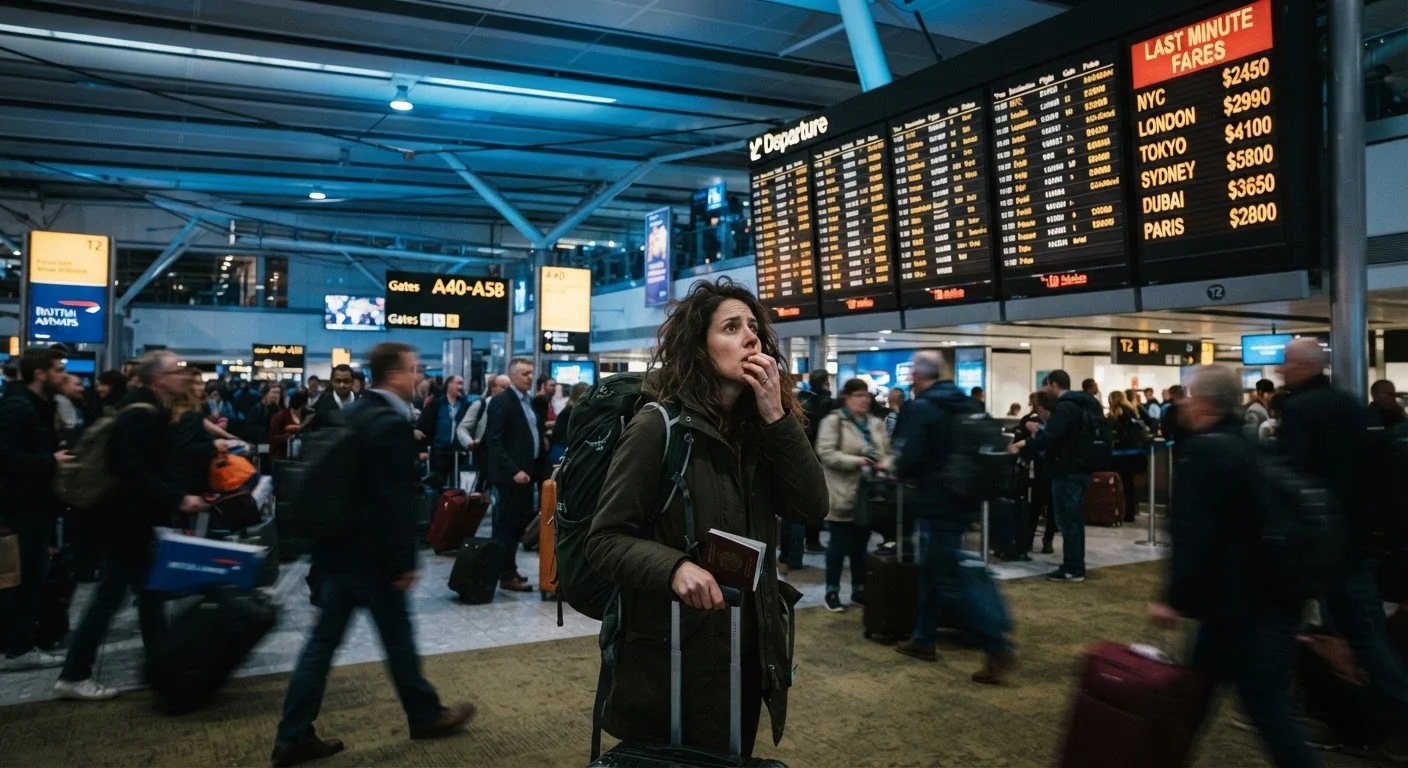
Where the Spontaneous Travel Myth Comes From
The idea that winging it saves money has deep cultural roots. Stories of travelers snagging $99 flights to Europe or last-minute resort deals have circulated for decades, and they aren't entirely fiction. Distressed inventory - unsold seats and empty rooms that providers discount to recover some revenue - does exist. The problem is that these deals are the exception, not the standard outcome of booking late.
Travel pricing today is governed by sophisticated algorithms that monitor demand, seat fill rates, and time-to-departure. As a flight fills up or a hotel's remaining rooms shrink, prices generally rise - not fall. What looks like a spontaneous opportunity is often a case of selective memory: travelers remember the one great deal and forget the three trips where late booking cost them significantly more.
Understanding the actual mechanics of travel pricing is the first step toward smarter decisions. Our guide to pre-trip vs. on-the-road spending breaks down exactly how timing your purchases affects your total financial exposure.
Myth
Booking at the last minute means airlines and hotels will slash prices to fill empty seats and rooms.
Fact
Revenue management systems typically raise prices as departure nears and inventory shrinks - distressed discounts are the exception, not the rule.
Airlines use dynamic pricing algorithms that adjust fares based on remaining seat inventory and time-to-departure. When a flight is nearly full, prices rise. Even when seats remain, carriers are unlikely to discount aggressively unless they are substantially undersold on a route with low future demand. For leisure travelers on popular routes - especially during holidays, school breaks, or summer - last-minute fares are almost universally higher than advance-purchase prices.
Myth
Flexible, spontaneous travelers always pay less because they can grab deals others miss.
Fact
Flexibility helps, but it doesn't guarantee savings - and most travelers have less flexibility than they think when destinations, dates, or travel companions are involved.
True deal-hunting flexibility means being willing to fly to any destination on any date at any hour, often with multiple connections. Most travelers have at least one constraint - school schedules, work leave, a specific event - that narrows options considerably. When flexibility is limited, spontaneous booking usually means choosing among whatever remains at market or above-market prices, not cherry-picking discounts.
Myth
Planning ahead locks you into costs and leaves no room for savings.
Fact
Advance planning gives you access to lower base fares, refundable rate tiers, and more accommodation options - all of which expand your ability to save.
Booking in advance doesn't mean paying more - it means choosing from a wider inventory at a broader price range. Many airlines offer lower fares weeks out, and many hotels provide better rates on non-refundable advance bookings. Crucially, planning ahead lets you compare options without time pressure, reducing the likelihood of panic-buying expensive last-minute alternatives. The Travel Budgeting hub covers strategies for locking in favorable rates without sacrificing flexibility.
Myth
Last-minute travel deals are common and easy to find if you know where to look.
Fact
Genuine last-minute bargains exist but are inconsistent, destination-specific, and require a level of flexibility most travelers cannot reliably offer.
While some platforms and carriers do offer last-minute promotions, their frequency and depth vary significantly by route, season, and market conditions. Travelers who budget around the expectation of last-minute deals frequently find themselves choosing between an expensive booking and missing the trip entirely. Treating unpredictable discounts as a dependable savings strategy introduces significant financial uncertainty into trip planning.
Myth
Spontaneous travel is cheaper because you avoid over-planning and unnecessary extras.
Fact
Without advance planning, travelers often pay premium rates for convenience - rushing into expensive options because better ones are no longer available.
Late bookers frequently face a narrowed set of choices: premium-priced rooms in desirable areas (budget options sold out), higher fare classes on direct flights (cheaper seats gone), and elevated ground transport costs due to distance from their original preferred accommodation. These forced upgrades and inconvenience costs can easily erase any notional savings from spontaneity. Currency exchange myths follow a similar pattern - decisions made under time pressure tend to cost more than those made deliberately.
What the Evidence Actually Shows About Last-Minute Pricing
Airline revenue management is a well-documented field, and the consensus is consistent: for most popular routes and travel periods, fares increase as departure approaches. Studies from travel data firms have repeatedly shown that economy fares for domestic U.S. flights tend to be lower when purchased three to eight weeks in advance compared to within two weeks of departure.
3-8 weeks
Optimal advance booking window for domestic U.S. flights
Travel industry pricing research consistently identifies this window as the period when economy fares are most likely to be at their lowest for popular domestic routes.
~47%
Of leisure travelers report booking trips at least a month in advance
According to travel industry consumer surveys, the majority of leisure travelers who report staying on budget planned their primary bookings well ahead of departure.
Hotels follow a similar pattern for popular destinations and high-demand periods. Business hotels near convention centers may discount rooms days out - since their target traveler books on a corporate card regardless - but leisure destinations and peak-season properties typically hold or raise rates as rooms disappear.
The travelers most likely to overspend on impulse bookings often don't realize it because they have no baseline for comparison. If you've never tracked what a planned trip to the same destination costs, you may not notice the premium you're paying. See our breakdown of why travelers overspend for the behavioral patterns that reinforce this blind spot.
Surge Pricing Hits Spontaneous Travelers Hardest
During peak periods - major holidays, summer vacation season, and large local events - last-minute travelers face the steepest price spikes. Hotels, ride-share services, and even some attractions apply surge or peak pricing that can dramatically inflate daily trip costs. If your travel dates are fixed around a popular period, early booking is almost always the lower-cost strategy.
When Spontaneous Travel Can Legitimately Save Money
Spontaneous travel is not always a financial mistake - but the conditions under which it works are specific. Last-minute deals are most likely to appear when: you have extreme flexibility in both destination and dates, you're traveling in low or shoulder season, you're flying from a major hub with many competing carriers, and you're willing to accept significant constraints on routing, layovers, and departure times.
Budget carriers occasionally clear out unsold inventory through flash sales, and some hotel booking platforms do surface discounted rates on short notice. But accessing those deals reliably requires flexibility most travelers don't have - and even then, savings on accommodation may be offset by higher ground transport costs, fewer dining options at the destination, or the need to purchase travel insurance at a premium rate after booking. Our look at travel insurance trade-offs explains why late bookers often pay more for coverage or skip it entirely - adding financial risk.
For a complete picture of where your travel money actually goes - planned or spontaneous - the Travel Budgeting From Scratch guide offers a category-by-category cost breakdown grounded in real trip expenses.
The content on this site is provided for informational purposes only and should not be considered a substitute for professional advice. While we strive to provide accurate and up-to-date information, we make no guarantees regarding its completeness or accuracy. Always consult a qualified professional for advice specific to your circumstances before making any decisions