

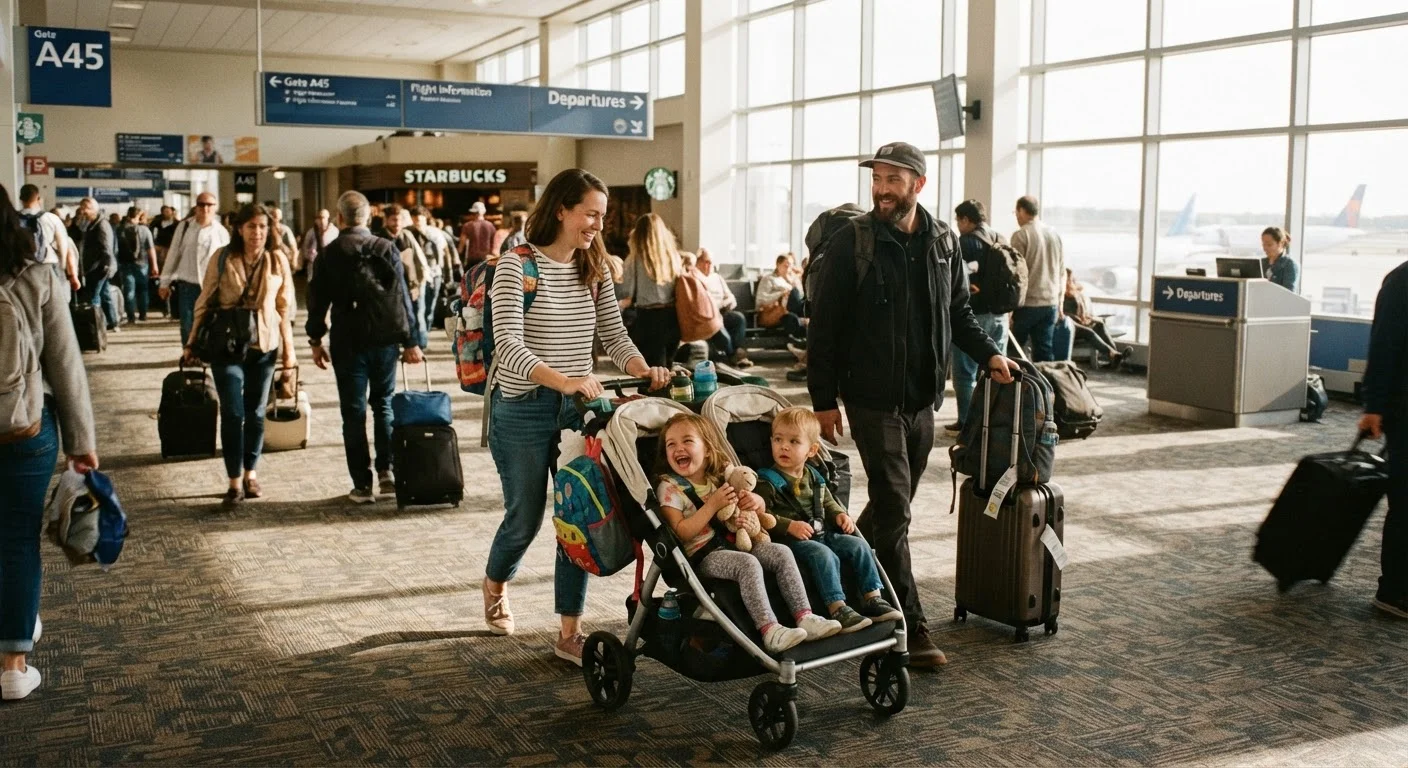
Why Family Travel Is a Different Planning Problem
Traveling with children doesn't just add names to the booking - it fundamentally changes every decision you make, from how you choose a destination to how you structure each hour of the day. Experienced family travelers will tell you that the instincts you developed as a solo or couple traveler often work against you when kids are involved.
If you're starting from scratch, our ground-up trip planning guide covers the foundational framework. This article builds on that - focusing specifically on what shifts when children are in the picture.
The core challenge is this: kids operate on tighter physical and emotional windows. They get hungry faster, tire more quickly, and have a much lower threshold for overstimulation. A day that feels perfectly reasonable to an adult - three museums, a long dinner, a night walk - can push a child past their limit before noon. Planning around those realities isn't pessimism; it's the skill that separates smooth family trips from miserable ones.
The Practices That Make Family Travel Work
These aren't abstract tips - they're the structural adjustments that experienced family travelers consistently apply across every type of trip.
Cut your planned daily activities by at least one-third compared to adult-only trips.
Children move more slowly, need more breaks, and reach exhaustion earlier than adults expect. Overscheduling is the single most common cause of family travel meltdowns. A lighter day with genuine downtime almost always produces better memories than a packed one.
Prioritize accommodation that gives your family functional space, not just sleeping room.
A cramped hotel room that works fine for two adults becomes stressful when a toddler needs a nap while other family members want to wind down. Space to spread out, access to a kitchen or kitchenette, and proximity to your main destinations reduce friction dramatically.
Build at least one unscheduled 'flex' hour into every day's plan.
With children, something unexpected will happen - a longer-than-expected meal, a child who refuses to leave a playground, a sudden nap. Flex time absorbs these moments without collapsing the rest of the day.
Research child-specific logistics at your destination before you arrive.
Not every destination has readily available stroller access, child menus, or family restrooms. Knowing what to expect - and where the gaps are - lets you prepare rather than scramble.
Involve older children in destination and activity planning.
Children who have a stake in the trip's plan are more engaged and more patient when things don't go perfectly. Even simple choices - which beach to visit, what to order for dinner - create investment and reduce friction.
Pack a dedicated 'kid emergency kit' in your carry-on or day bag.
Hunger, minor illness, and boredom are the most predictable sources of travel disruption with children. Being equipped for them on the spot prevents small problems from becoming trip-derailing ones.
Budgeting and Safety: Two Areas That Scale With Kids
Your travel budget looks very different with children. Meals out cost more, you may need larger accommodations, and activity fees multiply quickly. Factor in kid-specific costs early: entrance fees for attractions (some waive fees for young children - always verify), checked bag fees for strollers or gear, and the near-certainty of unplanned expenses like a pharmacy run or a replacement rain jacket.
2-3x
Typical cost multiplier for family vs. adult-only meals out
Food costs scale quickly with children, particularly when multiple sittings, kids' menus, and unplanned snacks are factored in across a full trip.
40%
Of family travelers report overpacking their itineraries
Travel industry surveys consistently find that overambitious scheduling is among the top sources of stress cited by parents after family trips.
Safety planning also takes on new dimensions. Keep copies of each child's passport, insurance card, and any medical documentation in a separate bag from the originals. Know the location of the nearest pediatric clinic or hospital at your destination before you need it. For more on travel safety fundamentals, our safety hub covers core awareness habits that apply at every age - many of which become even more relevant when you're responsible for young travelers.
Building baseline safety habits before you travel - not just for yourself, but adapted for your family - is one of the highest-value investments you can make as a parent traveler.
Start Small, Then Scale Up
One of the most consistent mistakes first-time family travelers make is choosing the same ambitious destinations they'd have picked without kids. A two-week international adventure might be something to work up to. A long weekend road trip or a domestic destination with flexible logistics gives you a lower-stakes environment to learn how your family travels.
Building a realistic daily itinerary is especially critical with children - one that builds in rest, accounts for slower movement, and doesn't rely on everything going to plan. Leave the tightly packed schedule for trips you take without kids.
Family travel has a learning curve, but it flattens quickly. The families who travel well with children aren't doing it effortlessly - they've simply internalized a different planning logic and stopped holding their trips to adult-only standards.
The content on this site is provided for informational purposes only and should not be considered a substitute for professional advice. While we strive to provide accurate and up-to-date information, we make no guarantees regarding its completeness or accuracy. Always consult a qualified professional for advice specific to your circumstances before making any decisions