

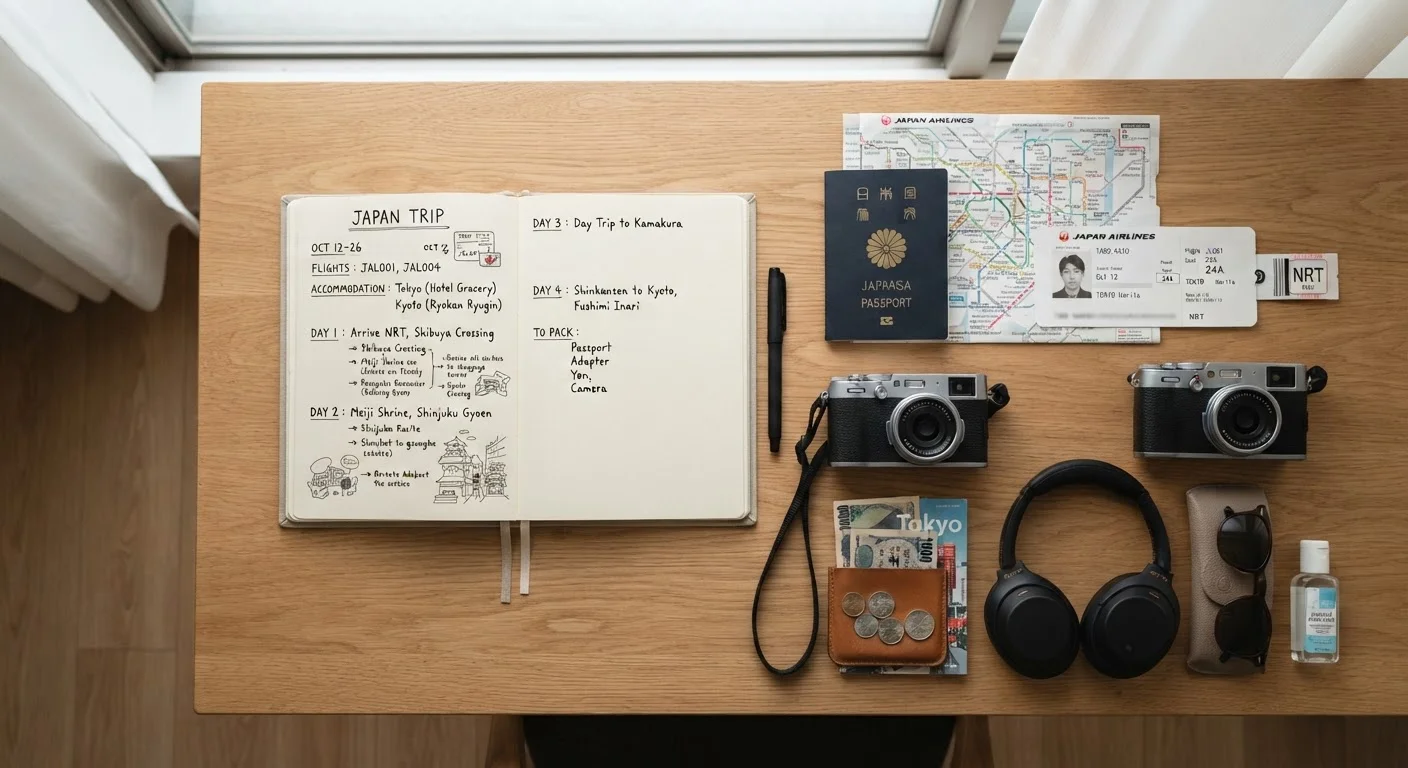
Start With the Right Destination
Every well-planned trip begins with a deliberate destination choice - not one driven purely by trends or a sale. The right destination is the intersection of your interests, your available time, your passport situation, and your realistic budget ceiling.
Ask three grounding questions before committing: What do I actually want from this trip? (rest, adventure, culture, family connection) How many days do I realistically have? (a five-day trip to a destination with a 14-hour flight is rarely worth it) What's my all-in budget ceiling? Setting this before you fall in love with a destination prevents expensive course-corrections later.
Research entry requirements - passport validity rules, visa requirements, and travel advisories - through official government sources such as the U.S. Department of State's travel portal. These details change; verify them close to your booking date and again before departure. If you're newer to travel planning, our beginner's guide to planning travel walks through destination selection in detail.
When choosing between two destinations you're equally drawn to, default to the one where your passport, budget, and available days align most cleanly - logistical friction compounds quickly and can overshadow the experience itself.
Destination-planning mismatches - where travel time, cost, or entry complexity exceeds what the trip allows - are among the most common sources of traveler regret and over-budget outcomes.
Set your accommodation budget as a nightly rate ceiling before you start searching, not after - it's far easier to filter options than to talk yourself down from something that's technically out of range.
Anchoring to a specific number before browsing prevents the gradual upward drift that happens when travelers compare options without a fixed reference point.
Build a Realistic Travel Budget
Budgeting is where most trip plans quietly fall apart. Travelers routinely underestimate costs by focusing only on flights and lodging, ignoring the categories that accumulate fastest: ground transportation, meals, entrance fees, travel insurance, and incidentals.
Structure your budget across six categories: flights, accommodation, in-destination transport, food and drink, activities and entrance fees, and a contingency buffer of roughly 10-15% of your total estimated spend. This buffer isn't optional - delays, medical needs, or a missed train can drain funds quickly without it.
For a granular breakdown of where travel money actually goes - including the hidden extras most people overlook - see our guide on travel budgeting from scratch. For broader strategies on managing travel money, the Travel Budgeting hub covers everything from currency exchange to saving frameworks.
~10-15%
Recommended contingency budget buffer
Travel planning experts broadly recommend reserving 10-15% of total trip cost for unexpected expenses such as delays, medical needs, or itinerary changes.
3-6 months
Ideal international flight booking window
General travel industry guidance suggests booking international flights three to six months in advance to access a reasonable range of fare options, though no window guarantees the lowest price.
Book Flights and Accommodation Strategically
Booking windows matter. For domestic U.S. flights, booking one to three months out generally yields reasonable fares. For international travel, three to six months is a more reliable window - though no booking timing guarantees the lowest price, since airfare is dynamic and influenced by route, demand, and season.
When evaluating accommodation, price per night is only one variable. Factor in location relative to what you plan to do (a cheaper room that adds two hours of daily transit isn't a deal), cancellation policy, and what's included. A refundable booking costs slightly more but protects you if plans shift - a worthwhile tradeoff on longer or more complex trips.
Book directly with airlines when possible to simplify any changes or cancellations. For accommodation, read cancellation and refund terms carefully before completing a reservation.
Plan Your Itinerary Without Overloading It
An itinerary's job is to give your trip structure - not account for every hour. Over-scheduled days are among the most common sources of travel frustration, turning what should be a vacation into a logistics sprint.
A practical framework: plan one or two anchor activities per day, leave at least one hour of unstructured time, and build in a half-day buffer somewhere mid-trip for rest, spontaneous discoveries, or schedule recovery from a delay. For longer trips, consider a full rest day every four to five days.
Our detailed guide on building a travel itinerary that doesn't leave you exhausted provides a day-by-day structuring approach that balances activity with recovery.
Handle Documents, Health, and Safety Before You Go
This is the area where procrastination has the highest cost. Passport renewal can take 10-13 weeks through routine processing. Visa applications for some countries require supporting documents, bank statements, and processing time measured in weeks. Start this phase at least three to four months before international travel.
Checklist essentials: confirm your passport is valid for at least six months beyond your return date (many countries require this), research visa requirements through the destination country's official embassy or consulate, check CDC and State Department health recommendations, and carry both digital and physical copies of all critical documents.
Travel insurance is worth understanding before you dismiss it - particularly for trip cancellation, medical evacuation, and emergency medical coverage abroad. Standard U.S. health insurance rarely covers care outside the country. Consult the Travel Safety hub for guidance on staying safe and prepared across different destination types.
Run through the full pre-departure sequence using our complete pre-trip checklist.
Don't Rely on U.S. Health Insurance Abroad
Most standard U.S. health insurance plans provide little to no coverage for medical care received outside the country. Medical evacuation from a remote destination can cost tens of thousands of dollars out of pocket. Review your existing coverage before travel and understand what travel insurance options exist - particularly for emergency medical and evacuation coverage.
Pack Smart, Not Heavy
Overpacking is almost universal among first-time and infrequent travelers. The standard correction: lay out everything you plan to bring, then remove roughly one-third of it. Most travelers use a fraction of what they pack and carry the rest as dead weight.
Key principles: choose versatile clothing that layers and mixes rather than single-use outfits; pack medications and valuables in carry-on luggage, never checked bags; use a packing list built around activities and climate rather than anxiety. Airline baggage policies vary - check both weight limits and carry-on dimensions for every carrier on your itinerary before you pack.
What to Sort Out Once You Arrive
The first two hours at a destination set the tone for everything that follows. Arriving with a clear plan for those hours - rather than improvising while jet-lagged and disoriented - makes a measurable difference.
Before landing, know: how you're getting from the airport to your accommodation (confirmed booking or clear transit route), whether you need local currency and where to get it safely (airport ATMs linked to major networks are typically reliable; avoid currency exchange desks with unclear fee structures), and how your phone will work (international plans, local SIM, or Wi-Fi calling options).
Keep an offline-accessible note - on your phone or printed - containing your accommodation address in the local language, emergency contact numbers for your destination country, your travel insurance policy number and emergency line, and your nearest embassy or consulate contact. This single habit resolves most first-day complications before they escalate.
This article provides general travel planning information for educational purposes. Entry requirements, health recommendations, and travel conditions can change - always verify current details through official government and destination sources before traveling.
The content on this site is provided for informational purposes only and should not be considered a substitute for professional advice. While we strive to provide accurate and up-to-date information, we make no guarantees regarding its completeness or accuracy. Always consult a qualified professional for advice specific to your circumstances before making any decisions