

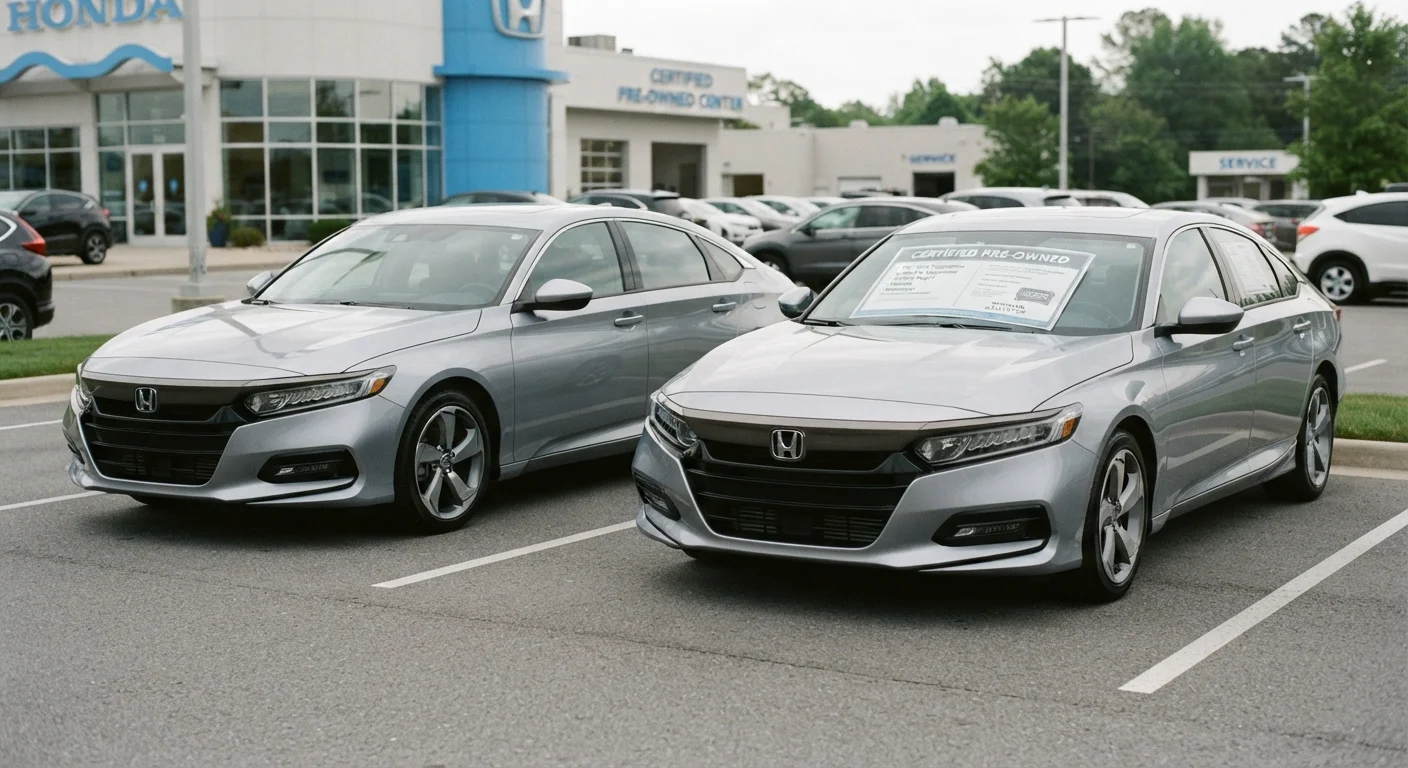
Option A
Certified Pre-Owned (CPO)
The manufacturer-backed used vehicle with structured assurances.
Best for: Buyers who want documented peace of mind, remaining warranty coverage, and a defined inspection standard - and can absorb a higher price.
Option B
Standard Used Vehicle
The straightforward, lower-cost alternative with more flexibility.
Best for: Buyers who are willing to conduct their own due diligence and prioritize price over formal certification.
What 'Certified' Actually Means
The word certified carries genuine weight - but only when you know what sits behind it. Certified Pre-Owned (CPO) programs are administered by individual automakers through their authorized dealerships. Each manufacturer sets its own inspection checklist, warranty terms, mileage caps, and vehicle age limits. There is no federal or industry-wide standard that defines what a CPO vehicle must include.
In practice, most manufacturer CPO programs require a multi-point inspection (commonly 100 to 200 points), a clean vehicle history report, and reconditioning to meet the brand's standards. The resulting warranty typically extends the original factory coverage - often adding a powertrain warranty of several years and, in some programs, a limited bumper-to-bumper component.
A standard used vehicle, by contrast, arrives with no manufacturer-backed inspection or warranty unless a dealer chooses to offer one independently. That doesn't make it a risky choice by definition - it simply means the buyer carries more responsibility for uncovering the vehicle's history and condition before purchase. See our guide to arranging a pre-purchase inspection for a practical approach to that process.
| Criterion | Certified Pre-Owned | Standard Used |
|---|---|---|
| Inspection standard | Manufacturer-defined multi-point inspection | None required; varies by seller |
| Warranty | Extended manufacturer warranty included | As-is unless dealer adds one |
| Price | Typically $1,000-$3,500 higher | Lower upfront cost |
| Vehicle age/mileage eligibility | Restricted (usually under 6 yrs / 80k mi) | No restrictions |
| Financing options | Often includes special manufacturer rates | Standard lending terms apply |
| Roadside assistance | Typically included | Not standard |
| Where available | Authorized franchise dealers only | Dealers, private parties, auctions |
| Buyer due diligence required | Moderate - verify program terms | High - inspection and history critical |
The Real Cost of the Premium
CPO vehicles consistently sell at a premium above otherwise comparable standard used vehicles. The gap is not trivial - industry data generally puts it in the range of $1,000 to $3,500, though it can be wider on luxury models or vehicles with lower mileage. Whether that premium is money well spent depends on what you're actually getting in return.
On the benefit side, CPO programs can include roadside assistance, loaner vehicle provisions during covered repairs, and access to special manufacturer financing rates. These are real financial considerations, particularly if you're financing the purchase. On the cost side, the premium is paid upfront regardless of whether you ever make a warranty claim.
$1,000-$3,500
Typical CPO price premium over standard used
Industry analyses of used-vehicle transaction data consistently show this range, though luxury segments often exceed it.
100-200
Inspection points in most manufacturer CPO programs
The specific checklist varies by automaker; buyers can usually request a copy of the inspection report from the selling dealer.
~$150
Average cost of independent pre-purchase inspection
An independent mechanic inspection is a widely recommended step for any used vehicle purchase, CPO or standard.
For a buyer purchasing a well-maintained three-year-old vehicle with low mileage, the CPO coverage may overlap significantly with remaining factory warranty - meaning you're paying for protection you already partly have. Always ask the dealer precisely what the CPO warranty adds beyond any factory coverage still in effect.
Standard used vehicles can close part of this gap. A vehicle history report and a thorough independent inspection together typically cost well under $200 - a fraction of a typical CPO premium. For buyers comfortable evaluating those results, this path can be financially sound.
Program Quality Varies Widely - Here's How to Evaluate One
Not all CPO programs are created equal, and buyers should resist treating the word certified as a blanket assurance. Before deciding the premium is justified, it's worth comparing three specifics across any CPO program you're considering:
- Inspection depth: How many points are checked, and is the checklist publicly available? Programs that publish their criteria tend to be more accountable.
- What the warranty covers and excludes: Powertrain coverage is common, but exclusions for wear items (brakes, tires, belts) vary significantly. Read the actual terms, not just the marketing language.
- Deductible and claims process: Some programs charge a deductible per repair visit; others cover repairs at the dealership only, which may affect convenience.
It's also worth noting that dealer-certified programs - offered by independent dealers rather than automakers - use the same language but carry no manufacturer backing. These are closer to a dealer's word than a formal warranty. The dealer add-ons explainer can help you parse the difference between these products at signing.
Ultimately, whether you're evaluating a CPO vehicle or a standard used one, the principles are the same: verify the vehicle's history, understand what's covered and what isn't, and don't rely on labels alone. Our pre-purchase checklist walks through the full set of questions worth asking before any used-vehicle purchase.
The content on this site is provided for informational purposes only and should not be considered a substitute for professional advice. While we strive to provide accurate and up-to-date information, we make no guarantees regarding its completeness or accuracy. Always consult a qualified professional for advice specific to your circumstances before making any decisions