

Why the Sticker Price Is Just the Opening Act
Walk into any dealership and you'll see prices displayed prominently on window stickers and lot signs. Those numbers grab attention - but they don't tell you what you'll actually write a check for. Before you get to the finance office, a series of mandatory and dealer-set charges pile on top of whatever price you negotiate. Understanding that gap is the foundation of a confident car purchase.
Before visiting a showroom, it helps to know exactly what the window sticker is communicating. See our guide to reading a car's window sticker for a line-by-line breakdown of every figure on the Monroney label.
~8-12%
Typical fees added above negotiated price
Industry estimates commonly cite taxes and fees adding 8-12% beyond the agreed vehicle price, though the exact amount varies significantly by state and dealer.
$300-$700
Average dealer documentation fee range
Dealer doc fees vary widely by state; some states cap the fee by law while others allow dealers to set their own amount, according to general industry data.
50 states
Different sales tax and fee structures
Every U.S. state sets its own vehicle sales tax rate and registration fee schedule, meaning OTD costs on the same vehicle can differ by thousands of dollars depending on where you buy.
What Goes Into the Out-the-Door Price
The OTD price is made up of four categories of charges:
- Negotiated vehicle price: The agreed sale price of the car, which may differ from the MSRP (Manufacturer's Suggested Retail Price) depending on market demand and negotiation.
- Sales tax: Applied by your state and sometimes your county or city as a percentage of the sale price. Rates vary widely - from no tax in some states to over 10% in others.
- Title and registration fees: State-mandated fees to legally transfer ownership and register the vehicle in your name. These are fixed government charges and not negotiable.
- Dealer documentation fee: Charged by the dealer to process paperwork. Every state handles this differently - some cap it by law, others leave it entirely to the dealer's discretion.
Dealers may also attempt to include add-ons such as paint protection, extended warranties, or nitrogen-filled tires in the quoted price. These are optional products and should be itemized separately before you agree to any total.
Always Request an Itemized OTD Quote in Writing
Before you agree to any deal, ask the dealer to provide a signed, itemized buyer's order that lists every charge contributing to the out-the-door price. This protects you from last-minute fee additions and gives you a document to compare against competing offers. A reputable dealer will have no hesitation providing this.
How to Use the OTD Price When Shopping
The OTD price becomes your most powerful comparison tool when you're evaluating multiple offers. Request the OTD price in writing from each dealer - a signed buyer's order or a formal quote sheet - before discussing financing or monthly payments. This creates a clear baseline that strips away any confusion caused by varying loan terms.
When comparing offers, make sure each quote uses the same vehicle configuration. A lower OTD price on a different trim level or with fewer features is not a like-for-like comparison. Focus on identical or near-identical vehicles to isolate the true cost difference between dealers.
This principle of looking past surface-level numbers applies across major purchases. For context, a similar dynamic plays out in real estate, where closing costs can add thousands beyond a home's purchase price - a familiar concept for anyone who has been through a home transaction.
A shopper sees a used sedan advertised at $22,000. After negotiation, the price drops to $21,000 - but the final OTD price comes to $23,400 after adding 7% sales tax, a $300 title and registration fee, and a $500 doc fee.
Two dealerships quote the same new truck. Dealer A advertises $38,000 with a $199 doc fee; Dealer B advertises $36,500 but charges a $999 doc fee. Sales tax and registration are identical in the same state.
A buyer focuses their negotiation on getting a monthly payment of $450 rather than asking for the OTD price. The dealership achieves this by extending the loan term to 72 months.
Protecting Yourself at the Finance Office
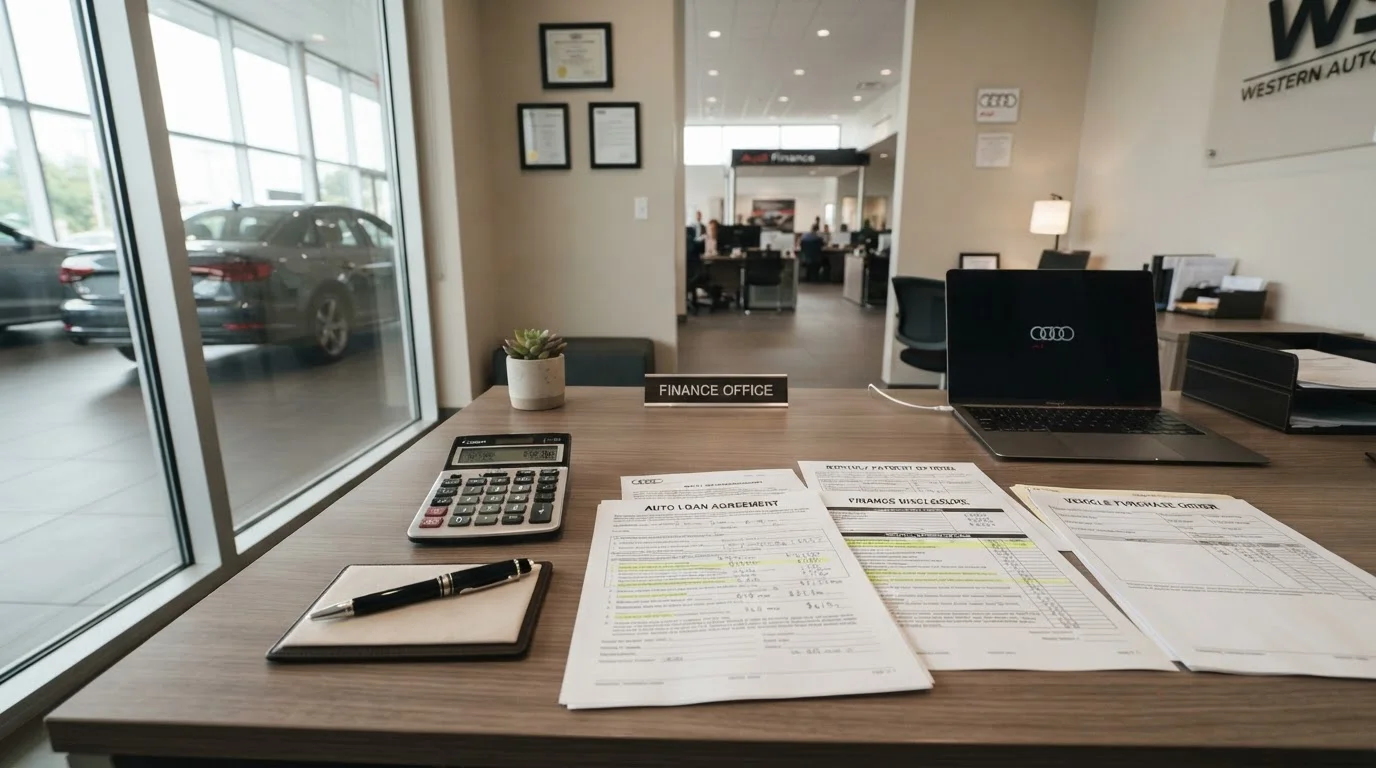
The finance and insurance (F&I) office is where the final paperwork is signed - and where the OTD price you negotiated can quietly shift if you're not paying close attention. Review every line of the buyer's order before signing. Confirm that the vehicle price, tax amount, registration fee, and doc fee each match what you were quoted.
If new charges appear that weren't in the original OTD quote, ask for an explanation and written justification before accepting them. You are entitled to understand every line item. A dealer who is unwilling to explain charges clearly is a dealer worth questioning.
Finally, keep your financing and purchase price conversations separate. The total you're paying for the car is one negotiation; the interest rate and loan term are another. Conflating the two can make it harder to evaluate whether either component is favorable.
This article is for general informational and educational purposes only. Specific fees, tax rates, and regulations vary by state and locality. Verify applicable charges with your state's DMV and consult a qualified financial professional before making vehicle purchasing decisions.
Frequently Asked Questions
The OTD price typically includes the negotiated vehicle price, state and local sales tax, title fee, registration fee, and the dealer's documentation (doc) fee. Some dealers also include a destination charge if it wasn't already in the advertised price. Ask for a written itemized breakdown so every line is visible.
Yes, in part. Government fees - sales tax, title, and registration - are set by your state and county and are non-negotiable. The vehicle price itself and the dealer's doc fee have varying degrees of flexibility depending on the dealer and market conditions. Negotiating the vehicle price down directly reduces your OTD total.
Monthly payments can be stretched over a longer loan term to appear smaller, masking a higher total cost. Focusing on the OTD price keeps the conversation grounded in what you're actually paying for the car, independent of financing structure.
No. The invoice price is what the dealer paid the manufacturer for the vehicle - it's a wholesale cost figure, not what you pay. The OTD price is your all-in retail purchase total, which is always higher than the invoice price once taxes and fees are added.
Start with the agreed vehicle price, then add your state and local sales tax rate applied to that price, plus a flat title fee, a flat registration fee (both set by your state's DMV), and the dealer's doc fee. Your state's DMV website is the most reliable source for the government fee amounts.
The OTD price itself stays the same regardless of how you pay. However, financing adds interest costs on top of the OTD amount, so the total you pay over the life of a loan will exceed the OTD price. Keep the two figures separate when evaluating a deal.
The content on this site is provided for informational purposes only and should not be considered a substitute for professional advice. While we strive to provide accurate and up-to-date information, we make no guarantees regarding its completeness or accuracy. Always consult a qualified professional for advice specific to your circumstances before making any decisions