

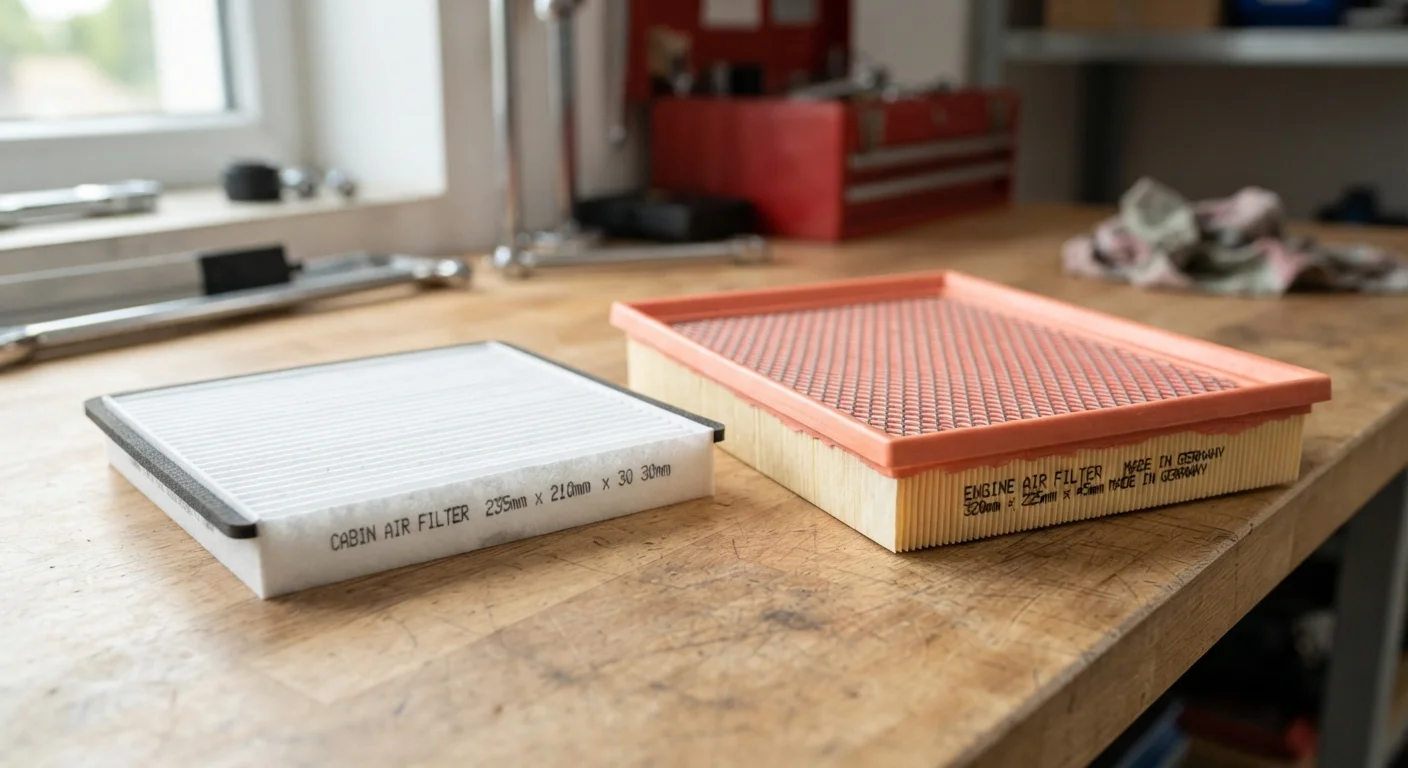
Option A
Cabin Air Filter
The filter that protects you and your passengers.
Best for: Drivers who prioritize air quality inside the vehicle, especially those with allergies or sensitivities to dust and pollen.
Option B
Engine Air Filter
The filter that protects your engine's performance.
Best for: Every driver - a clean engine air filter is essential to maintaining fuel efficiency and preventing premature engine wear.
What Each Filter Actually Does
Despite sharing the word "air" in their names, the cabin air filter and the engine air filter perform entirely separate jobs. Confusing them is understandable - but understanding the distinction helps you stay on top of both.
The cabin air filter sits within the HVAC (heating, ventilation, and air conditioning) system of your vehicle. Its job is to clean the air that flows through your vents before it reaches you and your passengers. It captures dust, pollen, mold spores, and other airborne particles, making the interior environment cleaner and more comfortable. Just as routine HVAC maintenance in a home improves indoor air quality, a fresh cabin filter makes a real difference in the air you breathe on the road.
The engine air filter, on the other hand, is part of your engine's intake system. It prevents dust, dirt, and debris from entering the engine's combustion chambers. Engines need a precise mixture of clean air and fuel to run efficiently - a dirty filter chokes that supply, stressing the engine and reducing performance.
| Criterion | Cabin Air Filter | Engine Air Filter |
|---|---|---|
| Primary purpose | Cleans air for passengers | Cleans air for the engine |
| Location | Behind glove box or dashboard | Engine bay airbox |
| What it filters | Pollen, dust, mold spores | Dirt, debris, dust particles |
| Impact when clogged | Poor interior air quality, weak HVAC flow | Reduced fuel economy, engine strain |
| Typical replacement interval | Every 15,000-25,000 miles | Every 15,000-30,000 miles |
| DIY-friendly? | Yes, in most vehicles | Yes, in most vehicles |
Where They Live and How to Spot Them
Knowing where each filter is located helps you find them during inspections - and helps you communicate clearly with a mechanic.
The cabin air filter is most commonly found behind the glove compartment, under the dashboard, or beneath a panel at the base of the windshield. Location varies by vehicle make and model, so consulting your owner's manual is the most reliable approach.
The engine air filter is typically housed in a black plastic box - called the air filter housing or airbox - connected to the intake duct. You'll usually find it near the top or side of the engine bay. It's generally one of the more accessible components under the hood.
15,000-25,000 mi
Typical cabin filter replacement range
General industry guidance; always verify with your vehicle's owner's manual for the manufacturer's specific recommendation.
15,000-30,000 mi
Typical engine filter replacement range
Intervals shorten considerably in dusty, off-road, or high-pollution driving conditions.
Both filters are designed for visual inspection. A filter that started white or pale beige and is now dark gray or brown is a strong indicator it's due for replacement. That said, appearance alone isn't always definitive - some filters trap particles internally that don't show on the surface.
Replacement Intervals and Warning Signs
There's no universal answer to "how often should I replace these?" - it depends on your vehicle, your environment, and how much you drive. The owner's manual is your most reliable source for manufacturer-recommended intervals.
As a general reference point, cabin air filters are often suggested for replacement every 15,000 to 25,000 miles, while engine air filters may be recommended every 15,000 to 30,000 miles under normal driving conditions. Dusty or high-pollution environments can shorten those intervals significantly.
Signs your cabin air filter needs attention:
- Weak or reduced airflow from the vents even at high fan settings
- Persistent musty or stale odors when the HVAC is running
- Increased dust accumulation on interior surfaces
- Allergy symptoms that seem worse inside the vehicle
Signs your engine air filter needs attention:
- Noticeable drop in fuel efficiency
- Sluggish acceleration or reduced engine responsiveness
- Unusual engine sounds or rough idling
- A visibly dark, dirty filter during inspection
Neither filter failure is an emergency in the way a brake issue would be, but both affect quality of life and long-term vehicle health. Addressing them promptly is straightforward and typically inexpensive.
DIY Replacement: What to Know
Both filters are among the more approachable maintenance tasks for everyday drivers. In many vehicles, replacing a cabin or engine air filter requires no special tools - just the correct replacement filter and your owner's manual.
For the cabin air filter, the process usually involves opening the glove compartment, removing a retaining clip or panel, sliding out the old filter, and sliding in the new one. For the engine air filter, you typically unclip or unscrew the airbox cover, remove the old filter, and drop in the new one.
If you're uncertain about your vehicle's specific process, manufacturer service documentation or a qualified mechanic can walk you through it safely. There's no harm in having a shop handle the replacement - it's a quick job when bundled with an oil change or other scheduled maintenance.
The key takeaway: these are two distinct filters doing two distinct jobs. Keeping track of both - and understanding what to look and feel for - puts you in control of a simple but meaningful aspect of your vehicle's upkeep.
The content on this site is provided for informational purposes only and should not be considered a substitute for professional advice. While we strive to provide accurate and up-to-date information, we make no guarantees regarding its completeness or accuracy. Always consult a qualified professional for advice specific to your circumstances before making any decisions