

Why Annual HVAC Attention Pays Off
Your HVAC system quietly works year-round, but it accumulates dust, debris, and wear that compound over time. Neglecting even a few basic maintenance tasks can drag down efficiency, raise energy bills, and eventually cause a breakdown at the worst possible moment - during a heat wave or cold snap.
Understanding which components need attention, and how often, helps you stay ahead of problems without spending money unnecessarily. Think of HVAC maintenance as falling into two categories: tasks a confident homeowner can handle, and tasks that belong to a licensed technician. This guide walks through both clearly. For a broader view of seasonal upkeep, see our home's annual maintenance calendar.
Air Filters: The Task Most Homeowners Already Know - But Often Get Wrong
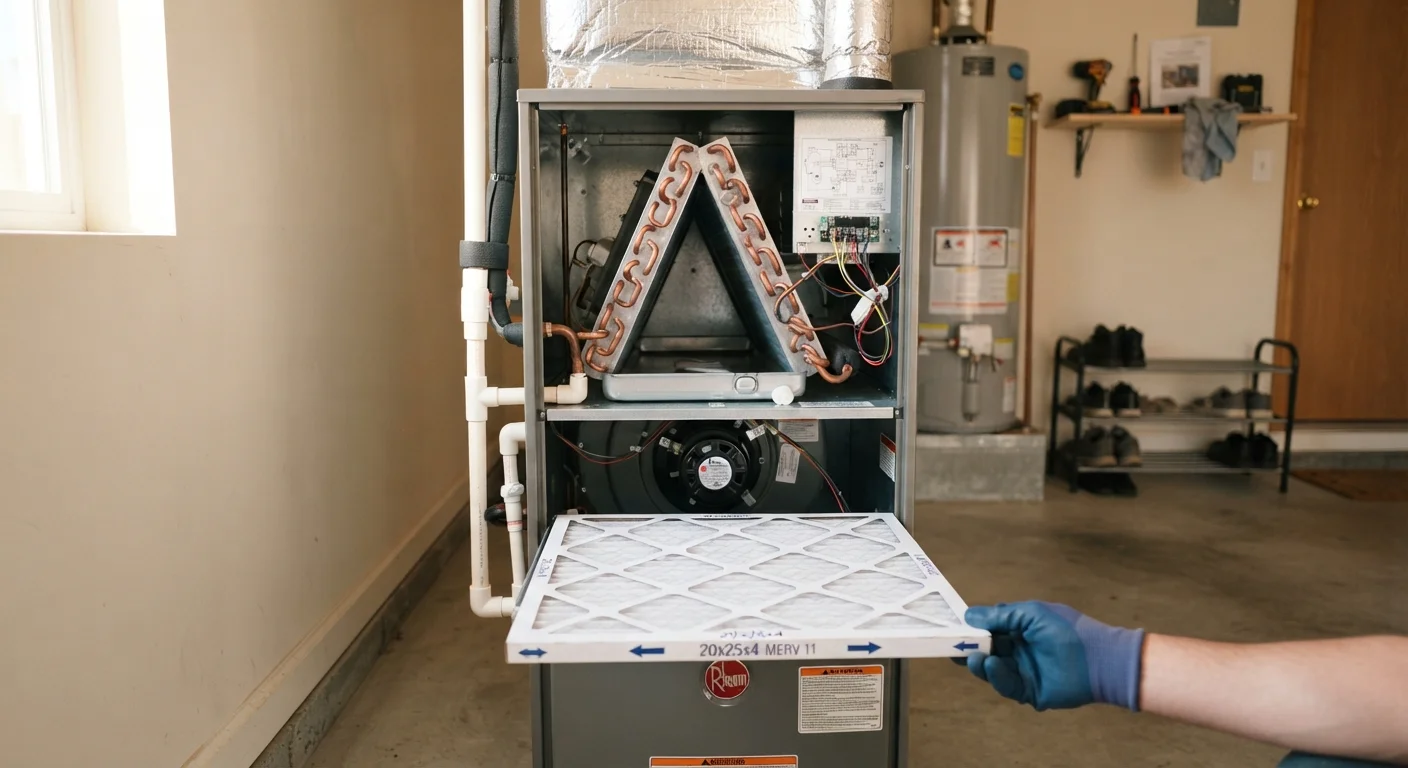
Changing the air filter is the single most impactful DIY maintenance task. A clogged filter restricts airflow, forces the blower motor to work harder, and allows dust to migrate deeper into the system. Despite being straightforward, many homeowners either forget to change filters or choose the wrong replacement.
Match your filter replacement schedule to your actual household conditions, not just the packaging.
Filter manufacturers give broad timelines that don't account for pets, renovations, or high-traffic use. Following only the packaging guidance often means filters stay in too long, restricting airflow and reducing indoor air quality.
Keep a consistent filter size and MERV rating on hand so replacements never get skipped.
Running any filter past its useful life is far more damaging than briefly running no filter, but the practical reason filters get skipped is simply not having a replacement ready. Stocking ahead eliminates this excuse entirely.
Vacuum supply and return vent grilles at least once a year, removing the grilles for thorough cleaning.
Dust accumulates on grille slats over months and eventually restricts airflow through the opening. Surface wiping doesn't remove buildup in the slots the way removing and washing the grille does.
Schedule professional HVAC maintenance twice a year - once before cooling season and once before heating season.
Coil cleaning, refrigerant checks, and combustion analysis require professional tools and credentials. Two visits per year ensure the system is tuned for its two most demanding periods, reducing the risk of mid-season failure.
Filter replacement frequency depends on filter type and your home environment. A basic fiberglass filter (MERV 1-4) typically needs replacing monthly. A mid-range pleated filter (MERV 8-11) can last 60-90 days. Homes with pets, allergy sufferers, or dusty conditions should lean toward the shorter end of any range. Check your system's manual for the maximum MERV rating it can handle - using a filter that's too dense can restrict airflow just as much as a dirty one.
Vents and Registers: Simple Cleaning With Real Consequences
Supply vents (the ones blowing conditioned air into rooms) and return vents (which pull air back to the air handler) both accumulate dust on their grilles. Once or twice a year, remove each grille and vacuum it thoroughly, wiping with a damp cloth before reinstalling. This is a genuine DIY task that takes under an hour for most homes.
Beyond surface cleaning, make sure no vents are blocked by furniture, rugs, or drapes. Blocked supply vents create pressure imbalances that stress the blower and reduce comfort in affected rooms. Also check that all vents open fully - partially closed vents do not save energy, they just redirect pressure in ways the system wasn't designed to handle.
Duct Cleaning Is a Separate Service
Cleaning the grilles on vents is not the same as professional duct cleaning, which involves vacuuming the interior of your ductwork. Duct cleaning is rarely necessary for most homes and is not a routine annual task. The EPA advises that duct cleaning is warranted only in specific situations, such as visible mold growth inside ducts, pest infestations, or ducts clogged with heavy debris. Don't let a vendor pressure you into duct cleaning based on vague claims.
Coils: Critical Components That Require Professional Hands
Your HVAC system has two coil sets: the evaporator coil inside the air handler and the condenser coil in the outdoor unit. Both collect debris over time, but cleaning them safely and effectively requires tools, refrigerant knowledge, and access that most homeowners don't have.
A dirty evaporator coil loses its ability to absorb heat efficiently, causing the system to run longer cycles and potentially freeze up. A dirty condenser coil can't release heat properly, raising head pressure and straining the compressor - one of the most expensive components in the system.
Up to 15%
Energy savings from regular HVAC maintenance
The U.S. Department of Energy has noted that proper maintenance, including clean filters and coils, can meaningfully reduce system energy consumption.
5-15 years
Typical HVAC system lifespan with proper care
Industry estimates suggest well-maintained central air systems commonly operate 15 or more years, while neglected systems may need replacement significantly sooner.
Annual professional maintenance should include both coil inspections and cleanings. During a tune-up visit, a technician will also check refrigerant levels, inspect electrical connections, lubricate moving parts, and test controls. This is the category where skipping professional service has the clearest dollar cost.
If you notice ice forming on the indoor unit, reduced cooling performance, or unusually long run times, don't delay scheduling a service call. These are signs the coils or refrigerant circuit may already need attention. First-time owners unfamiliar with what HVAC professionals check for can review our introduction to home maintenance for helpful context.
When to Call a Licensed HVAC Technician
Beyond coil cleaning, several other tasks should always go to a licensed professional: handling or checking refrigerant, inspecting heat exchangers on gas furnaces (a cracked exchanger is a carbon monoxide risk), testing combustion efficiency, and any electrical work inside the air handler or disconnect box.
A well-qualified HVAC technician will also catch early signs of component wear that aren't visible or measurable without gauges and diagnostic tools. Scheduling a tune-up in spring (before cooling season) and fall (before heating season) gives the system a clean start for its heaviest workload. These seasonal check-ins fit naturally into the broader spring tasks described in our spring home maintenance checklist.
This article provides general home maintenance information for educational purposes. Always consult a licensed HVAC professional before performing or evaluating any work beyond basic filter replacement and vent cleaning.
The content on this site is provided for informational purposes only and should not be considered a substitute for professional advice. While we strive to provide accurate and up-to-date information, we make no guarantees regarding its completeness or accuracy. Always consult a qualified professional for advice specific to your circumstances before making any decisions