

The Distraction Problem Is Bigger Than the Phone
Smartphone bans and hands-free laws have pushed phone use to the center of every distracted driving conversation - and for good reason. But narrowing the conversation to just one device understates a much broader problem. Distraction is anything that pulls your attention away from the primary task of driving, whether it's visual (taking your eyes off the road), manual (taking your hands off the wheel), or cognitive (taking your mind off driving).
Cognitive distraction is the trickiest category because it's invisible. A driver can appear fully attentive - eyes forward, hands on the wheel - while mentally somewhere else entirely. Research by the AAA Foundation for Traffic Safety has found that certain in-vehicle infotainment tasks can leave drivers cognitively distracted for up to 27 seconds after completing them. At 25 mph, that's over 990 feet traveled without full mental engagement.
Understanding the full spectrum of distractors is a key part of defensive driving awareness. Below are the distractors that don't get enough attention - and what you can do about them.
Passengers - Especially Multiple or Young Ones
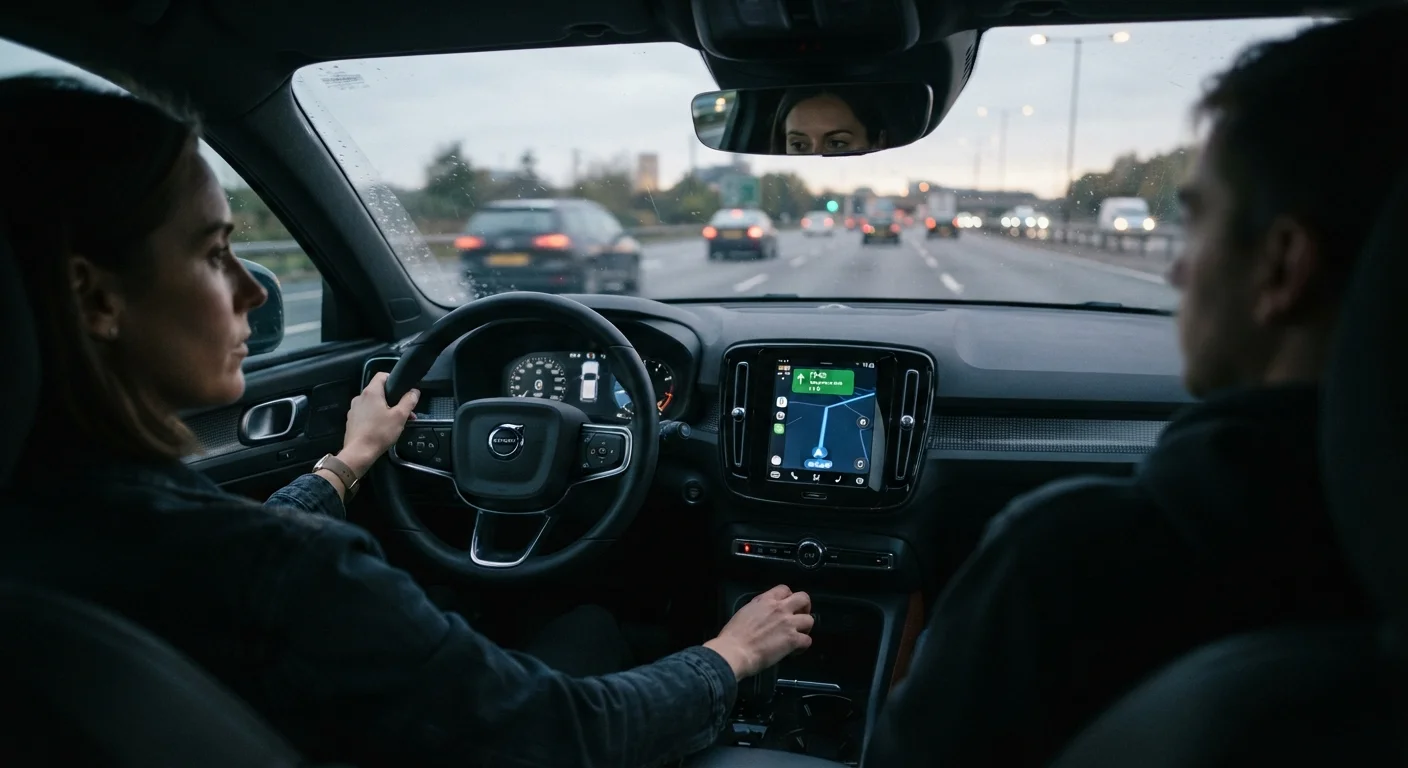
Conversations with passengers are a frequently underestimated distractor. Unlike phone calls, in-person conversations involve eye contact, gesturing, and the social pressure to respond immediately. Research has consistently shown that carrying multiple teenage passengers significantly increases crash risk for young drivers, a factor that graduated licensing laws in most states attempt to address.
Even adult passengers can pull a driver's focus during emotionally charged discussions or when a backseat passenger needs attention. A practical approach: ask passengers to hold complex conversations at red lights or pull over when something requires real attention. For young drivers, passenger limits matter more than most realize.
Social pressure to respond to passengers can be just as distracting as looking at a screen.
In-Vehicle Navigation and Infotainment Systems
Touchscreen navigation systems, climate controls, and audio interfaces built into modern vehicles are designed for convenience - but interacting with them while moving creates the same three-category distraction profile as a phone: visual, manual, and cognitive. The AAA Foundation for Traffic Safety has studied these systems and found that some require significant interaction time even for basic tasks.
The habit fix is straightforward: program your destination before the vehicle moves. Adjust climate and audio settings while stationary. If you need to make a change en route, pull over safely. The technology is improving, but voice command systems aren't error-free either - correcting a misheard command still draws your attention.
Set your navigation before you move - interacting with screens while driving carries the same risk as texting.
Eating and Drinking Behind the Wheel
Drive-through culture has normalized eating in the car to the point that many drivers don't register it as a distraction. It is. Unwrapping food, managing a drink with a loose lid, or catching a dropped item all involve manual and visual distraction. A spill can cause a sudden, sharp reaction - jerking the wheel or looking down - at exactly the wrong moment.
Liquid spills are especially dangerous because the instinctive response (looking down, reaching to contain the mess) happens faster than conscious thought. If you regularly eat on the road, planning a brief stop to eat before driving, rather than simultaneously, is a simple adjustment with real safety upside.
A hot coffee spill can trigger an instinctive, uncontrolled reaction that overrides any conscious driving decision.
Emotional and Cognitive Preoccupation
Stress, worry, anger, and grief don't stay home when you get in the car. A driver replaying an argument or anxious about a medical appointment is cognitively occupied in ways that slow hazard recognition and decision-making - even when their eyes are technically on the road. This is sometimes called "mind-wandering," and it's a normal human experience that becomes a road hazard at speed.
There's no app-based fix for emotional distraction, but recognizing it is the starting point. If you're driving while significantly distressed, giving yourself more following distance and reducing speed creates additional margin. In serious cases, pulling over until the sharpest edge of the emotion passes is a legitimate safety choice. Emotional distraction and fatigue often overlap - see our piece on how fatigue impairs your reaction time for related context.
Driving while emotionally preoccupied slows hazard recognition even when your eyes are pointing at the road.
External Events and Roadside Distractions
Crashes, flashing lights, unusual vehicles, construction scenes, and dramatic roadside events all pull a driver's gaze. This phenomenon - sometimes called "rubbernecking" - is responsible for secondary crashes, where drivers collide while looking at an existing incident. The visual distraction compounds because surrounding traffic often slows or stops unpredictably.
Awareness of this tendency is half the battle. When you notice an incident ahead, make a conscious effort to redirect your eyes forward and check your following distance. Adequate following distance gives you the buffer time needed when the driver ahead brakes unexpectedly near an incident scene.
Rubbernecking at crash scenes causes secondary collisions - redirecting your gaze forward is an active safety choice.
Grooming and Personal Care
Applying makeup, fixing hair, adjusting clothing, or checking appearance in the rearview mirror are manual and visual distractors that regularly appear in crash reports. Like eating, these tasks often feel low-risk because they're routine and brief - but brief is relative when you're traveling at highway speed. Even a two-second glance away from the road at 60 mph means traveling roughly 176 feet without eyes on the road ahead.
The corrective here isn't complicated: build in the time before departure. A few extra minutes at home or in a parked car eliminates the need entirely. The mirror above your head is for traffic checks, not personal grooming.
At 60 mph, a two-second glance at the mirror means traveling roughly 176 feet without watching the road.
Building Habits That Keep Your Mind on the Road
Awareness is the first step, but habits do the real work. Preparing your route before you move, setting passenger expectations upfront, and recognizing when your emotional state might compromise your focus are all practical, low-effort changes. If you're traveling with new or teen drivers in the car, modeling these habits openly is one of the most effective things you can do.
It's also worth recognizing that distraction and fatigue often compound each other. A mentally tired driver is more susceptible to every form of distraction on this list. If you want to understand how exhaustion affects your reflexes specifically, our coverage on how fatigue changes reaction time goes deeper into that relationship.
No driver is immune to distraction, and overconfidence - particularly among experienced drivers - can be its own risk factor. Staying informed about what actually pulls your attention is how you stay genuinely safer, not just legally compliant.
Build a Pre-Drive Routine
Before pulling out of any parking space or driveway, take 60 seconds to handle common distractors: set your navigation, connect your audio, adjust mirrors, and put your phone on Do Not Disturb. These brief preparations eliminate the temptation to handle them while moving. Consistent pre-drive habits are one of the simplest, highest-impact safety behaviors any driver can adopt.
The content on this site is provided for informational purposes only and should not be considered a substitute for professional advice. While we strive to provide accurate and up-to-date information, we make no guarantees regarding its completeness or accuracy. Always consult a qualified professional for advice specific to your circumstances before making any decisions