

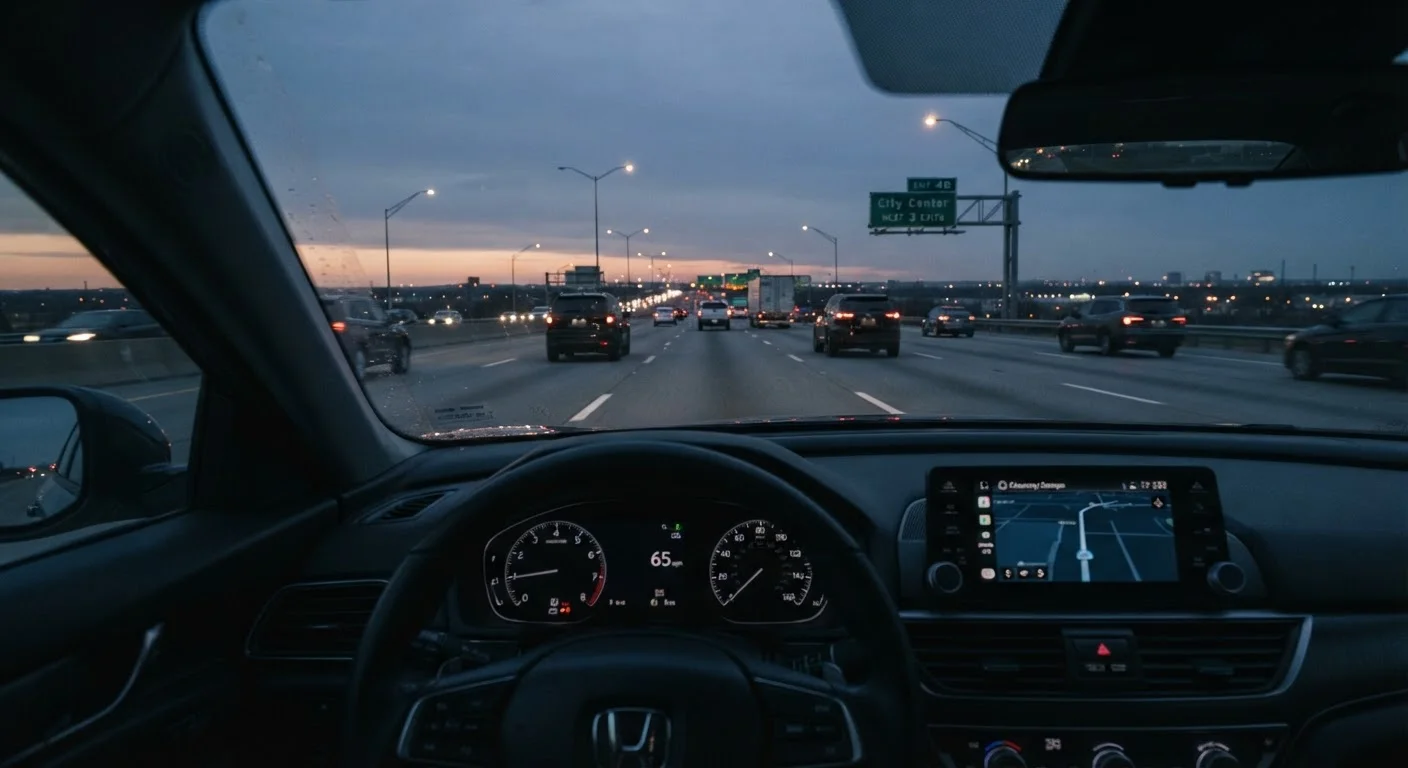
What Defensive Driving Actually Means
Defensive driving is frequently misunderstood as either overly cautious, slow-moving behavior or an advanced skill reserved for racing schools and law enforcement training. In practice, it's neither. Defensive driving is a systematic approach to operating a vehicle that assumes other drivers, pedestrians, road conditions, and even your own vehicle may present hazards - and that prepares you to handle them before they escalate into emergencies.
The National Safety Council defines defensive driving as driving to save lives, time, and money regardless of the conditions around you or the actions of others. That framing matters: the goal isn't fear-based driving. It's informed, confident operation grounded in realistic awareness of what roads actually look like rather than what we wish they did.
For everyday drivers, this translates to a set of mental habits and physical techniques that work together - not a single trick or shortcut. Before you've even left your driveway, preparation plays a role. A pre-trip safety walkthrough can surface tire, lighting, and visibility issues that would otherwise compromise your ability to respond in the moment.
When entering a highway on-ramp, match your speed to traffic before merging - not after. Drivers who merge slowly create the dangerous speed differential that causes rear-end collisions in the merge zone.
Speed mismatches at merge points are a leading cause of highway crashes; proper speed matching before lane entry is standard guidance in advanced driver training programs.
At night, use other vehicles' headlights ahead of you as an early warning system - their beams will reveal curves, hills, and stopped traffic before your own lights reach those points.
This technique extends your effective visual range at night and is a standard practice taught in commercial driver training, where reaction time at highway speeds is critical.
Position your hands at the 9 and 3 o'clock positions on the steering wheel. This gives you maximum control during evasive maneuvers while keeping your arms clear of the airbag deployment zone.
Current safety guidance from the National Highway Traffic Safety Administration recommends 9-and-3 positioning over older 10-and-2 recommendations specifically because of airbag safety considerations.
The Core Principles Experienced Drivers Rely On
Experienced drivers don't consciously run through a checklist every mile - their defensive habits have become automatic. But those habits trace back to a handful of foundational principles:
- Aim high in steering. Rather than watching only the vehicle directly ahead, experienced drivers scan 12-15 seconds down the road. This scanning range - roughly a city block at 30 mph or a quarter-mile at highway speeds - is where developing hazards first become visible.
- Get the big picture. Regularly checking mirrors and being aware of what's happening on all sides of your vehicle prevents tunnel vision - the narrowing of attention that often precedes rear-end and side-impact collisions.
- Keep an out. Always position your vehicle so you have at least one clear path of escape. This means avoiding situations where you're boxed in by other vehicles on multiple sides simultaneously.
- Make yourself visible. Use headlights in low-visibility conditions, signal well before turns and lane changes, and avoid lingering in other drivers' blind zones - especially those of large commercial trucks.
- Communicate clearly and early. Brake gradually when possible rather than abruptly, and use your signals far enough in advance that other drivers can adjust.
~94%
Crashes with human error as a factor
According to NHTSA research, human choice or error is a critical reason in approximately 94% of serious crashes, underscoring why driver behavior is the primary lever for safety.
3 sec
Minimum recommended following distance
The three-second rule is a widely taught benchmark across defensive driving courses; safety authorities recommend expanding this in adverse weather or at highway speeds.
40%
Of fatal crashes occurring at intersections
The Federal Highway Administration has identified intersections as the site of a disproportionate share of serious crashes, making intersection awareness a core defensive priority.
Managing Space and Following Distance
Of all the variables a driver can control, space management is the most consistently protective. Following distance - the cushion between your vehicle and the one ahead - determines how much time you have to recognize a developing problem and respond before it becomes a collision.
A commonly taught benchmark is the three-second rule: choose a fixed point on the road, note when the vehicle ahead passes it, then confirm your own vehicle doesn't reach that point for at least three seconds. In wet, icy, or high-speed conditions, that margin should expand significantly. Tailgating is one of the most easily avoidable crash contributors, yet it remains one of the most common behaviors on American roads.
Lateral space matters too. On multi-lane roads, avoid clustering with adjacent vehicles. If you can't see a truck driver's mirrors, they almost certainly cannot see you - a critical consideration on highways. For a deeper look at vehicle geometry and sightline management, understanding where your own blind spots are is equally important to knowing where others' blind spots fall.
Reading Other Drivers Before They Act
Defensive driving turns on the ability to anticipate - not predict perfectly, but make educated assessments about what other road users are likely to do next. Several cues consistently signal elevated risk:
- Erratic speed changes - frequent acceleration and braking without clear cause often indicate distraction or impairment.
- Drifting within a lane - particularly onto lane markings or shoulders - suggests inattention or driver fatigue.
- Delayed response at signals or intersections - a vehicle slow to move on a green light or late to brake at red may have an impaired driver.
- Last-minute lane changes - abrupt movement without signaling is a strong indicator the driver isn't scanning ahead effectively.
When you identify a potential risk vehicle, increase your following distance from it, avoid positioning yourself alongside it, and - where safe - let it move further ahead of you. You cannot control another driver's behavior, but you can control your proximity to it.
Intersections deserve special attention. A significant proportion of serious collisions occur at or near intersections, often involving drivers running late-cycle yellows or failing to yield. Covering the brake (placing your foot near the pedal without pressing it) as you approach an intersection is a low-effort habit with a meaningful safety payoff.
Common Situations Where Defensive Habits Matter Most
Certain environments amplify risk and call for heightened application of defensive principles:
Highway and interstate driving
High speeds reduce reaction time and expand the consequences of any error. Safe highway habits - including maintaining consistent speed, using mirrors every 5-8 seconds, and avoiding the far left lane unless overtaking - directly reflect defensive driving principles. Lane changes are a particularly concentrated source of highway crashes; improper merging often stems from drivers failing to check blind zones before moving.
Urban and residential driving
Lower speeds don't eliminate risk - they shift it. Pedestrians, cyclists, and vehicles entering from driveways or side streets require frequent scanning at a closer range than highway driving demands. Speed limits in residential zones exist specifically because reaction distances compress when obstacles appear close and unexpectedly.
Adverse weather
Rain, snow, ice, and heavy fog all reduce traction and visibility simultaneously. The correct adjustment isn't just slowing down - it's rebuilding your following distance, being gentler with braking and steering inputs, and accepting that your stopping distance has multiplied.
Building the Habit: Making Defensive Driving Automatic
The most important characteristic of skilled defensive drivers isn't knowledge - it's consistency. Knowing the principles and applying them only when you remember to do so leaves significant gaps. The goal is to embed these habits deeply enough that they operate even during routine, familiar drives when attention naturally drifts.
A few practical approaches support habit formation:
- Narrate your drive mentally - briefly noting developing hazards aloud or in your head forces active scanning rather than passive watching.
- Set a single focus for each drive - spend one commute deliberately working on following distance, another on mirror checks. Layering habits one at a time tends to make them stick.
- Keep your vehicle in sound mechanical condition. Defensive technique can't compensate for worn brakes, underinflated tires, or malfunctioning lights. Routine vehicle maintenance is the physical foundation that defensive skills depend on.
Teen and newer drivers benefit from understanding these principles early - many of the risks that new drivers aren't typically told about are precisely the ones defensive driving directly addresses. And if a collision does occur despite best efforts, knowing what to do in the first 60 seconds afterward is a valuable complement to prevention.
Defensive driving isn't a guarantee of safety - no approach can fully neutralize every variable on a public road. But it is the most reliable, evidence-supported way to reduce your risk as a driver, every single time you're behind the wheel.
The content on this site is provided for informational purposes only and should not be considered a substitute for professional advice. While we strive to provide accurate and up-to-date information, we make no guarantees regarding its completeness or accuracy. Always consult a qualified professional for advice specific to your circumstances before making any decisions