

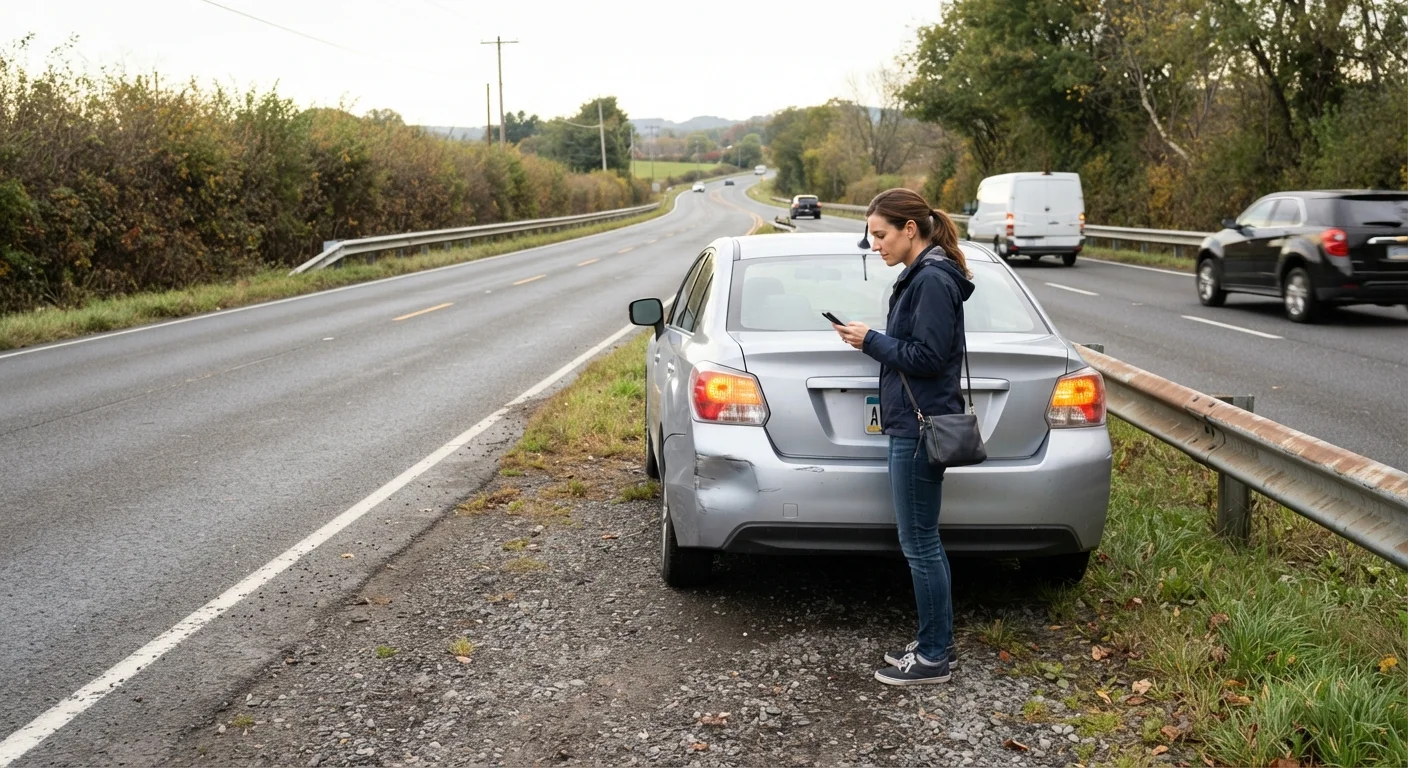
Why the First Minute Matters So Much
A collision - even a minor fender-bender - triggers an immediate adrenaline response. Heart rate climbs, hands shake, and clear thinking becomes harder precisely when it is needed most. Knowing what to do before a crash happens means you can act on trained instinct rather than react in panic.
The actions you take in those first 60 seconds protect three things: your physical wellbeing, the wellbeing of others involved, and your legal and insurance standing afterward. These goals are not in conflict - in fact, the sequence below addresses all three at once.
Preparation also extends beyond the moment of impact. Drivers who practice defensive driving habits are often better positioned to respond calmly because they already approach the road with structured awareness. This guide is the natural companion to that mindset - what to do when prevention wasn't enough.
What you will need
Step-by-Step: The First 60 Seconds
Follow this sequence as closely as conditions allow. In a chaotic situation, priorities may need to shift - but this order reflects what safety professionals and legal guidance generally recommend.
Check Yourself for Injury
Before anything else, take two seconds to assess your own condition. Adrenaline can mask pain - you may be injured without feeling it yet. Take a breath, look at your hands and body, and determine whether you can move safely.
Check on Passengers
Turn to any passengers in your vehicle and ask them clearly whether they are hurt. Do not assume silence means they are fine - some people go quiet when injured or in shock. If someone is unconscious or unresponsive, this is an emergency requiring immediate 911 contact.
Get to Safety if Possible
If your vehicle is drivable and it is safe to do so, move it out of active traffic lanes - to a shoulder, parking lot, or side street. Turn on your hazard lights immediately. If the vehicle cannot be moved, stay inside with your seatbelt on until help arrives, unless there is a risk of fire.
Call 911
Contact emergency services. If anyone is injured, this is non-negotiable. Even if injuries are not apparent, calling creates an official record and gets trained responders to the scene. When speaking with the dispatcher, state your location as precisely as you can - cross streets, highway mile markers, or a nearby landmark.
Exchange Information with the Other Driver
Once everyone is safe and help has been called, exchange the following with all other drivers involved: full legal name, driver's license number, license plate number, insurance company name and policy number, and contact information. Do this calmly and without discussing fault. Photograph their documents with your phone if they are willing.
Document the Scene
Before vehicles are moved (if possible), photograph the scene thoroughly: the position of both vehicles, visible damage, skid marks, road conditions, traffic signals, and any relevant signage. Photographs taken immediately preserve details that disappear quickly. This documentation will support both your insurance claim and any subsequent investigation.
Do Not Accept or Offer Cash Settlements
Some drivers propose handling a minor collision privately to avoid involving insurance. This carries significant risk: hidden vehicle damage, undisclosed injuries that emerge later, and no legal protection if the other party changes their account. Always go through proper reporting and insurance channels, regardless of how minor an incident appears.
What Not to Do at the Scene
Equally important is understanding what to avoid. Several common instincts can cause harm or complicate the situation significantly.
- Do not admit fault. Even saying "I'm sorry" can be interpreted as an admission of liability. Determining fault is a legal and insurance matter - not something to resolve at the roadside.
- Do not leave the scene. In every U.S. state, leaving the scene of a collision - especially one involving injury - carries serious legal consequences. Stay until authorities arrive or you have lawfully exchanged information.
- Do not argue with the other driver. Emotions run high after a crash. Keep exchanges brief, factual, and civil. Confrontation solves nothing and can escalate a stressful situation.
- Do not neglect to call for help. Some drivers skip calling 911 for minor collisions to avoid complexity. However, a police report creates an official record that can be essential during insurance claims or legal disputes.
Teen and newer drivers are especially vulnerable to making these missteps under pressure. Our guide on what new drivers need to know covers this broader context in detail.
The content on this site is provided for informational purposes only and should not be considered a substitute for professional advice. While we strive to provide accurate and up-to-date information, we make no guarantees regarding its completeness or accuracy. Always consult a qualified professional for advice specific to your circumstances before making any decisions