

Why the Distinction Matters
Many Americans use the term "savings account" and "emergency fund" interchangeably - and it's an understandable mix-up. Both involve setting money aside, and an emergency fund often lives inside a savings account. But conflating the two can quietly undermine your financial stability.
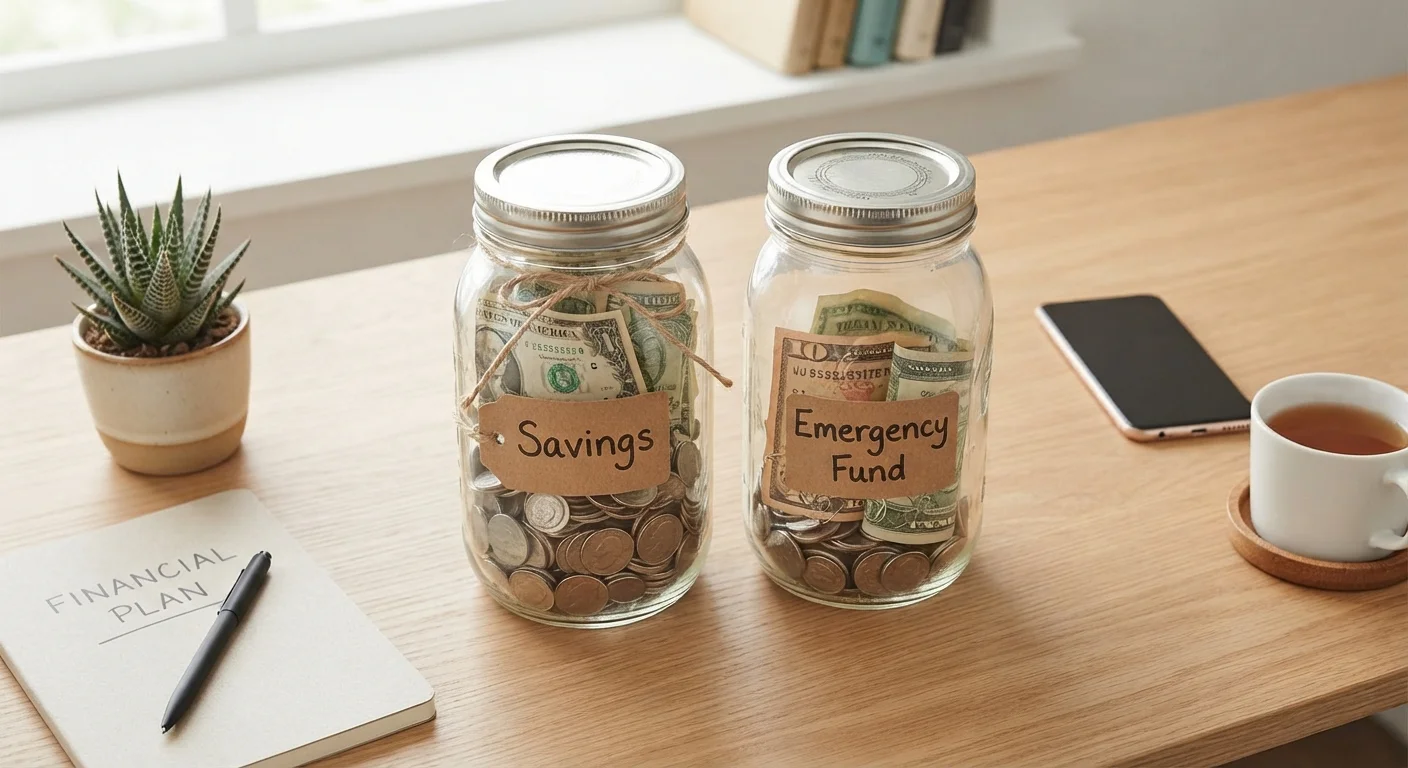
Think of it this way: a savings account is the container, and an emergency fund is what you choose to put in it - and why. Without a clearly defined emergency fund, people often dip into their savings for non-emergencies, then find themselves without a cushion when something serious happens. Defining each separately gives your money a job description, which is foundational to sound financial planning. For a broader look at how these concepts fit into longer-term financial health, see the Planning Ahead hub.
57%
Americans unable to cover a $1,000 emergency with savings
According to Bankrate's annual emergency savings report, a majority of U.S. adults would need to borrow or use credit to cover an unexpected $1,000 expense.
3-6 months
Recommended emergency fund coverage
Most mainstream financial guidance - including resources from the Consumer Financial Protection Bureau - suggests keeping three to six months of essential expenses in an accessible emergency fund.
22%
Americans with no emergency savings at all
Bankrate's research consistently finds that roughly one in five Americans has no dedicated emergency savings, leaving them fully exposed to financial shocks.
What a Savings Account Actually Is
A savings account is a deposit account offered by banks and credit unions that earns interest on the balance you maintain. It's a flexible, general-purpose tool designed to hold money you don't need for everyday spending. People use savings accounts for:
- Building toward a vacation or large purchase
- Saving for a home down payment
- Setting aside funds for annual expenses like insurance premiums
- Holding an emergency fund (among other things)
Standard savings accounts are federally insured up to $250,000 per depositor, per institution - meaning your money is protected even if the bank fails. Interest rates vary widely, which is worth understanding when deciding where to keep your money. If you want to maximize what your savings earn, high-yield savings accounts explained is a useful next read.
What Makes an Emergency Fund Different
An emergency fund is not a product you open at a bank - it's a financial strategy. It's a predetermined amount of money you commit to using only for genuine, unplanned financial emergencies. The key characteristics that set it apart:
- Purpose-restricted: The money is off-limits for anything that isn't a true emergency.
- Size-targeted: It's built to a specific goal, typically three to six months of essential living expenses.
- Replenishment-focused: After you use it, rebuilding it becomes a financial priority.
Without this distinction, savings tend to get spent on lifestyle costs and slow lifestyle upgrades rather than serving as a real safety net. If you're starting from nothing, building your first emergency fund from zero offers a practical starting framework.
Maria saves $200 a month in a single savings account labeled 'savings.' When her car breaks down unexpectedly, she pays for the repair from that account - but it was money she had earmarked for a vacation.
James keeps $8,000 in a dedicated emergency fund account and contributes separately to a savings account for a home down payment. When he loses his job, he taps the emergency fund to cover two months of expenses.
Priya has a savings account but never defined how much should be reserved for emergencies. When her refrigerator dies, she's unsure whether to treat it as an emergency or an inconvenient expense - and ends up using a credit card instead.
How to Manage Both Effectively
The most practical approach is to keep your emergency fund in a separate savings account from your other savings goals. Even if both accounts are at the same institution, the separation creates a psychological and logistical barrier that discourages casual withdrawals.
Here's a simple structure many financial planners suggest:
- Account 1 - Emergency Fund: Three to six months of essential expenses. Touch only during a genuine crisis.
- Account 2 - Goal Savings: Vacation, home purchase, car replacement, or other planned future expenses.
You might also consider how a monthly spending buffer fits alongside these - that's a different tool with its own role, as covered in Emergency Fund vs. Monthly Buffer. Having a layered approach means a surprise car repair doesn't wipe out the vacation fund - and it doesn't touch your emergency cushion either.
Label Your Accounts by Purpose
Many online banks allow you to nickname individual savings accounts - for example, 'Emergency Fund' or 'Vacation 2025.' Using clear labels makes it much easier to respect the intended purpose of each account and avoid accidental raiding of funds meant for emergencies.
This article is for general informational purposes only and is not personalized financial advice. Consider consulting a licensed financial professional for guidance suited to your individual situation.
Frequently Asked Questions
Technically yes, but it's risky. Mixing funds makes it easy to spend emergency money on non-emergencies. Opening separate accounts - even at the same bank - creates a clear boundary that most financial educators recommend.
A commonly cited guideline is three to six months of essential living expenses, such as rent, utilities, food, and minimum debt payments. Those with variable income or dependents may want to aim for the higher end of that range.
True emergencies include unexpected job loss, urgent medical expenses, emergency home or car repairs, and unplanned travel for a family crisis. Planned purchases - like holiday gifts or a vacation - are not emergencies, even if they feel urgent.
Most financial educators suggest establishing at least a small emergency fund - often $1,000 as a starter - before aggressively saving for other goals. This prevents a single unexpected expense from derailing your entire plan.
Most people keep emergency funds in an FDIC-insured savings or money market account that's accessible but not too easy to dip into. Keeping it separate from your everyday checking account adds a useful friction that discourages casual withdrawals.
The content on this site is provided for informational purposes only and should not be considered a substitute for professional advice. While we strive to provide accurate and up-to-date information, we make no guarantees regarding its completeness or accuracy. Always consult a qualified professional for advice specific to your circumstances before making any decisions