

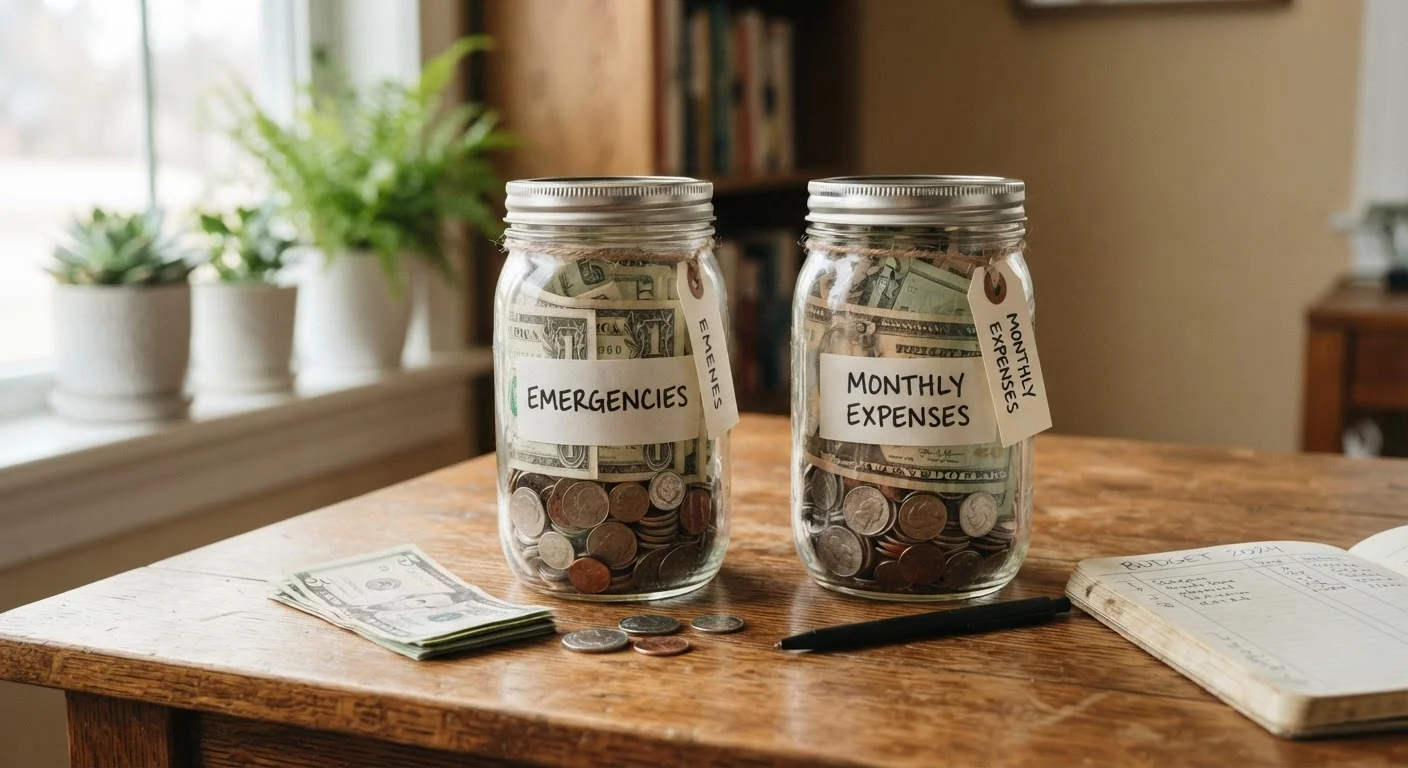
Option A
Emergency Fund
The financial firewall for life's serious disruptions.
Best for: Covering major, unexpected expenses like job loss, medical bills, or urgent car repairs that could derail your finances.
Option B
Monthly Buffer
The day-to-day cushion that keeps your budget breathing.
Best for: Absorbing routine spending fluctuations - irregular bills, small surprises, and timing gaps between income and expenses.
What Each One Actually Does
Despite often being lumped together under the umbrella of "savings," an emergency fund and a monthly buffer operate at entirely different levels of your financial life. Conflating them is one of the most common - and costly - budgeting mistakes.
An emergency fund is a dedicated reserve set aside exclusively for significant, unanticipated financial disruptions: a job layoff, a major medical expense, a critical car breakdown, or an urgent home repair. It's not meant to be touched for ordinary life. The widely cited guidance from personal finance educators is to keep three to six months' worth of essential living expenses in this fund, held in a liquid account separate from your everyday banking. For more on where and how to store it, see how emergency funds differ from standard savings accounts.
A monthly buffer, by contrast, operates inside your regular cash flow. It's extra money - typically one to two months of spending - kept in your checking account so that irregular bills, slight overspending, or timing gaps between income and expenses don't trigger overdrafts or force you to raid long-term savings. Think of it as breathing room within your budget rather than a wall against catastrophe.
| Criterion | Emergency Fund | Monthly Buffer |
|---|---|---|
| Primary purpose | Cover major unexpected crises | Smooth routine cash flow gaps |
| Typical size | 3-6 months of essential expenses | 1-2 months of spending |
| Where it's kept | Separate savings account | Checking account (as extra balance) |
| How often accessed | Rarely - true emergencies only | Regularly absorbs small fluctuations |
| Replenishment timeline | Rebuild after each use, gradually | Naturally replenishes with each paycheck |
| Risk if absent | Debt spiral during serious crises | Overdrafts, fees, credit card reliance |
Why Using One for the Other's Job Backfires
The clearest sign someone is misusing these tools is when they dip into their emergency fund to cover a month when spending ran a little high - or conversely, when they rely on a thin checking-account buffer to weather a genuine crisis like job loss.
Treating your emergency fund as a flexible spending account gradually erodes it. Each withdrawal, however justified it feels in the moment, leaves you less protected when something truly serious hits. On the other side, relying on a monthly buffer to absorb a multi-month emergency means running out of runway quickly and potentially turning to high-interest debt to survive.
A useful mental model: the emergency fund is a firewall - it should be hard to reach and rarely touched. The monthly buffer is more like shock absorption - it's meant to flex with normal life. If you're building your emergency fund for the first time, this walkthrough on building an emergency fund from scratch can help you set a realistic target and stay on track.
Homeowners: A Third Fund to Know About
If you own a home, you may also benefit from a dedicated home maintenance reserve - separate from both your emergency fund and monthly buffer. Major repairs like a roof replacement or HVAC failure can cost thousands and don't fit neatly into either category. Learn how a home maintenance reserve fund works and why it's worth building alongside your other safety nets.
How to Build Both Without Feeling Overwhelmed
Most financial educators suggest a sequenced approach rather than trying to fully fund both simultaneously, especially when starting from limited savings.
- Start with a small buffer first. Aim to keep one month of essential expenses in your checking account. This prevents overdraft fees and the knee-jerk habit of putting small surprises on a credit card.
- Begin emergency fund contributions. Once your buffer is established, direct a fixed amount each month - even a modest one - to a separate, dedicated savings account. Automation helps remove the temptation to skip it.
- Scale up the emergency fund to your target. Work toward three months of expenses as an initial milestone, then extend to six if your income is variable or your household has elevated financial risk.
Tracking how both funds behave month to month can clarify whether your buffer is sized correctly for your actual spending patterns. For help seeing the full picture, comparing a spending tracker with a full budget is worth exploring.
~57%
Americans unable to cover a $1,000 emergency
A Bankrate survey found that roughly 57% of U.S. adults would struggle to pay an unexpected $1,000 expense from savings, underscoring how critical both a buffer and an emergency fund are.
3-6 months
Recommended emergency fund coverage
Financial educators and consumer agencies broadly recommend this range of essential expenses as a target for a well-funded emergency reserve.
This article is for general informational and educational purposes only and does not constitute personalized financial advice. Consult a qualified financial professional for guidance tailored to your individual circumstances.
The content on this site is provided for informational purposes only and should not be considered a substitute for professional advice. While we strive to provide accurate and up-to-date information, we make no guarantees regarding its completeness or accuracy. Always consult a qualified professional for advice specific to your circumstances before making any decisions