

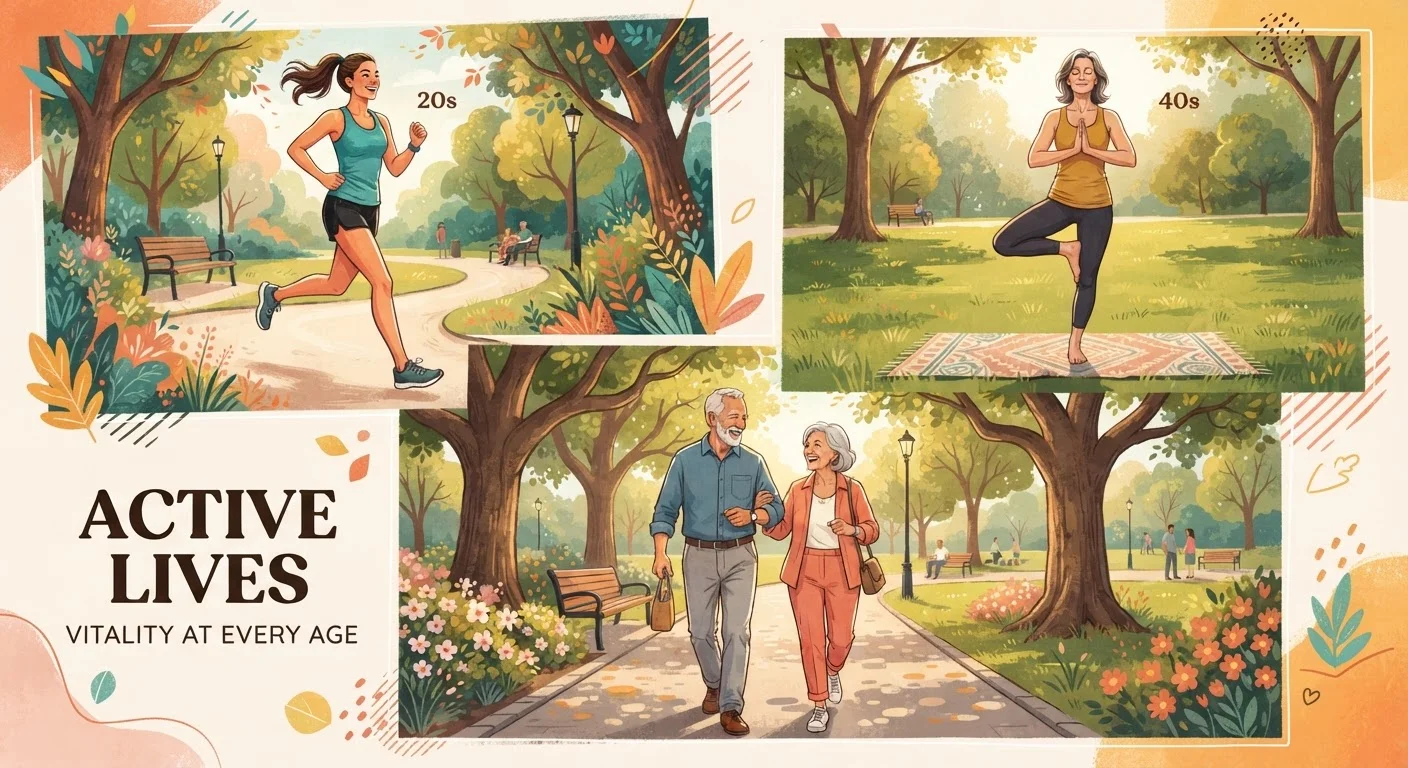
Why Exercise Needs Change With Age
Physical activity is one of the most well-documented contributors to long-term health - but it isn't one-size-fits-all. The biological changes that unfold across a lifetime directly affect how the body responds to exercise, recovers from it, and benefits from different types of movement.
Bone density peaks in the late twenties and gradually declines thereafter. Muscle mass typically begins decreasing around age 30 at a rate of roughly 3-8% per decade, a process called sarcopenia. Cardiovascular efficiency, joint flexibility, and hormonal profiles also shift with time. These aren't reasons to exercise less - they're reasons to exercise smarter.
The good news: the CDC's Physical Activity Guidelines for Americans establish that adults of all ages benefit from regular movement, and the foundational recommendations - 150 minutes of moderate-intensity activity per week plus muscle-strengthening activities - apply broadly. What changes is how those minutes are best spent, and what additional priorities emerge at each life stage.
150 min
Weekly moderate aerobic activity recommended for adults
Per the CDC's Physical Activity Guidelines for Americans, applicable to adults across age groups.
3-8%
Muscle mass lost per decade after age 30
Research published in the Journal of Cachexia, Sarcopenia and Muscle estimates this decline rate in sedentary adults.
36%
Lower all-cause mortality risk in active older adults
A meta-analysis in the British Journal of Sports Medicine found this risk reduction among physically active adults over 65 compared to inactive peers.
Young Adulthood (18-35): Building a Foundation
Early adulthood is arguably the best time to invest in fitness habits that will pay dividends for decades. The body is generally at or near peak bone density, cardiovascular capacity, and muscle-building potential, making this an ideal window to establish a varied and challenging routine.
Strength training during this period helps maximize muscle and bone mass - a reserve that proves valuable in later decades. Aerobic fitness developed now lowers the long-term risk of cardiovascular disease, type 2 diabetes, and several other chronic conditions. Equally important: the habits formed in your twenties and early thirties tend to be the most durable.
That said, young adults aren't immune to overtraining injuries. Adequate recovery, sleep, and attention to form matter even when the body feels resilient. The goal isn't just peak performance now - it's building a sustainable relationship with movement.
See our guide to building consistent activity habits for evidence-informed strategies that extend well beyond the initial motivation surge.
Think of your fitness habits in your twenties and thirties as deposits into a long-term health account. The compound interest shows up in your fifties and sixties.
Longitudinal studies consistently show that physically active young adults have significantly better functional capacity and lower chronic disease risk in later life.
In midlife, prioritize recovery as deliberately as you plan workouts - sleep, protein intake, and rest days are not optional extras.
Muscle protein synthesis declines with age, meaning that adequate recovery time and dietary protein become increasingly necessary to retain strength gains.
Midlife (36-55): Shifting Priorities and Protecting Gains
Midlife brings a meaningful shift in how the body responds to exercise. Recovery takes longer, hormonal changes affect fat distribution and muscle retention, and cumulative wear on joints may begin to surface. This isn't a reason to pull back - it's a reason to recalibrate.
Strength training becomes especially important during this phase. Resistance exercise helps offset the natural decline in muscle mass and supports metabolic health as resting calorie burn slows. Prioritizing compound movements - squats, deadlifts, rows - over isolated exercises delivers more return per session.
Cardiovascular exercise remains essential, but variety matters. Mixing lower-impact options like cycling, swimming, or walking alongside higher-intensity intervals can maintain aerobic capacity while reducing joint stress. Flexibility and mobility work, often overlooked in younger years, becomes noticeably valuable for staying comfortable and injury-free.
Mental health benefits also deserve recognition in midlife. Regular physical activity is associated with reduced symptoms of anxiety and depression - a meaningful consideration during a life stage often marked by significant stress. Our overview of the relationship between exercise and mood explains the underlying mechanisms.
Older Adults (56-70): Strength, Balance, and Staying Active
Between the mid-fifties and early seventies, the exercise equation shifts further toward preserving function and independence. Aerobic capacity continues to decline, but research consistently shows that regular activity meaningfully slows this trajectory. Strength training remains critical - and balance training enters the picture as a genuine health priority.
Falls are a leading cause of injury in adults over 65, and balance-focused exercises - tai chi, single-leg stands, resistance band work - have demonstrated effectiveness in fall prevention. The CDC recommends that older adults incorporate balance training into their weekly routine in addition to aerobic and muscle-strengthening activities.
Cardiovascular exercise choices may evolve. Water aerobics, cycling, and brisk walking are easier on aging joints while still delivering meaningful aerobic benefit. The key is maintaining consistency rather than intensity. Even moderate activity, performed regularly, is strongly associated with lower all-cause mortality in this age group.
For those managing chronic conditions such as arthritis, hypertension, or osteoporosis, exercise is still appropriate - but the specific approach should be discussed with a qualified healthcare provider. Modifications exist for virtually every limitation.
Seniors (70+): Movement as Medicine
Physical activity in the seventh decade and beyond is less about performance and more about quality of life - maintaining the strength to carry groceries, the balance to navigate stairs safely, and the endurance to stay engaged with daily life. Research consistently supports the view that no age group benefits more, in relative terms, from moving regularly than older adults who have been largely sedentary.
For seniors new to exercise or returning after a long break, the starting point matters less than the direction. Light resistance exercises using body weight or bands, chair-based aerobics, and daily walking all offer meaningful starting points. The documented benefits of walking make it one of the most appropriate and accessible options at this stage.
Home environment also plays a role in supporting activity. For older adults working to maintain independence, aging-in-place home modifications - such as grab bars and non-slip flooring - can reduce fall risk and support confidence in moving freely.
This content is for general informational purposes only and is not a substitute for personalized medical advice. Always consult a qualified healthcare professional before beginning or modifying an exercise routine, particularly if you have existing health conditions.
What Stays the Same at Every Age
Despite the genuine differences between life stages, several principles hold true across the board. Consistency outperforms intensity - a moderate routine maintained over years produces far better outcomes than aggressive regimens abandoned after weeks. Variety protects against both injury and boredom. And enjoyment, underrated in clinical discussions of exercise, is one of the strongest predictors of adherence.
The psychological benefits of movement - improved mood, reduced stress, better sleep - are documented across all age groups and are often felt quickly even before physical changes become visible. These benefits alone make physical activity one of the most broadly recommended health behaviors by major public health bodies.
Wherever you are in life, the most effective exercise routine is one you'll actually do. That might look like group fitness classes, solo trail running, water aerobics, or a daily walk around the neighborhood. All of these count - and all of them matter.
Building that consistency is a skill in itself. Our resource on long-term physical activity habits explores the behavioral science behind staying active over months and years, not just weeks.
The content on this site is provided for informational purposes only and should not be considered a substitute for professional advice. While we strive to provide accurate and up-to-date information, we make no guarantees regarding its completeness or accuracy. Always consult a qualified professional for advice specific to your circumstances before making any decisions