

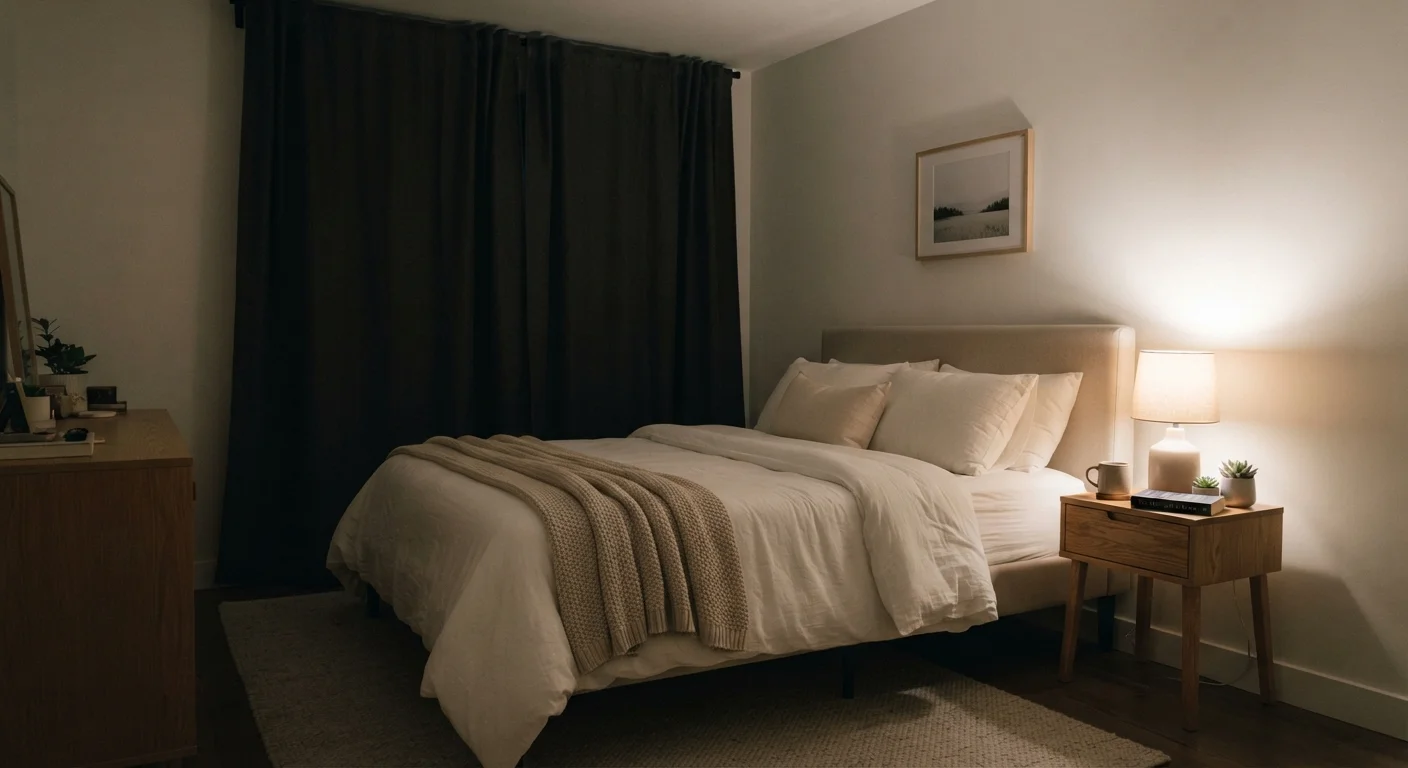
Why Sleep Advice Gets So Muddled
Sleep is one of the most studied topics in health science - and one of the most misrepresented in popular culture. Folklore, marketing language, and oversimplified summaries of legitimate research all blend together until it becomes genuinely difficult to know what to trust. The result is that many people follow sleep routines built on half-truths while ignoring the habits that actually move the needle.
The good news: a solid body of research from sleep medicine does point clearly to specific, practical behaviors that support consistent, restorative sleep. This article untangles the most stubborn myths and replaces them with what the evidence actually shows. For a broader look at how stress and mood compound sleep difficulties, see Understanding the Stress-Sleep-Mood Cycle.
This article is for general informational purposes only and is not medical advice. If you are experiencing persistent sleep difficulties, consult a qualified healthcare professional.
Common Sleep Myths - Corrected
Below are some of the most widely held beliefs about sleep hygiene, paired with what peer-reviewed research and clinical sleep science actually support.
Myth
Everyone needs exactly eight hours of sleep to be healthy.
Fact
Sleep needs are individually variable, typically ranging from seven to nine hours for most adults, with some people functioning well on slightly more or less.
The "eight hours" figure is a population-level average, not a biological prescription. The National Sleep Foundation and the American Academy of Sleep Medicine both recommend seven to nine hours for most adults, acknowledging meaningful individual variation. What matters is whether you wake feeling restored, can sustain alertness through the day, and do not rely on an alarm to end sleep. Chasing a fixed number - especially if it causes anxiety - can itself impair sleep quality.
Myth
A glass of wine or a nightcap helps you sleep better.
Fact
Alcohol reduces the time it takes to fall asleep but measurably disrupts REM sleep and increases nighttime awakenings, leaving you less rested overall.
Alcohol is a central nervous system depressant, which is why it feels sedating initially. However, as the body metabolizes it - typically in the second half of the night - it produces a rebound effect that fragments sleep architecture, suppresses REM sleep (critical for memory consolidation and emotional regulation), and increases the likelihood of waking. Research published in sleep medicine literature consistently shows that even moderate pre-sleep alcohol reduces overall sleep quality as measured by polysomnography.
Myth
Blue light from screens is the main reason devices disrupt sleep.
Fact
Blue light is one factor, but cognitive and emotional stimulation from device content is likely a more significant driver of delayed sleep onset for most people.
Blue light wavelengths do suppress melatonin production, and this is documented in controlled lab studies. However, real-world research suggests the content and mental engagement involved in device use - social comparison, news consumption, gaming, or unresolved conversations - contribute substantially to a state of heightened arousal that delays sleep. Blue-light filtering glasses and night mode settings offer partial mitigation, but they do not address the underlying arousal problem. A genuine wind-down period away from stimulating content is more broadly effective.
Myth
You can fully recover lost weekday sleep by sleeping in on weekends.
Fact
Weekend "sleep banking" provides only partial and short-term recovery while disrupting the circadian rhythm in ways that worsen Monday morning alertness.
Research on sleep debt indicates that some cognitive and metabolic effects of sleep deprivation do partially resolve with recovery sleep. However, sleeping in significantly later on weekends shifts your circadian phase - essentially giving yourself mild social jet lag - making it harder to fall asleep Sunday night and harder to wake Monday morning. Over time, irregular sleep schedules are associated with poorer metabolic health and mood stability. Protecting consistent sleep timing across the week is a more effective strategy than relying on weekend recovery.
Myth
If you can't sleep, lying in bed longer gives your body more chance to rest.
Fact
Prolonged time in bed while awake weakens the association between bed and sleep, and is a primary driver of chronic insomnia maintenance.
This counterintuitive finding is central to sleep restriction therapy, a component of CBT-I. When people spend excessive time in bed awake - watching the clock, trying to force sleep, or lying in frustration - the brain learns to associate the bed with wakefulness and anxiety rather than with sleep. Clinical guidelines recommend getting out of bed after roughly 20 minutes of wakefulness and returning only when sleepy. This approach, though initially uncomfortable, reliably rebuilds sleep drive and strengthens the bed-sleep association over several weeks.
What the Evidence Does Support
Beyond debunking myths, sleep research converges on a short list of practices with consistent support:
- Anchor your wake time. Waking at the same time every day - including weekends - is one of the strongest signals to your circadian system. Sleep researchers often describe a fixed wake time as the foundation of sleep scheduling.
- Keep the bedroom cool. Core body temperature drops naturally as sleep onset approaches. A room temperature in the range of 65-68°F (18-20°C) is commonly cited as supportive of this process, though individual comfort varies.
- Reserve the bed for sleep. Working, scrolling, or watching content in bed conditions the brain to associate the space with wakefulness - a concept called stimulus control that is central to Cognitive Behavioral Therapy for Insomnia (CBT-I), currently the first-line recommended treatment for chronic insomnia.
- Manage pre-sleep arousal, not just screens. The mental state you bring to bed matters enormously. Worry, planning, and emotional rumination are among the most documented barriers to sleep onset. A short wind-down routine - whether reading, light stretching, or journaling - addresses this directly.
These habits also reinforce broader wellness goals. See Consistent Habits That Support Long-Term Physical Activity for how regular movement can complement better sleep over time.
Over-the-Counter Sleep Aids Are Not Long-Term Solutions
Many OTC sleep products - including antihistamine-based aids - can lose effectiveness quickly and carry risks including daytime grogginess, cognitive effects, and interactions with other medications. They do not address the behavioral and cognitive factors that sustain insomnia. Use only as directed and consult a healthcare professional before relying on any sleep aid regularly.
Building a Routine That Holds
Sleep hygiene works best as a system, not a checklist. Isolated habits produce modest results; consistent, layered routines produce durable ones. Most people overestimate how quickly sleep improves and underestimate how long it takes for behavioral changes to consolidate into reliable patterns - often several weeks of consistency are needed before gains become stable.
If you find that self-guided sleep hygiene changes are not enough, CBT-I delivered by a trained clinician or through validated digital programs has the strongest evidence base for sustained improvement. It outperforms sleep medications in most long-term outcome studies and does not carry dependence risks. Talk to a healthcare provider about whether this approach is appropriate for you.
For practical mental wellness habits that work alongside better sleep, Sustainable Mental Health Habits That Fit Into an Ordinary Day offers evidence-informed strategies designed for realistic daily routines.
The content on this site is provided for informational purposes only and should not be considered a substitute for professional advice. While we strive to provide accurate and up-to-date information, we make no guarantees regarding its completeness or accuracy. Always consult a qualified professional for advice specific to your circumstances before making any decisions