

Why Water Belongs in Every Nutrition Conversation
Most nutrition discussions focus on proteins, carbohydrates, fats, vitamins, and minerals - and understandably so. But water, the body's most abundant compound, deserves equal attention. It participates in virtually every function that keeps the body operating, from regulating body temperature to flushing metabolic waste.
If you are just beginning to think critically about what you eat and drink, the foundations of nutrition are a useful starting point. Hydration fits naturally within that framework - not as an add-on, but as a core pillar.
What sets water apart from other nutrients is its involvement in the delivery system of the diet itself. Nutrients cannot reach cells, organs, or tissues without water acting as a transport medium. Recognizing hydration as nutritional infrastructure - rather than a separate wellness habit - is the first shift worth making.
How Water Supports Digestion and Nutrient Absorption
Digestion begins in the mouth with saliva, which is roughly 99% water. From there, water continues to play a structural role at every stage: it dissolves nutrients in the stomach, facilitates enzyme activity in the small intestine, and softens waste in the large intestine for easier elimination.
Water-soluble vitamins - including vitamin C and the eight B vitamins - literally require water to be absorbed and transported through the body. Without adequate hydration, these micronutrients cannot dissolve properly or move efficiently across the intestinal lining. For a closer look at what these vitamins do, see our overview of key vitamins and minerals.
Hydration also works in tandem with dietary fiber. Fiber draws water into the colon to form soft, bulky stool and support gut motility. If water intake is low, even a fiber-rich diet can contribute to constipation rather than relieve it. Learn more about this relationship in our article on dietary fiber and why many Americans fall short.
~60%
Proportion of the adult human body that is water
According to the U.S. Geological Survey, water makes up approximately 60% of adult body weight, underlining its role as the body's primary structural and functional medium.
~20%
Share of daily fluid intake from food
The National Academies of Sciences estimates that food contributes roughly 20% of total daily water intake, primarily through fruits, vegetables, and other moisture-rich foods.
75%
Americans estimated to be chronically under-hydrated
Various surveys and medical commentaries have cited estimates suggesting that a large share of American adults do not consistently meet recommended fluid intake levels.
Hydration Sources: Beyond the Glass of Water
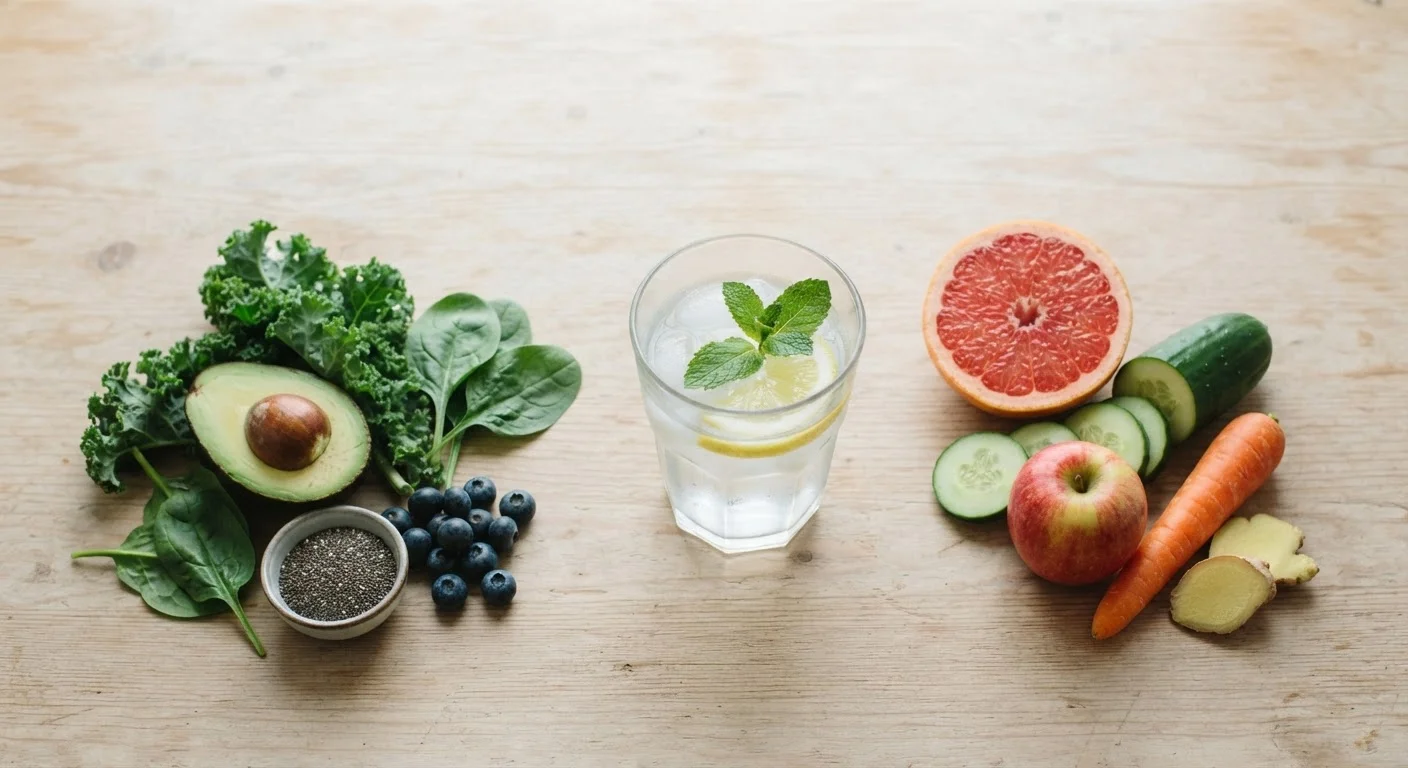
Meeting daily hydration needs is not solely about drinking plain water - though that remains the most direct approach. A meaningful share of fluid intake comes from whole foods, particularly fruits and vegetables with high water content. Cucumbers, celery, strawberries, oranges, and leafy greens all exceed 85% water by weight.
Soups, broths, dairy milk, and herbal teas also contribute to total fluid intake. Even coffee, despite its mild diuretic properties, adds net fluid in habitual drinkers according to current evidence.
Use Food to Supplement Your Fluid Intake
Building meals around water-dense foods - such as leafy greens, cucumbers, berries, and broth-based soups - can meaningfully support daily hydration without relying entirely on beverages. This approach also tends to increase intake of fiber, vitamins, and minerals simultaneously, reinforcing multiple nutritional goals at once.
The practical takeaway: a diet rich in whole, minimally processed foods naturally supports hydration. Conversely, diets heavy in ultra-processed foods tend to be low in water content and high in sodium, which increases fluid requirements. Use periodic reflection - such as the questions in our weekly nutrition check-in - to assess whether your overall eating pattern is supporting adequate hydration.
Recognizing Individual Hydration Needs
Hydration is not one-size-fits-all. Physical activity, hot weather, altitude, illness, pregnancy, and breastfeeding all increase fluid requirements. Older adults are particularly vulnerable to dehydration because the sense of thirst diminishes with age, and kidney function changes how efficiently the body conserves water.
Rather than chasing a specific daily number, paying attention to body cues - urine color, energy levels, and concentration - offers practical, ongoing feedback. Pale yellow urine generally signals adequate hydration; dark yellow or amber urine typically signals a need for more fluids.
Anyone managing a chronic health condition or taking medications that affect fluid balance should consult a healthcare professional for personalized guidance. General hydration education is not a substitute for individualized medical advice.
This article is for general informational and educational purposes only and is not a substitute for professional medical advice, diagnosis, or treatment. Always consult a qualified healthcare provider with questions about your health or dietary needs.
Frequently Asked Questions
There is no single universal answer, as needs vary by body size, activity level, climate, and overall health. The National Academies of Sciences suggests a general daily adequate intake of about 3.7 liters for men and 2.7 liters for women from all beverages and foods combined. A qualified healthcare professional can help you determine what is appropriate for your individual situation.
Yes, caffeinated beverages like coffee and tea do contribute to overall fluid intake. While caffeine has a mild diuretic effect, research indicates that moderate consumption does not cause net fluid loss in habitual drinkers. Plain water remains the most straightforward hydration source.
Food typically accounts for roughly 20% of daily water intake, primarily from fruits, vegetables, soups, and dairy. While this is a meaningful contribution, most people also need to drink fluids throughout the day to meet their total hydration needs.
Common signs include dark-colored urine, fatigue, difficulty concentrating, and headaches. Thirst itself is a late indicator - by the time you feel thirsty, you may already be mildly dehydrated. Monitoring urine color (pale yellow is generally a good sign) is a practical daily check.
Yes. Water is essential for dissolving water-soluble vitamins like B vitamins and vitamin C, and it helps transport nutrients across the intestinal lining into the bloodstream. Dehydration can slow digestive processes and reduce the efficiency of nutrient uptake.
Sparkling water hydrates just as effectively as still water. The carbonation does not significantly affect absorption or fluid retention. However, some flavored sparkling waters may contain added sugars or citric acid, so checking labels is worthwhile.
The content on this site is provided for informational purposes only and should not be considered a substitute for professional advice. While we strive to provide accurate and up-to-date information, we make no guarantees regarding its completeness or accuracy. Always consult a qualified professional for advice specific to your circumstances before making any decisions