

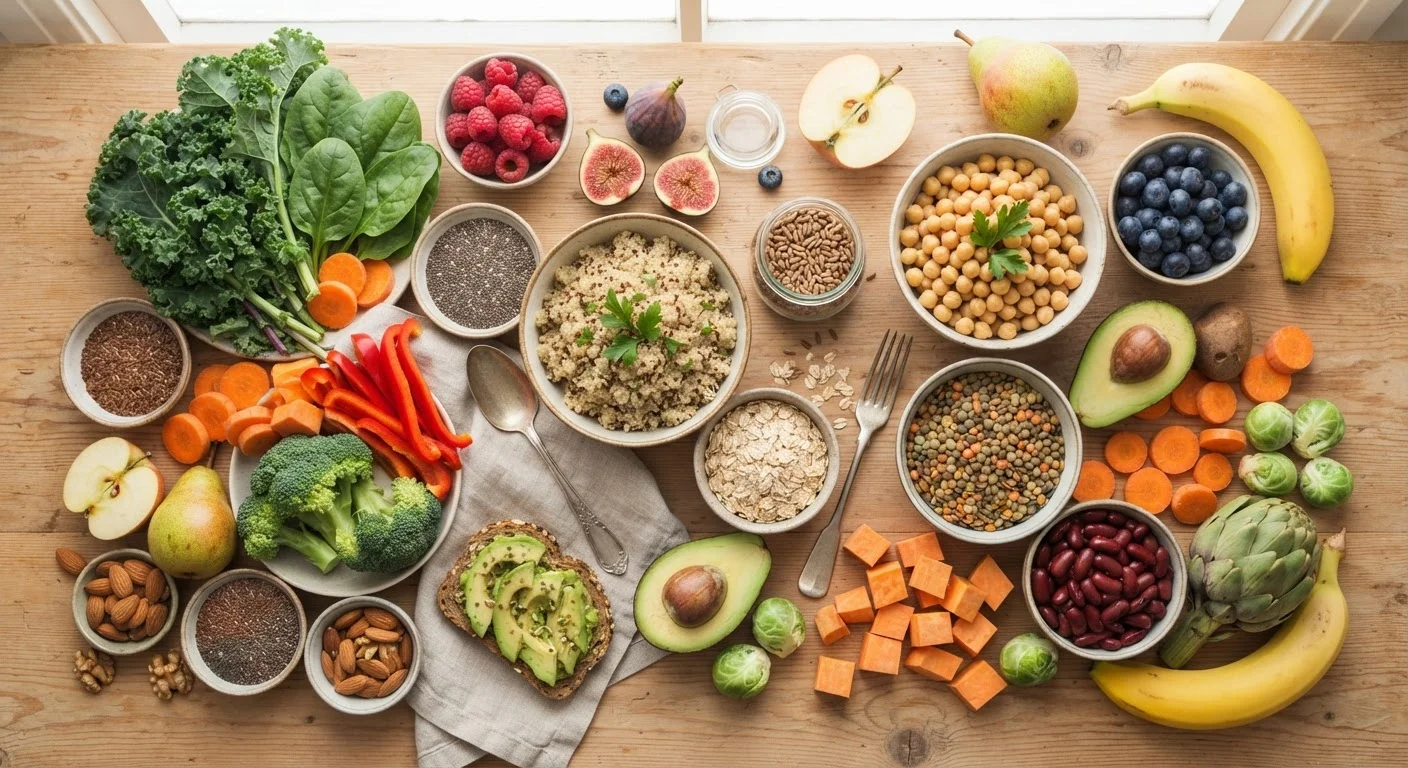
What Fiber Actually Does in the Body
Fiber is often reduced to its most basic association - keeping digestion regular - but its role in the body extends well beyond that. As fiber moves through the gastrointestinal tract, it interacts with the gut environment in ways that affect blood sugar regulation, cholesterol metabolism, inflammation, and the composition of the gut microbiome.
Soluble fiber, found in foods like oats, apples, and lentils, binds to bile acids in the digestive tract. The liver must then draw on circulating cholesterol to produce more bile, which can contribute to lower LDL (low-density lipoprotein) cholesterol levels over time. Soluble fiber also slows the absorption of glucose, helping to moderate blood sugar spikes after meals - a benefit relevant to both metabolic health and sustained energy levels.
Insoluble fiber, abundant in whole wheat, bran, and many vegetables, adds physical bulk to digestive contents and accelerates transit time through the colon. This supports regularity and may reduce exposure of the intestinal lining to potentially harmful compounds.
Perhaps most notably, certain types of fiber - classified as prebiotics - serve as fuel for beneficial gut bacteria. A well-nourished microbiome produces short-chain fatty acids that support gut barrier integrity and are associated with reduced systemic inflammation. For a broader look at how individual nutrients interact in the diet, see our nutrition science foundations guide.
~15g
Average daily fiber intake for U.S. adults
According to USDA data, most Americans consume around 15 grams of fiber per day - roughly half of the recommended amount.
95%
Americans not meeting daily fiber recommendations
Research published in the American Journal of Lifestyle Medicine estimated that approximately 95% of Americans fail to meet adequate daily fiber intake.
25-38g
Recommended daily fiber for adults
The Dietary Guidelines for Americans recommend 25 grams per day for women and 38 grams per day for men based on a standard 2,000-calorie diet.
Why the Fiber Gap Persists
Despite widespread awareness that fiber is beneficial, average American fiber intake consistently falls short of federal dietary recommendations. The USDA Dietary Guidelines identify dietary fiber as a nutrient of public health concern - a designation reserved for nutrients that most Americans consume in inadequate amounts.
The underlying reason is largely structural: the American food supply is heavily weighted toward processed and refined foods, which strip away most of the fiber present in whole grains, fruits, and vegetables. White bread, refined cereals, and packaged snacks are quick, inexpensive, and widely available - but they contribute little fiber compared to their whole-food counterparts.
Eating patterns also play a role. Meals built around meat, refined carbohydrates, and dairy - with limited vegetable and legume variety - leave little room for fiber-dense foods. This pattern reflects both cultural habit and, in many communities, limited access to affordable fresh produce.
Increase Fiber Gradually to Avoid Discomfort
Adding large amounts of fiber to the diet too quickly is one of the most common reasons people give up on high-fiber eating. The digestive system needs time to adjust, particularly as gut bacteria adapt to a new substrate. A practical approach is to add one higher-fiber food per day over two to three weeks while ensuring you are drinking enough water throughout the day.
Understanding what a high-fiber eating pattern actually looks like in practice can make the gap feel more manageable. Our balanced plate framework offers a meal-by-meal structure for integrating more plant foods without overhauling your diet entirely.
Practical Ways to Increase Fiber Intake
Closing the fiber gap does not require dramatic dietary changes. Small, consistent substitutions tend to be more sustainable than wholesale overhauls - a principle supported by behavioral nutrition research. For context on why gradual shifts outperform restrictive approaches, see why diets often fail.
Effective strategies include:
- Swap refined grains for whole grains. Choosing whole wheat bread, brown rice, or oats over their refined counterparts adds meaningful fiber with minimal effort.
- Include legumes regularly. Adding lentils, chickpeas, or black beans to soups, salads, or grain bowls can contribute 6-9 grams of fiber per half-cup serving.
- Eat fruit and vegetables with skins where safe to do so. The peel of apples, pears, and potatoes contains a significant portion of their total fiber.
- Front-load fiber early in the day. A breakfast built around oats, fruit, or a fiber-rich cereal sets a stronger nutritional foundation for the day.
Hydration matters alongside fiber. Insoluble fiber works most effectively when fluid intake is adequate, and insufficient water can exacerbate rather than relieve digestive discomfort. For more on how hydration interacts with digestion, see hydration and nutrition.
A person replaces their usual breakfast of white toast and orange juice with a bowl of oatmeal topped with fresh berries and a handful of walnuts.
A weekday lunch shifts from a deli sandwich on white bread to a grain bowl featuring farro, roasted vegetables, and a serving of chickpeas.
A family adds a side of black beans to their usual taco night instead of using only seasoned ground meat.
This article is for informational purposes only and does not constitute medical or dietary advice. Speak with a qualified healthcare professional or registered dietitian before making significant changes to your diet, particularly if you have a digestive condition or chronic health concern.
Frequently Asked Questions
The Dietary Guidelines for Americans recommend 25 grams per day for adult women and 38 grams per day for adult men, based on a 2,000-calorie diet. These targets decline slightly for adults over 50. Most Americans currently average around 15 grams per day.
Soluble fiber dissolves in water and forms a gel that can help slow digestion and moderate blood sugar and cholesterol levels. Insoluble fiber does not dissolve; it adds bulk to stool and helps food move through the digestive tract more efficiently. Most whole plant foods contain both types in varying proportions.
Fiber supplements can help close the gap but are not equivalent to food-based fiber. Whole foods deliver a broader range of fiber types along with vitamins, minerals, antioxidants, and other beneficial compounds. Supplements may be useful in some situations, but a healthcare provider should be consulted before adding them regularly.
Gut bacteria ferment fiber as part of normal digestion, and a rapid increase in fiber intake can temporarily cause gas, bloating, or cramping. Increasing fiber intake gradually over several weeks - and drinking plenty of water - typically allows the digestive system to adjust without discomfort.
Legumes such as lentils, black beans, and chickpeas are among the most concentrated sources. Other high-fiber foods include whole grains like oats and barley, vegetables such as broccoli and Brussels sprouts, and fruits including raspberries, pears, and apples. The fiber content varies depending on preparation and whether skins are retained.
Cooking generally does not eliminate fiber, though it can soften its structure and slightly alter the ratio of soluble to insoluble fiber in some foods. Canned beans, for example, retain nearly as much fiber as freshly cooked beans. Peeling fruits and vegetables, however, can significantly reduce their fiber contribution.
The content on this site is provided for informational purposes only and should not be considered a substitute for professional advice. While we strive to provide accurate and up-to-date information, we make no guarantees regarding its completeness or accuracy. Always consult a qualified professional for advice specific to your circumstances before making any decisions