

Our Verdict
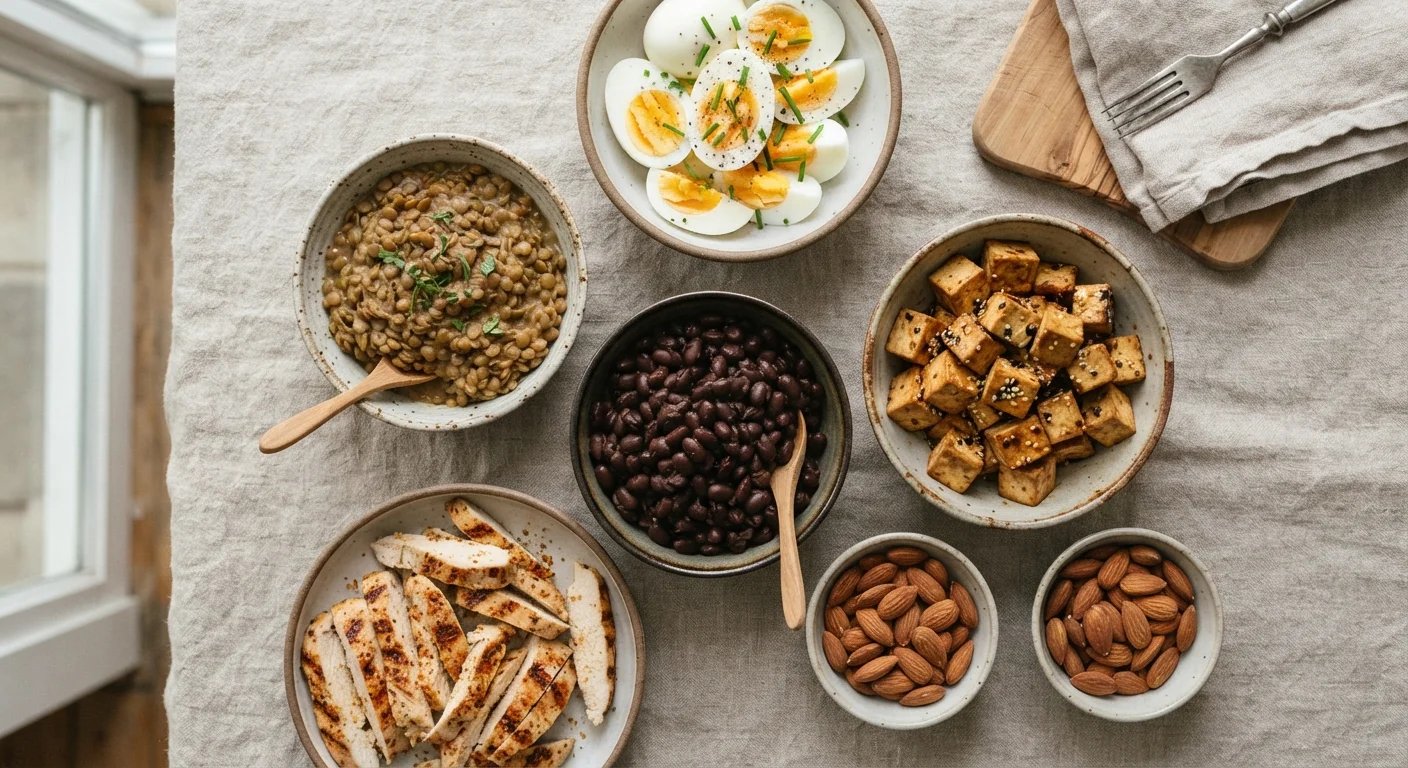
No single protein source dominates across every nutritional dimension. Animal proteins offer completeness and high digestibility, while plant proteins bring fiber, phytonutrients, and lower saturated fat. The most evidence-backed approach for most people is variety - pairing different sources across meals to capture each category's strengths.
| Best for | Recommended |
|---|---|
| Those focused on maximizing protein efficiency per gram | Eggs or lean poultry |
| Plant-based eaters seeking complete amino acid coverage | Soy foods (tofu, edamame, tempeh) |
| Budget-conscious eaters wanting high protein and fiber | Legumes (lentils, chickpeas, black beans) |
| Flexitarians wanting the broadest nutritional balance | Mixed animal and plant protein sources |
What Makes a Protein 'High Quality'?
Protein quality is determined by two main factors: amino acid profile and digestibility. Proteins are made up of 20 amino acids, nine of which are classified as essential - meaning the body cannot produce them and must obtain them through food. A protein containing all nine in sufficient amounts is called a complete protein.
Digestibility refers to how efficiently the body absorbs and uses a protein source. Scientists use a metric called the DIAAS - endorsed by the Food and Agriculture Organization - to rank protein quality more precisely than older systems. Higher DIAAS scores indicate better amino acid absorption. Animal proteins tend to score higher, though this doesn't make plant proteins nutritionally irrelevant.
If you're new to thinking about macronutrients, our beginner's guide to nutrition science covers the foundational concepts in plain language.
Animal Proteins: Eggs, Meat, Fish, and Dairy
Animal-based proteins - including meat, poultry, fish, eggs, and dairy - are complete proteins with high DIAAS scores. Eggs are frequently cited by researchers as a near-ideal protein source, with excellent amino acid balance and a digestibility score close to or above 1.0. Fatty fish like salmon add omega-3 fatty acids alongside protein, offering cardiovascular benefits recognized by health authorities including the American Heart Association.
Lean meats such as chicken breast and turkey deliver substantial protein with relatively low saturated fat. Red and processed meats, while protein-rich, carry associations with increased health risks at high intake levels according to research reviewed by the World Health Organization - context and quantity matter here.
Dairy sources like Greek yogurt and cottage cheese also provide complete protein, along with calcium. They suit many dietary patterns, though lactose intolerance affects a meaningful share of the population and should be factored in.
| Eggs | Chicken Breast | Lentils | Tofu | Greek Yogurt | |
|---|---|---|---|---|---|
| Protein completeness | Complete | Complete | Incomplete | Complete | Complete |
| Digestibility (DIAAS) | Very high (≈1.13) | High (≈1.08) | Moderate (≈0.59) | Moderate-high (≈0.84) | High (≈1.08) |
| Approx. protein per 100g | 13g | 31g | 9g (cooked) | 8g | 10g |
| Saturated fat level | Moderate | Low | Negligible | Low | Low-moderate |
| Fiber content | None | None | High | Low | None |
| Key nutrients alongside protein | B12, choline | Niacin, selenium | Iron, folate | Calcium, isoflavones | Calcium, probiotics |
| Dietary suitability | Vegetarian-friendly | Omnivore | Vegan-friendly | Vegan-friendly | Vegetarian-friendly |
Plant Proteins: Legumes, Soy, Grains, and Nuts
Plant proteins are often called incomplete because most are low in at least one essential amino acid - lysine is the most common limiting amino acid in grains, while methionine is lower in legumes. However, this limitation is easily addressed by eating a variety of plant foods across the day, not necessarily at every meal.
Soy stands out as the primary plant-based complete protein. Tofu, edamame, and tempeh all provide all essential amino acids at meaningful levels, and tempeh's fermentation process can further improve digestibility. Lentils and chickpeas are protein-dense, affordable, and rich in fiber and iron - though their iron is non-heme iron, which is absorbed less efficiently than heme iron from meat (pairing with vitamin C-rich foods can help).
Nuts, seeds, and whole grains contribute protein alongside healthy fats, fiber, and micronutrients. While their protein content per serving is lower than legumes or soy, they form a valuable part of a varied diet. See how to integrate these into everyday meals using our guide on building a balanced plate.
Combining Plant Proteins Across Meals
You don't need to pair complementary plant proteins at every single meal. Research shows that eating a variety of plant foods throughout the day - grains at breakfast, legumes at lunch, nuts at a snack - effectively covers your essential amino acid needs. Focus on variety over the day rather than engineering each plate.
Choosing What Works for Your Diet
Protein source decisions rarely hinge on nutrition data alone. Allergies, ethical values, environmental impact, cost, and cooking habits all play real roles. From a purely nutritional standpoint, research generally supports both omnivore and well-planned plant-based diets as capable of meeting protein needs across the lifespan - the Academy of Nutrition and Dietetics affirms that appropriately planned vegetarian and vegan diets can be nutritionally adequate.
Processing matters too. A whole chicken breast and a heavily processed chicken product are not nutritionally equivalent - the latter may carry excess sodium, additives, and lower nutrient density. Our whole foods vs. processed foods breakdown explains why form affects nutritional value significantly.
Regularly reflecting on your protein variety is a useful habit. Our weekly nutrition check-in offers practical questions to help you assess your eating patterns without rigid rules.
This article is for general informational and educational purposes only and is not a substitute for professional medical or dietary advice. Consult a registered dietitian or qualified healthcare provider for guidance tailored to your individual health needs.
The content on this site is provided for informational purposes only and should not be considered a substitute for professional advice. While we strive to provide accurate and up-to-date information, we make no guarantees regarding its completeness or accuracy. Always consult a qualified professional for advice specific to your circumstances before making any decisions