

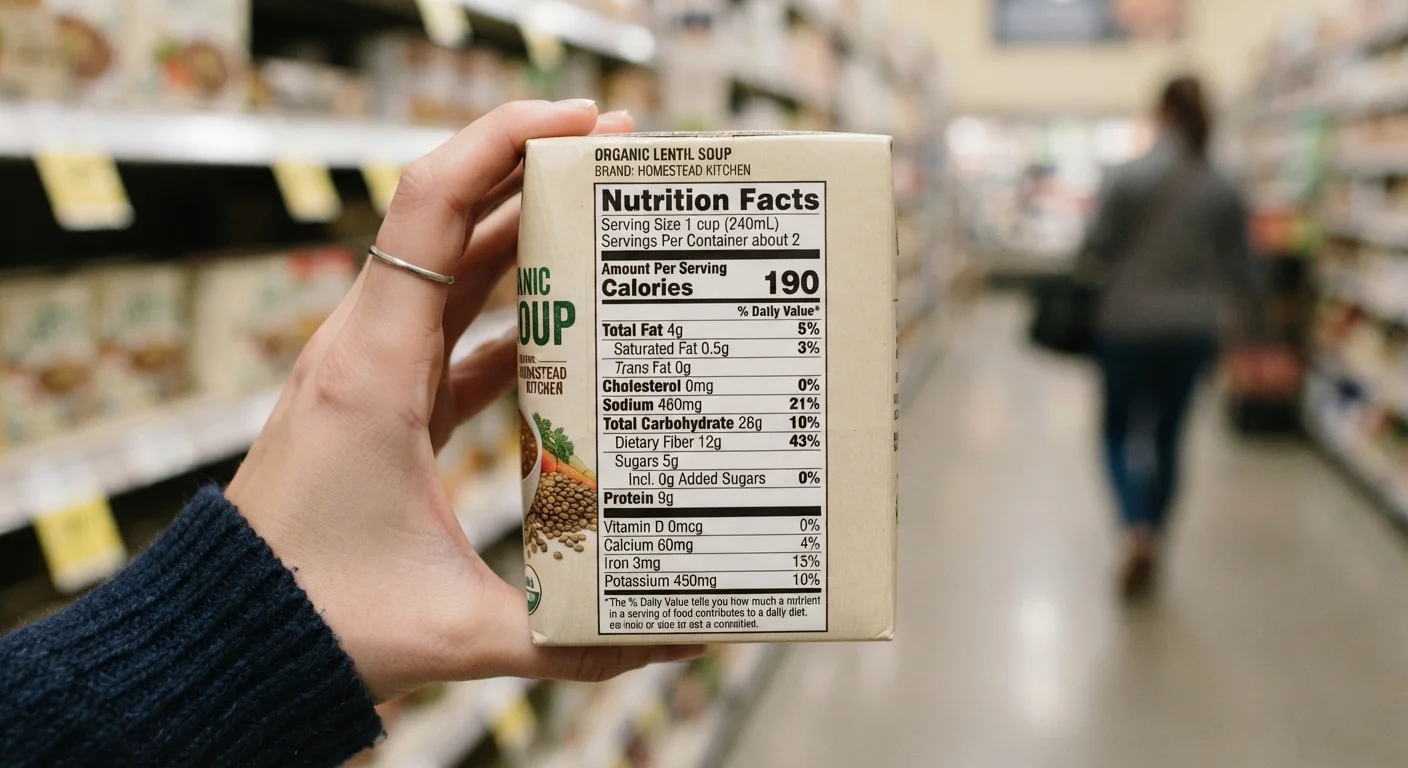
Why the Nutrition Facts Label Matters
The Nutrition Facts label is one of the most accessible and consistent tools available for evaluating packaged food. Standardized by the U.S. Food and Drug Administration (FDA) and updated in 2020 to reflect current nutrition science, the label gives you a snapshot of what a food contributes to your diet - calories, macronutrients, key micronutrients, and more. If you're newer to thinking about nutrition, our beginner's guide to nutrition science covers the core concepts that make label-reading more intuitive.
Despite its familiarity, the label is frequently misread. Consumers often treat the entire package as one serving, confuse %DV with percentage of total calories, or focus only on calories while ignoring fiber, added sugars, and sodium. Each of these misreadings can lead to inaccurate assessments of a food's role in an overall diet.
Labels Inform, But Don't Diagnose
The information on a Nutrition Facts label is general educational data, not personalized medical or dietary advice. If you have a health condition, food allergy, or specific nutritional need, consult a registered dietitian or your healthcare provider before making significant dietary changes based on label data.
It's also worth knowing that the label reflects what's in the food - not what's claimed on the front of the package. Marketing terms like "natural," "light," or "multigrain" are regulated inconsistently and often convey less than they imply. For a breakdown of which label claims carry weight and which don't, see our article on food label claims worth paying attention to.
Putting It All Together in Your Daily Diet
Reading a single label in isolation only tells part of the story. A food that's high in sodium may still fit comfortably into a day where other meals are low in sodium. The Nutrition Facts panel is most useful when you treat it as one data point within the full picture of your daily eating pattern.
Use Daily Values as a Rough Compass
As a quick rule of thumb, 5% DV or less for a nutrient is generally considered low, and 20% DV or more is considered high. This shortcut works well when you're comparing two similar products side by side. Keep in mind the 2,000-calorie reference point may not match your actual energy needs.
Once you're comfortable reading individual labels, the next step is applying that knowledge at the meal level. Our practical framework for building a balanced plate shows how to assemble meals that bring together an appropriate mix of nutrients without requiring calorie counting or complex tracking.
For an ongoing check on your eating habits, consider the reflective questions in our weekly nutrition check-in. Over time, reading labels becomes faster and more intuitive - and you'll develop a clearer sense of which numbers deserve your attention and which are less relevant to your personal dietary goals.
Watch Out for Multiple Servings Per Package
Single-serving packaging can be misleading. A bag of chips or a bottle of juice may list two or more servings, meaning the calories and nutrients shown must be multiplied accordingly. Always check the 'Servings Per Container' line before assuming the entire package equals one serving.
This article is for general informational and educational purposes only and is not a substitute for advice from a qualified healthcare professional or registered dietitian. Individual nutritional needs vary. Always consult a licensed professional for guidance specific to your health situation.
The content on this site is provided for informational purposes only and should not be considered a substitute for professional advice. While we strive to provide accurate and up-to-date information, we make no guarantees regarding its completeness or accuracy. Always consult a qualified professional for advice specific to your circumstances before making any decisions