

Why Food Labels Can Feel Like a Foreign Language
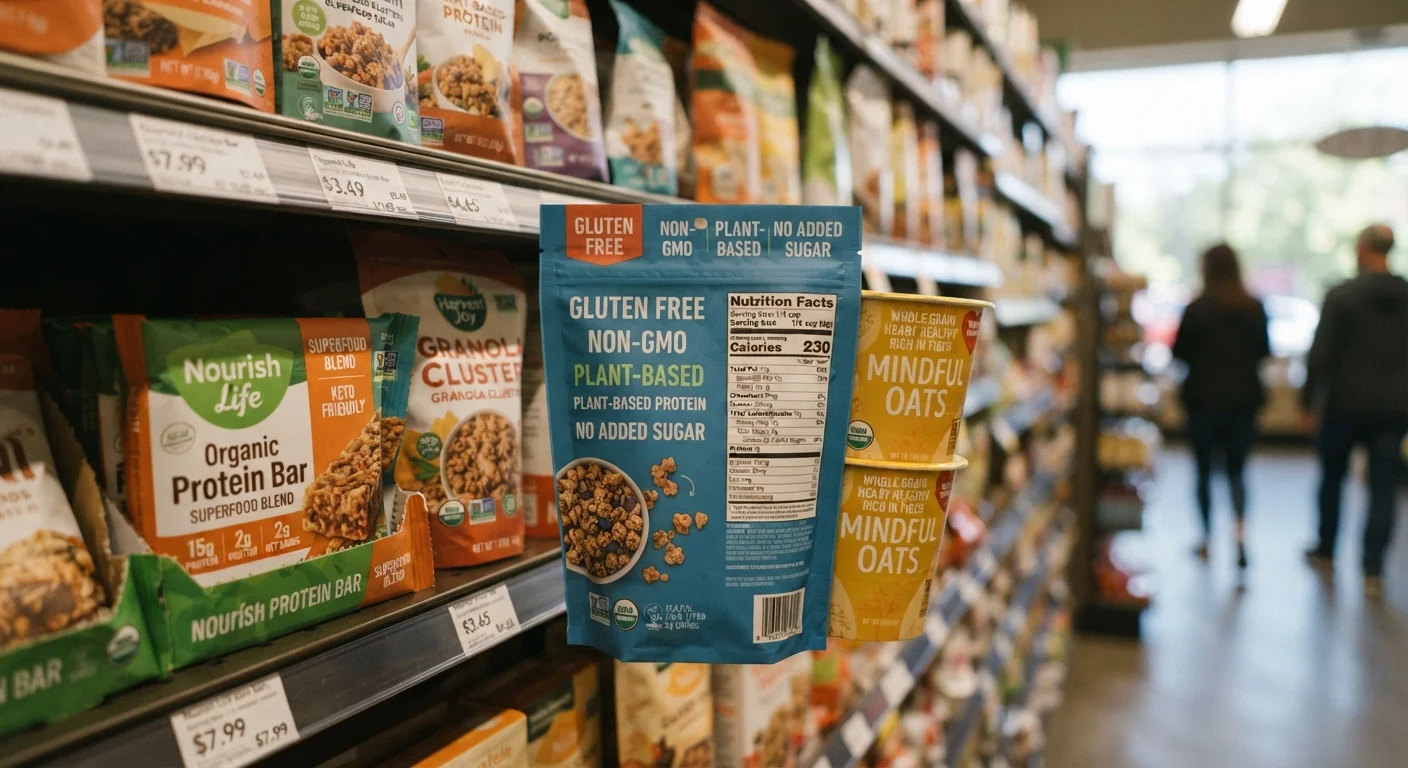
Walk down any grocery aisle and you'll be met with a barrage of promises: "all-natural," "light," "multigrain," "hormone-free." These phrases are engineered to feel reassuring, but their actual nutritional meaning ranges from precise and regulated to essentially nothing at all. For everyday shoppers trying to make healthier choices, the gap between marketing language and meaningful information can be genuinely confusing.
The U.S. Food and Drug Administration (FDA) regulates specific nutrient content claims on food labels and sets strict criteria each one must meet. The U.S. Department of Agriculture (USDA) governs meat, poultry, and egg labeling under a parallel framework. But many of the phrases dominating front-of-package design fall outside those defined categories entirely - which means manufacturers can use them with very little accountability.
Learning to distinguish regulated claims from unregulated marketing language is one of the more practical nutrition skills you can develop. For a deeper look at how to interpret the actual numbers on a label, see our step-by-step guide to the Nutrition Facts panel.
"Low Sodium" - A Regulated Claim Worth Trusting
The FDA defines "low sodium" as containing 140 milligrams or less of sodium per serving. Related terms like "very low sodium" (35 mg or less) and "sodium-free" (less than 5 mg) are equally precise. These definitions make sodium claims among the more reliable nutrient content claims on the shelf, provided you also check the serving size - a product low in sodium per serving may still deliver significant sodium across a realistic portion.
"Low sodium" has a strict FDA ceiling of 140 mg per serving - one of the label's more trustworthy claims.
"Natural" - Widespread, Loosely Defined, and Frequently Misleading
The FDA has stated it has not formally defined the term "natural" for most foods, though it has historically exercised enforcement discretion around products using it to mean no added artificial flavors, colors, or synthetic substances. In practice, a "natural" product may be highly processed, contain added sugars, or carry a lengthy ingredient list. The word is a marketing phrase more than a nutritional signal. Shoppers who see it should look past it to the ingredient list.
"Natural" has no formal FDA definition for most foods and is largely a marketing term.
"Multigrain" vs. "Whole Grain" - A Meaningful Distinction
"Multigrain" simply means a product contains more than one type of grain. Those grains may all be refined, meaning the fiber-rich bran and nutrient-dense germ have been removed during processing. "Whole grain," by contrast, means the grain retains all three of its original components. The FDA allows a qualified health claim linking whole grain consumption to reduced risk of heart disease and certain cancers, based on the body of evidence. When choosing grain-based products, "100% whole grain" or seeing a whole grain listed first in the ingredient list is the more meaningful signal.
"Multigrain" tells you nothing about whether the grains are refined or whole - check the ingredient list.
"Low-Fat" and "Light" - Regulated but Potentially Misleading in Context
The FDA defines "low-fat" as 3 grams of fat or less per serving, and "light" (or "lite") as containing at least 33% fewer calories or 50% less fat than a comparable reference product. These are real, defined claims - but they don't account for what replaces the fat. Many low-fat products compensate with added sugars or sodium to restore palatability. Checking the full Nutrition Facts panel alongside these claims gives a more complete picture. For more on how fat-related misconceptions persist, see our piece on nutrition myths most Americans still believe.
Low-fat products often contain added sugars or sodium - the full Nutrition Facts panel tells the real story.
"Organic" - USDA Certified, Specific, and Worth Understanding
Unlike many front-of-package terms, "USDA Organic" is backed by a detailed federal certification program. Products bearing the USDA Organic seal must meet strict standards: crops must be grown without most synthetic pesticides or fertilizers, and livestock must be raised under specific welfare and feed conditions. "100% Organic" means all ingredients meet the standard; products labeled simply "Organic" must contain at least 95% organic ingredients. "Organic" does not automatically mean more nutritious - an organic cookie is still a cookie - but the certification does reflect verifiable production practices.
The USDA Organic seal reflects verified production standards, not an automatic guarantee of superior nutrition.
"Hormone-Free" on Poultry and Pork - Legally Required, Not a Differentiator
By federal law, hormones are not permitted in the raising of poultry or pork in the United States. When a chicken or pork product claims to be "raised without hormones," the USDA requires that the label also carry a disclosure noting that federal regulations prohibit the use of hormones in these products anyway. In other words, the claim is technically true but tells you nothing that isn't already true of every comparable product on the shelf. The same phrase on beef does carry more meaning, since hormone use is permitted in beef cattle production.
"Hormone-free" on chicken or pork reflects a legal requirement, not a meaningful product distinction.
"Good Source Of" and "High In" - Reliable Nutrient Content Benchmarks
The FDA defines "good source of" a nutrient as providing 10-19% of the Daily Value (DV") per serving, while "high in," "rich in," or "excellent source of" requires at least 20% DV per serving. These are consistent, defined thresholds - useful reference points when you're trying to identify, say, a fiber-rich cereal or a calcium-dense dairy alternative. They apply to vitamins, minerals, fiber, and other nutrients with established daily values. Just remember that serving sizes can vary widely between products, so comparing labels directly requires checking that detail first.
"Excellent source of" means at least 20% of the Daily Value per serving - a consistent, FDA-defined benchmark.
"Made with Real Fruit" - Often Less Than It Sounds
This phrase is one of the most common examples of an unregulated front-of-package claim. There is no defined minimum for how much real fruit a product must contain to carry this wording. A product could technically meet the claim with a negligible quantity of fruit concentrate buried near the end of the ingredient list - while deriving most of its sweetness from added sugars. For a more grounded look at how sugars are classified and labeled, our article on added sugars vs. natural sugars breaks down the distinction clearly.
"Made with real fruit" has no minimum fruit content requirement - it's an unregulated marketing phrase.
Putting It Together at the Shelf
No single label claim should steer a purchase decision on its own. The most reliable approach is to flip the package over: check the Nutrition Facts panel for serving size and actual nutrient amounts, then scan the ingredient list - ingredients are listed in descending order by weight, so what appears first is most prevalent.
Focus on the Ingredient List First
The ingredient list is required to follow standardized rules: ingredients are listed by weight, from most to least. If a whole grain, vegetable, or protein source appears first, that reflects genuine product composition. If added sugar appears in the first three ingredients under multiple names - such as "cane syrup," "dextrose," or "maltose" - that's meaningful information no front-of-package claim will volunteer.
Front-of-package claims are worth noting as a starting point, but they're marketing tools first. Pairing awareness of regulated terms with a habit of reading the ingredient list puts the power back in your hands. For broader context on how whole and minimally processed foods fit into this picture, our article on whole foods vs. processed foods is a useful companion read.
This article is for general informational and educational purposes only and does not constitute medical or dietary advice. Consult a qualified healthcare or nutrition professional for guidance specific to your health needs.
The content on this site is provided for informational purposes only and should not be considered a substitute for professional advice. While we strive to provide accurate and up-to-date information, we make no guarantees regarding its completeness or accuracy. Always consult a qualified professional for advice specific to your circumstances before making any decisions