

Our Verdict
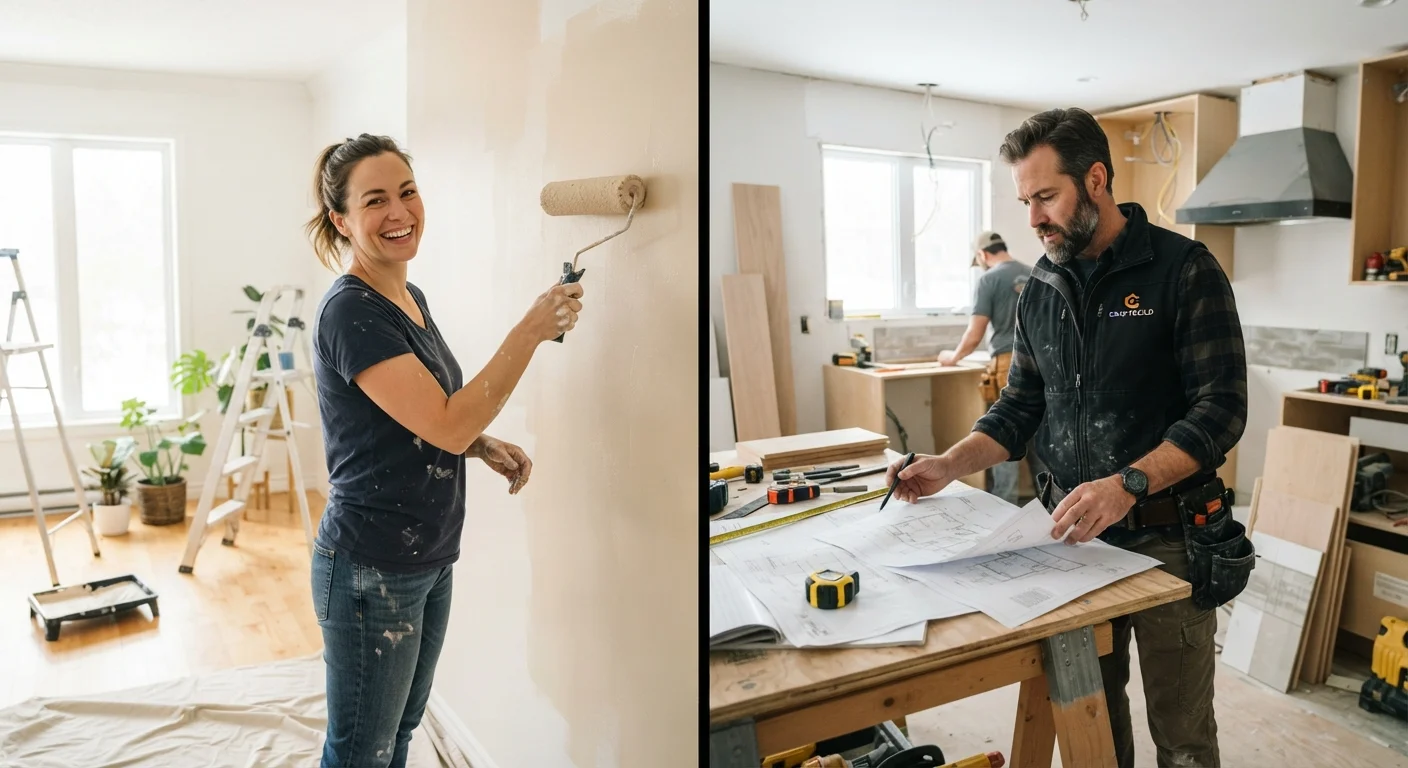
Neither DIY nor hiring a contractor is universally better - the right call depends on the specific task, your verified skill set, local permit requirements, and the consequences of getting it wrong. For cosmetic upgrades and low-risk maintenance, capable DIYers can save significantly on labor. For structural, electrical, gas, or code-regulated work, hiring a licensed professional is almost always the safer and smarter investment.
| Best for | Recommended |
|---|---|
| Confident DIYers with relevant skills and low-risk projects | DIY |
| Electrical, gas, plumbing-to-mains, or structural work | Hire a Licensed Contractor |
| Complex projects with cosmetic finishing phases | Hybrid Approach |
| Projects affecting home resale value or requiring permits | Hire a Licensed Contractor |
The Question Isn't Just About Money
Most homeowners frame the DIY-vs.-contractor decision around cost savings. That's understandable - labor can account for 40-60% of a renovation budget - but price alone is a poor compass. The smarter framework weighs three variables before anything else: safety risk, skill match, and permit requirements.
Safety risk asks whether a mistake could injure someone, damage the home's systems, or create a liability issue. Skill match asks honestly whether your current abilities meet the technical demands of the job - not the job you imagine, but the one you'll actually encounter behind the wall. Permit requirements ask whether local building codes mandate licensed work and inspections, because unpermitted work can complicate insurance claims and future home sales.
For a deeper look at how these principles apply to repair versus renovation scenarios, see our guide to drawing the line on home repairs.
Start With an Honest Skill Inventory
Before committing to any project, write down the specific tasks involved - not just the general category. 'Bathroom renovation' is too broad; 'removing old tile, installing cement backer board, setting new tile, and grouting' is specific enough to assess honestly. Match each task against work you've completed successfully before, not work you've watched online. This gap analysis often reveals where a hybrid approach makes the most sense.
Jobs That Are Generally Safe to DIY
Several home improvement categories are well-suited to capable DIYers because they carry low structural or safety risk, require tools that are widely accessible, and are forgiving of learning curves. These typically include:
- Interior painting and wallpaper - High labor-to-skill ratio; mistakes are correctable.
- Landscaping and garden work - Planting, mulching, and non-structural hardscaping can be tackled in phases.
- Tile installation - Floor and backsplash tile in non-wet areas is manageable with preparation and patience.
- Cabinet hardware and fixture swaps - Replacing handles, faucets (not rerouting supply lines), and light fixtures involves minimal risk when power is properly shut off.
- Drywall patching - Small to medium patches are learnable; large replacements involving load-bearing walls are not in this category.
Keep in mind that even low-risk DIY has a real cost: your time. An honest accounting of what sweat equity actually saves you should factor in the learning curve, material waste from mistakes, and the cost of renting specialized tools.
Jobs That Require a Licensed Professional
Certain categories of work are regulated, dangerous, or consequential enough that DIY is not a reasonable option for most homeowners - regardless of confidence level.
Unpermitted Work Can Create Serious Problems
Work done without required permits is not just a code issue - it can affect your homeowner's insurance coverage, complicate the sale of your home, and require costly remediation when discovered during an appraisal or inspection. Some jurisdictions require unpermitted work to be fully removed and redone before a property can transfer ownership. Always check with your local building department before starting any project that involves structural, electrical, plumbing, or HVAC systems.
- Electrical panel work, new circuit runs, and rewiring - Most jurisdictions require a licensed electrician and inspection. Faulty wiring is a leading cause of residential fires.
- Gas line installation or repair - This work is regulated in virtually every state and must be handled by a licensed plumber or gas fitter.
- Structural modifications - Removing or altering load-bearing walls without engineering review can compromise the home's integrity.
- Main plumbing connections - Tying into municipal water or sewer lines typically requires permits and licensed tradespeople.
- Roofing on steep or tall structures - Fall risk is significant; improper installation can void manufacturer warranties and create leak liability.
Before starting any project in these categories, contact your local building department to understand permit requirements. If you're new to the process, a realistic starting point for first-time renovators can help you understand what to expect.
Comparing DIY and Contractor Approaches
The table below outlines how DIY and hiring a contractor compare across the factors that matter most to homeowners planning a renovation.
| DIY | Hire a Contractor | |
|---|---|---|
| Upfront labor cost | None (your time only) | Significant; 40-60% of total budget |
| Safety risk management | Entirely your responsibility | Contractor carries liability insurance |
| Permit & code compliance | Must self-navigate; risk of violations | Licensed trades typically manage permits |
| Quality consistency | Varies by skill and experience | Generally predictable with vetted contractor |
| Timeline | Flexible but often longer | Fixed schedule; subject to contractor availability |
| Impact on resale value | Risk of unpermitted or substandard work | Professional work typically meets appraisal standards |
| Ideal project type | Cosmetic, low-risk, learnable tasks | Structural, electrical, gas, plumbing work |
A hybrid strategy - handling cosmetic or preparatory work yourself while contracting the technical core - can offer meaningful savings without taking on unacceptable risk. For example, a homeowner might demo old tile and paint after drywall is complete, while leaving the electrical rough-in to a licensed electrician.
If you do move forward with a contractor, understanding the numbers is critical. Our breakdown of what contractor bid line items mean can help you evaluate quotes with confidence.
Before You Decide: Four Questions to Ask Yourself
Use this short self-assessment before committing to either path on any project:
- Have I done something similar before, or am I starting from scratch? First-time attempts often take two to three times longer than expected and involve costly material waste.
- Does this job require a permit in my municipality? If yes, verify whether the permit requires licensed-trade sign-off - many do.
- What is the worst-case outcome if I make a mistake? A botched paint job is fixable. A miswired circuit or improperly supported beam is not.
- Do I have the right tools, or will renting/buying them erase my savings? Specialized equipment like tile saws, pipe threaders, or drywall lifts adds real cost to DIY budgets.
Budget planning deserves its own careful attention regardless of which path you choose. Our article on why renovation budgets fall apart covers the most common planning mistakes and how to avoid them. And if you're hiring a contractor, what contractors wish homeowners understood can set the working relationship up for success from the start.
The content on this site is provided for informational purposes only and should not be considered a substitute for professional advice. While we strive to provide accurate and up-to-date information, we make no guarantees regarding its completeness or accuracy. Always consult a qualified professional for advice specific to your circumstances before making any decisions