

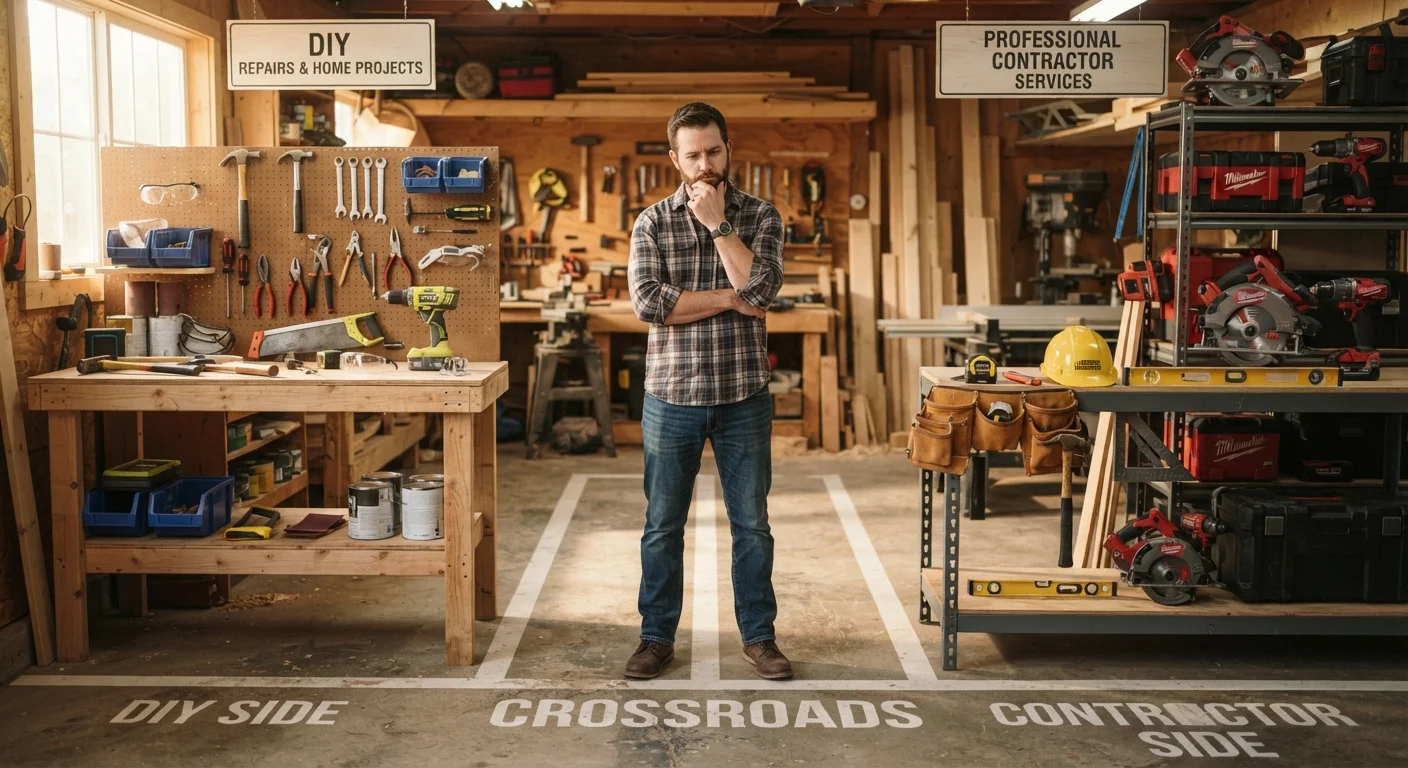
Our Verdict
DIY home repairs can be genuinely rewarding and cost-effective when the work is low-risk, clearly within your skill set, and doesn't require permits. But for electrical, gas, structural, or roofing work, the risks of injury, code violation, and compounding damage far outweigh any labor savings. The smartest approach is knowing which category each job falls into before you pick up a tool.
| Best for | Recommended |
|---|---|
| Handy homeowners comfortable with tools and basic systems | DIY |
| Work involving electrical panels, gas lines, or load-bearing structures | Hire a Pro |
| First-time homeowners learning their home's systems | Hire a Pro for complex tasks, DIY for simple maintenance |
| Jobs requiring permits, inspections, or licensed tradespeople by local code | Hire a Pro |
Why the DIY vs. Pro Decision Matters More Than You Think
Every homeowner eventually faces the same question: handle this repair yourself, or call someone in? The impulse to save money by doing it yourself is understandable - but the calculus isn't always straightforward. A poorly executed repair can void warranties, fail inspections, create safety hazards, or result in far costlier fixes down the road.
This isn't about whether you're handy. It's about honestly matching the job's demands to your skills, tools, and the regulatory environment around it. Many homeowners underestimate how often local building codes require permits for work that seems routine - and skipping those steps can create real problems when it's time to sell or file an insurance claim. For a broader look at how common assumptions can lead homeowners astray, see our article on home maintenance myths that cost homeowners money.
Repairs That Are Generally Safe to DIY
Certain categories of home repair carry low risk, require no permits, and are genuinely manageable for homeowners with basic mechanical ability and the right tools. These include:
- Painting interior walls - preparation matters more than technique, and mistakes are correctable.
- Replacing interior door hardware - knobs, hinges, and locksets typically involve only basic hand tools.
- Patching drywall - small holes and dings are low-stakes repairs with forgiving learning curves.
- Unclogging drains - a plunger or drain snake handles most routine clogs without touching supply lines.
- Replacing a toilet fill valve or flapper - parts are inexpensive and the shut-off valve makes this low-risk.
- Caulking around tubs and windows - a basic but impactful maintenance task that prevents water intrusion.
- Pressure washing exterior surfaces - effective for driveways, decks, and siding when done correctly. Our guide on pressure washing your home's exterior covers what can go wrong and how to avoid it.
Test Your Decision Before You Start
Before beginning any repair, ask yourself: Can I stop partway through without making things worse? Do I have all the required tools and materials on hand? Have I read through the full process - not just the first few steps? If the answer to any of these is no, that's useful information. Starting a job you can't safely finish is one of the most common reasons homeowners end up calling a professional anyway - at a higher cost than if they'd called first.
The common thread in DIY-safe repairs: the task is isolated, the consequences of an error are limited and visible, and you can stop and call for help without having made the situation worse.
Work That Almost Always Requires a Licensed Professional
Some repairs fall outside safe DIY territory not because they're technically complex, but because the risks - to life, property, and legal standing - are too high. In most U.S. jurisdictions, the following categories require licensed contractors and pulled permits:
| Task Type | DIY | Hire a Pro | |
|---|---|---|---|
| Typical skill required | Basic to intermediate | Licensed or certified trade | |
| Permit usually required? | Rarely | Often yes | |
| Risk if done incorrectly | Low to moderate (cosmetic/reversible) | High (safety, structural, legal) | |
| Examples | Painting, caulking, minor plumbing | Electrical panel, gas lines, roof replacement | |
| Cost of a mistake | Usually manageable | Can far exceed original job cost | |
| Insurance/resale impact | Minimal if done properly | Significant if unpermitted work is discovered |
- Electrical panel work - Adding circuits, upgrading service, or touching your main panel carries electrocution risk and fire risk if done incorrectly. This is licensed-electrician territory in virtually every state.
- Gas line repairs or modifications - Gas leaks can cause explosions and carbon monoxide exposure. Any work on gas supply lines must be handled by a licensed plumber or gas fitter.
- Structural modifications - Removing or altering walls, especially load-bearing walls, without engineering review can cause catastrophic failure.
- Roof replacement or major repairs - Beyond the fall hazard, improper flashing and underlayment installation leads to water damage that may not be visible for months.
- HVAC system work - Refrigerant handling requires EPA certification; ductwork modifications affect efficiency and air quality throughout the home.
If you're unsure whether your project requires a permit, contact your local building department before starting - not after. The cost of a permit is almost always less than the cost of unpermitted work discovered during a home sale or insurance claim.
The Gray Zone: Tasks That Depend on Your Skill Level
Between clearly safe and clearly off-limits lies a wide middle ground where the right answer depends on the individual homeowner. Consider these factors honestly before proceeding:
- Do you have the right tools?
- Improvising with the wrong tools is one of the most common causes of DIY injuries and botched repairs.
- Have you done this - or something similar - before?
- A first attempt at tile work or deck framing carries more risk than a fifth.
- What's the worst realistic outcome if you get it wrong?
- Reversible cosmetic damage is very different from a water leak inside a wall cavity.
- Does the job require working at height, in a confined space, or near live utilities?
- These conditions amplify risk significantly for inexperienced workers.
Tasks like installing a ceiling fan (with the breaker off and solid wiring knowledge), replacing a bathroom vanity, or refinishing hardwood floors sit in this zone. They're manageable for some homeowners and genuinely risky for others. If you're new to owning a home and building your baseline knowledge, our guide to getting started with home maintenance is a useful foundation.
What a Pro Actually Costs - and What DIY Really Saves
It's tempting to frame this as a straight cost comparison, but the math is more nuanced. DIY labor has real value when the job goes right - but when it goes wrong, the correction costs typically exceed what a professional would have charged. This is especially true for water, electrical, and structural issues, where small errors compound quickly.
Beyond direct costs, consider time, insurance implications, and resale value. Unpermitted work can reduce a home's appraised value and complicate title transfers. Some homeowners insurance policies may not cover damage resulting from unpermitted or unlicensed work. For a candid look at when DIY labor actually pays off financially, see the truth about sweat equity. And if you do hire a contractor, understanding what you're being charged for matters - our breakdown of reading a contractor's bid can help you evaluate quotes with confidence.
Skipping Permits Can Have Lasting Consequences
Unpermitted work isn't just a code violation - it can become a serious problem when you refinance, sell, or file an insurance claim. Buyers and their inspectors routinely check permit records, and lenders may require unpermitted work to be brought up to code before closing. In some cases, this means tearing out finished work for inspection. When a job requires a permit, pulling one is almost always the smarter financial decision, even if it adds time to the project.
The content on this site is provided for informational purposes only and should not be considered a substitute for professional advice. While we strive to provide accurate and up-to-date information, we make no guarantees regarding its completeness or accuracy. Always consult a qualified professional for advice specific to your circumstances before making any decisions