

Why ROI Matters Before You Renovate
Most homeowners renovate for two overlapping reasons: to enjoy their home more right now, and to protect or grow their investment over time. Both are valid - but conflating them can lead to expensive mistakes. A renovation that makes your home feel like a dream may return only a fraction of its cost when you sell.
Understanding return on investment (ROI) in home renovation doesn't require financial expertise. It simply means asking: if I spend $X on this project, how much of that is likely to come back when I sell? Industry research consistently shows that few projects recoup 100% of their cost, and many fall well short. That doesn't make them bad decisions - it just means you should go in with realistic expectations.
If you're new to home improvement planning, the first renovation guide is a good starting point before committing to any major project. And if you're weighing how renovations fit into your broader property value picture, it's also worth understanding the factors that shape home value over time.
ROI Figures Vary by Region and Market
National cost-vs-value averages are useful benchmarks, but they don't reflect every local market. A project that returns 80% in one metro area might return 55% - or 95% - in another. Always cross-reference national data with input from a local real estate professional who knows your specific neighborhood and price tier before making large renovation decisions.
Upgrades That Tend to Add Real Value
Address Deferred Maintenance Before Anything Else
Buyers and appraisers notice neglect. A leaky roof, outdated electrical panel, or failing HVAC system will suppress your home's value far more than any cosmetic upgrade can lift it. Fixing these issues isn't glamorous, but it protects the foundation of your investment and signals to buyers that the home has been properly cared for.
Before planning aesthetic upgrades, conduct an honest audit of your home's core systems. Issues that affect safety, structure, or weatherproofing should come first - always. This approach also tends to produce the clearest return at resale, since buyers discount heavily for known deficiencies.
Deferred maintenance suppresses value more than any cosmetic upgrade can lift it.
Minor Kitchen Updates Over Full Remodels
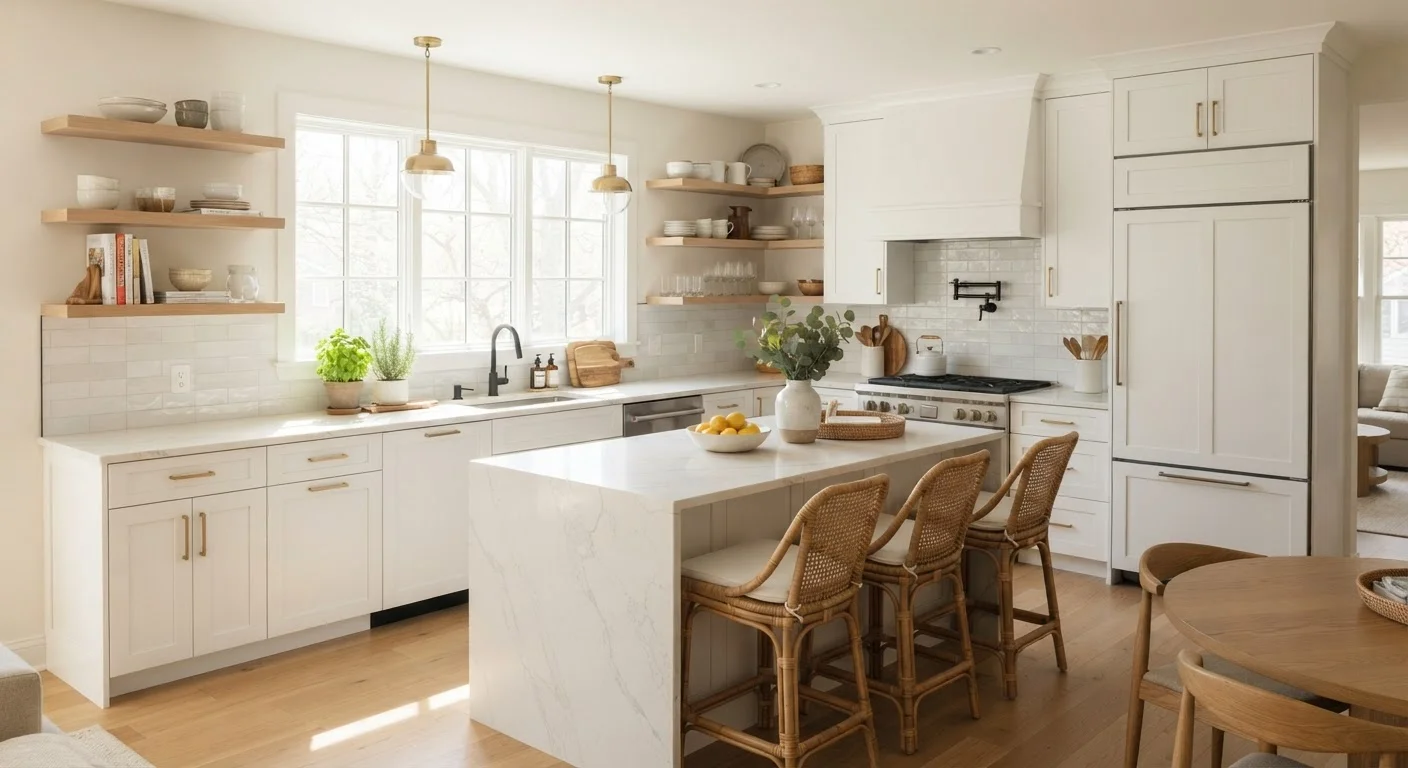
A full kitchen gut renovation is one of the most expensive projects a homeowner can undertake - and one of the least likely to return its full cost. Industry cost-vs-value analyses consistently show that minor kitchen remodels (new hardware, fresh cabinet faces, updated fixtures, modern appliances) return a higher percentage of cost than major overhauls.
Why? Because buyers mentally discount high-end kitchens that exceed the price range of the surrounding neighborhood. A $80,000 kitchen in a $300,000 neighborhood rarely returns dollar-for-dollar. Modest, clean, and functional almost always outperforms lavish and personalized.
Clean and functional kitchens outperform lavish, over-budget remodels at resale.
Bathroom Refreshes With Broad Appeal
Like kitchens, bathrooms reward targeted updates over complete replacements. Replacing a dated vanity, re-grouting tile, updating lighting, and installing a new toilet can transform a bathroom's feel for a fraction of a full remodel's cost - and tend to recover a respectable portion of the investment.
Focus on neutral finishes that appeal broadly. Bold or highly customized tile choices and luxury spa features may appeal to you personally, but narrow the pool of buyers willing to pay a premium for them. Universally appealing, clean, and well-maintained bathrooms are what move homes.
Neutral, well-maintained bathrooms appeal to a wider buyer pool than luxury spa designs.
Curb Appeal: Garage Doors, Entry Doors, and Landscaping
First impressions are powerful in real estate. Garage door replacement is one of the highest-ROI projects in most national cost studies - it's visible, functional, and often underappreciated. Similarly, replacing a worn entry door with a quality steel or fiberglass option can return a large proportion of its cost while improving security and energy efficiency.
Landscaping matters too, though ROI varies with maintenance requirements. Clean, simple landscaping that photographs well and requires minimal upkeep is more appealing than elaborate garden designs that signal ongoing labor to buyers. Consistent home maintenance - including lawn care and exterior upkeep - is often more valuable than one-time landscaping investments.
Garage door replacement is among the highest-return projects in most national cost analyses.
What Rarely Pays Off: Pools, Sunrooms, and Luxury Additions
In-ground pools, sunrooms, and high-end additions are frequently cited as low-ROI investments - not because they're without value, but because they're expensive, highly personal, and appeal to a narrower set of buyers. Pools in particular add ongoing maintenance costs that some buyers view as liabilities rather than assets.
This doesn't mean you shouldn't build a pool if you'll genuinely use and enjoy it for years. It means you should go in knowing you're spending for personal enjoyment, not financial return. The same logic applies to elaborate home theaters, wine cellars, and other niche features. Consider whether DIY labor might reduce costs on lower-complexity projects rather than directing that energy toward additions with uncertain payback.
Pools and luxury additions often serve personal enjoyment more than resale return.
Energy Efficiency Upgrades: Practical and Increasingly Valued
Insulation improvements, window replacement, and smart thermostats tend to offer moderate-to-solid ROI - and their appeal is growing as energy costs rise and buyers grow more cost-conscious. These upgrades also reduce ongoing utility expenses while you're still in the home, making them dual-purpose investments.
Insulation and air sealing in attics and crawl spaces are particularly well-regarded for their cost-effectiveness. Window replacement can be expensive relative to return, so prioritize windows that are genuinely failing (drafty, fogged, or damaged) rather than replacing functional windows purely for aesthetics.
Energy efficiency upgrades reduce ongoing costs and are increasingly valued by buyers.
Match Your Renovation to the Neighborhood
Over-improving for your street is one of the most common renovation mistakes. If comparable homes in your area sell for $350,000, a $60,000 kitchen remodel is unlikely to return its full cost - buyers won't pay $410,000 for your home simply because of the kitchen. Research what comparable homes in your area offer before setting a renovation budget.
Making Smart Decisions for Your Home
No renovation decision should be made on ROI data alone. Local market conditions matter enormously - what sells well in a competitive urban market may be irrelevant in a rural area with different buyer expectations. Before spending significantly, talk to a local real estate professional who knows your neighborhood, not just national averages.
Financing is another factor to weigh carefully. If you're borrowing to fund renovations, the cost of that debt affects your real return. For a plain-language overview of the options, see our guide on home improvement financing. And don't overlook permits - skipping required approvals can complicate your sale and reduce buyer confidence. Our article on renovation permits explains what most American homeowners need to know.
The bottom line: prioritize deferred maintenance first, then consider value-adding updates that align with your neighborhood's price range. Reserve purely personal upgrades - the ones unlikely to pay back - for homes you plan to stay in long term, and enjoy them for what they are: quality-of-life investments, not financial ones.
The content on this site is provided for informational purposes only and should not be considered a substitute for professional advice. While we strive to provide accurate and up-to-date information, we make no guarantees regarding its completeness or accuracy. Always consult a qualified professional for advice specific to your circumstances before making any decisions