

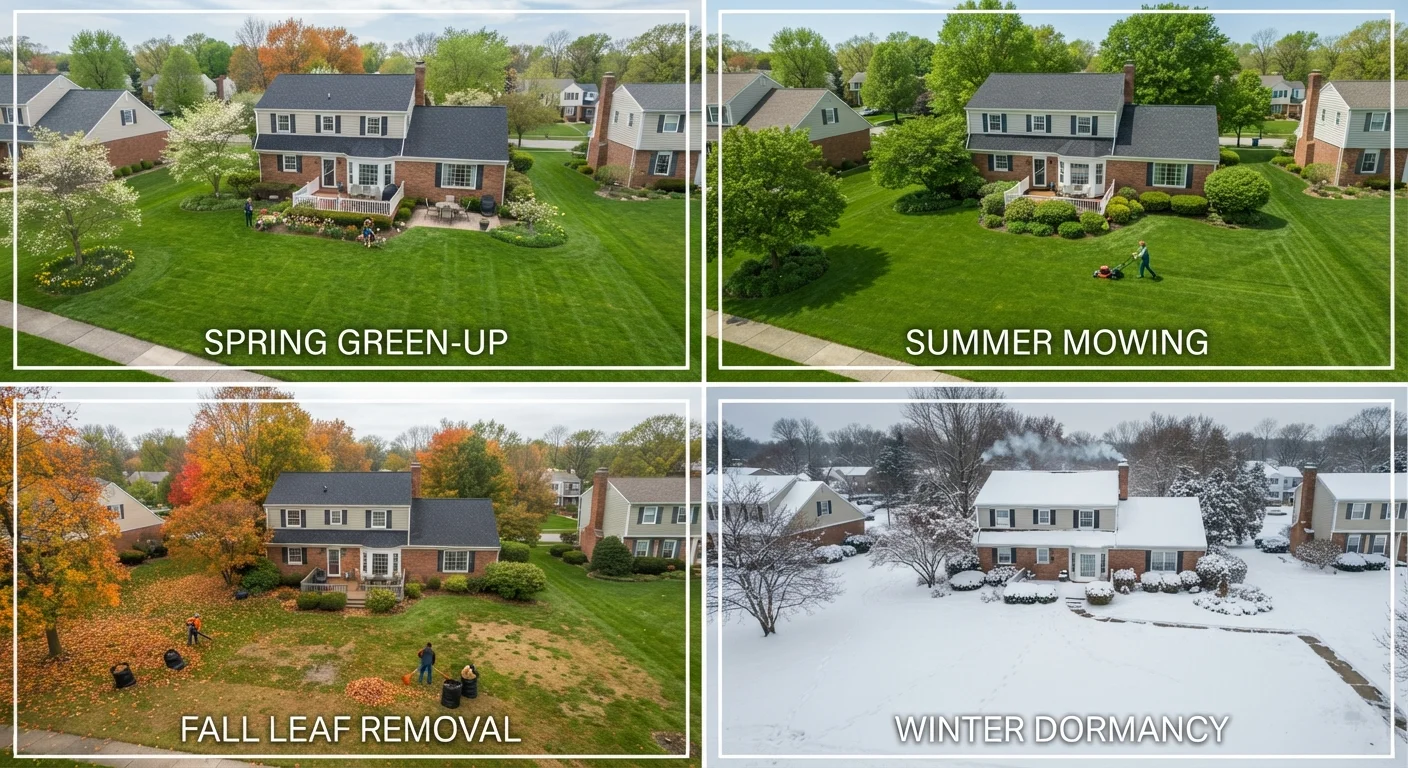
Spring (March-May): Waking the Lawn Up Right
Spring is the most consequential season for lawn health. What you do - and when - sets the tone for the entire growing year. Pair your lawn tasks with broader seasonal upkeep; see our spring home maintenance checklist for tasks that go hand-in-hand with outdoor work.
March
- Soil test: Test pH and nutrient levels before adding anything to the lawn. County extension offices often provide low-cost testing kits.
- Clean up debris: Rake out matted leaves and dead grass to prevent mold and allow sunlight to reach new growth.
- Sharpen mower blades: Dull blades tear rather than cut grass, leaving it prone to disease.
April
- Overseed bare spots once soil temperatures reach 50-65°F for cool-season grasses.
- Apply pre-emergent herbicide to prevent crabgrass - timing is critical and varies by region.
- Begin mowing when grass reaches about 3 inches; never remove more than one-third of the blade height at once.
May
- Fertilize: Apply a balanced, slow-release fertilizer based on your soil test results. Avoid over-fertilizing, which can burn grass and pollute waterways.
- Check irrigation systems for leaks or clogged heads before the heat arrives.
Summer (June-August): Protecting Against Heat and Drought
Summer lawn care is largely about defense - protecting grass from heat stress, drought, and pest pressure rather than pushing aggressive growth.
Core aeration
A mechanical process that removes small cylindrical plugs of soil and thatch from the lawn. This reduces soil compaction, improves water and nutrient absorption, and encourages deeper root growth.
Pre-emergent herbicide
A type of weed control applied to soil before weed seeds germinate. It creates a barrier that prevents germination but does not kill established weeds or grass.
Overseeding
Spreading grass seed over an existing lawn without fully tearing it up. Used to fill thin patches, improve turf density, or introduce a more resilient grass variety.
Dormancy
A natural period of reduced or halted growth that grass enters in response to extreme heat or cold. Dormant grass appears brown or straw-colored but is typically still alive.
Thatch
A layer of dead grass stems, roots, and organic debris that accumulates between the soil surface and green grass blades. A thin thatch layer is normal; more than ½ inch can impede water and nutrient penetration.
Winterizer fertilizer
A fertilizer formulated with higher potassium content and lower nitrogen, applied in fall to strengthen grass roots and improve cold-weather hardiness without stimulating excessive top growth.
June
- Raise your mowing height by half an inch. Taller grass shades soil, retains moisture, and resists weeds.
- Water deeply and infrequently: Aim for about 1 inch of water per week (rain plus irrigation). Early morning watering reduces evaporation and fungal risk.
- Scout for grubs and surface insects. Look for irregular brown patches or increased bird activity pecking at turf.
July
- Avoid fertilizing cool-season grasses during peak heat - it stresses already-struggling turf.
- Let dormant grass rest. If cool-season grass goes dormant in extreme heat, water lightly (about ½ inch per week) to keep crowns alive without forcing growth.
August
- Begin planning for fall seeding. This is the best time to order seed and prepare areas for overseeding next month.
- Treat grubs if population thresholds are exceeded (consult your local extension office for regional thresholds).
Fall (September-November): The Most Important Season for Long-Term Health
Lawn care professionals often consider fall the single most impactful season. Cooler temperatures and reliable moisture create ideal growing conditions for root development. For a complete picture of fall and winter home tasks, refer to the annual home maintenance calendar.
September
- Overseed: Spread grass seed over thin or bare areas. For cool-season grasses (fescue, bluegrass, ryegrass), this is the optimal window.
- Aerate compacted soil: Core aeration - removing small plugs of soil - improves water penetration and root growth. Rent a core aerator or hire a lawn service.
- Apply fall fertilizer with higher potassium content to strengthen roots heading into winter.
October
- Keep mowing until grass stops growing. Grass left too long over winter can harbor disease; too short exposes crowns to cold damage. Target a final height of 2-2.5 inches.
- Rake leaves promptly. A thick mat of wet leaves can smother grass and promote fungal disease.
November
- Winterize irrigation systems before the first hard freeze to prevent pipe damage.
- Apply a final winterizer fertilizer in warmer parts of the country where warm-season grasses (Bermuda, zoysia, St. Augustine) are common.
Winter (December-February): Planning and Preparation
For most of the country, winter means the lawn is dormant and the focus shifts to equipment care and planning. If you're new to maintaining a home year-round, our guide on getting started with home maintenance covers the broader seasonal rhythms worth building habits around.
December
- Service your mower: Change the oil, clean the air filter, and stabilize fuel or drain the tank before long-term storage.
- Stay off frozen turf. Walking on frost-covered grass crushes cell walls in the blades and causes visible damage.
January-February
- Review your soil test results and plan amendments for spring.
- Order seed, fertilizer, and supplies before spring rush - not as a purchasing endorsement, but as a practical planning habit.
- Sketch your lawn layout if you're planning any changes, such as new beds, edging, or irrigation zones.
Regional Differences Matter Significantly
This calendar reflects general guidance for the continental United States, but timing varies considerably by region and grass type. Homeowners in the Deep South managing warm-season grasses like Bermuda or zoysia follow a different schedule than those in the Pacific Northwest with cool-season fescues. Always confirm timing recommendations with your local cooperative extension service, which provides free, region-specific guidance calibrated to your climate zone.
The content on this site is provided for informational purposes only and should not be considered a substitute for professional advice. While we strive to provide accurate and up-to-date information, we make no guarantees regarding its completeness or accuracy. Always consult a qualified professional for advice specific to your circumstances before making any decisions