

Our Verdict
Neither new construction nor an existing home is universally the better choice - both involve meaningful trade-offs that depend on your financial situation, timeline, and priorities. New builds suit buyers who value modern systems, warranties, and the ability to customize, and who can absorb higher base prices and longer waits. Existing homes tend to work better for buyers who need to move quickly, want an established community, and are prepared to handle some deferred maintenance.
New construction is best suited for buyers with flexible timelines and strong budgets; existing homes suit those prioritizing location, speed, and negotiating room.
What You're Actually Comparing
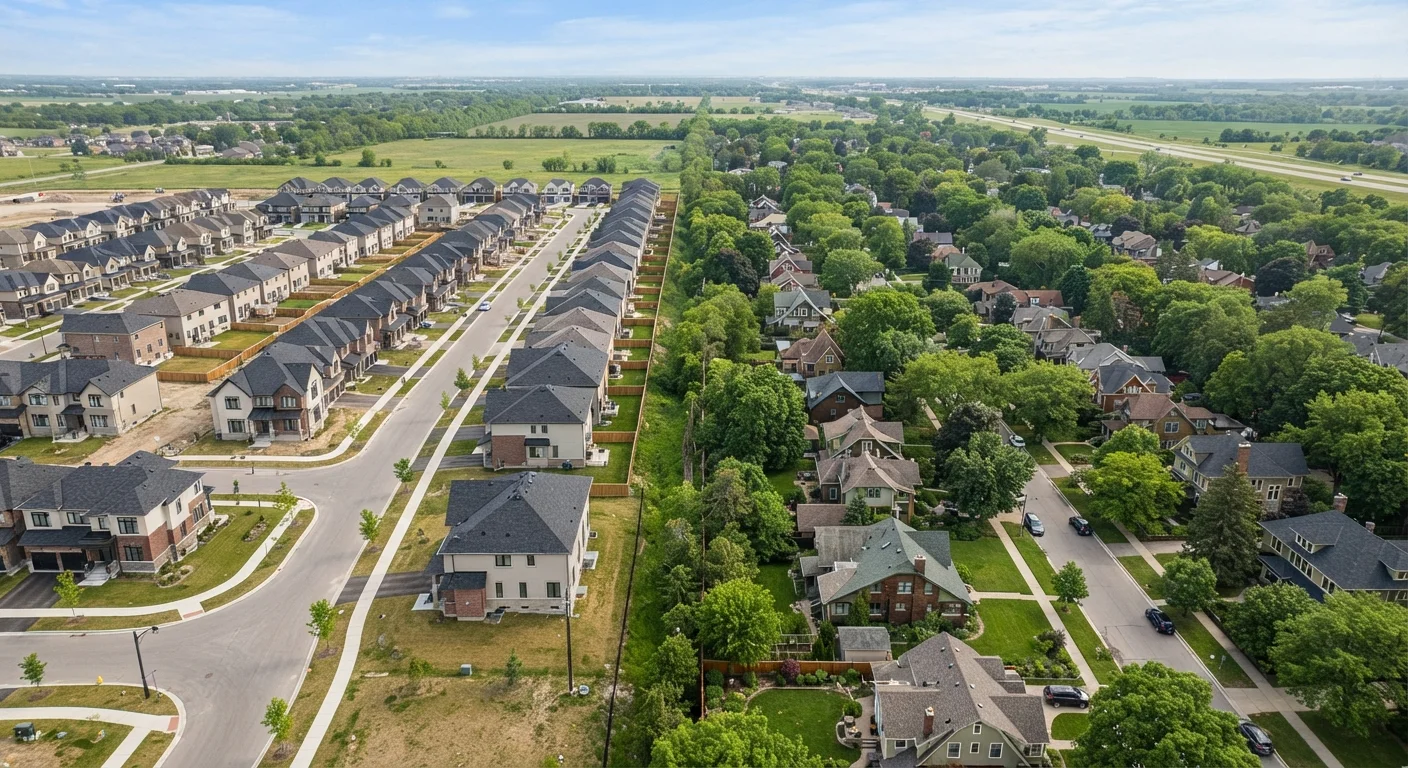
When buyers weigh new construction against existing - or resale - homes, they're rarely comparing apples to apples. A newly built home comes with untouched systems, builder warranties, and floor plans selected from a limited catalog. A resale home comes with its own history: a neighborhood with established character, landscaping that took decades to mature, and infrastructure that may be excellent or in need of attention.
Both paths lead to homeownership. But the experience of getting there, and the ongoing costs and benefits after closing, can look quite different. Understanding those differences clearly is one of the more practical steps any buyer can take before making one of the largest financial decisions of their life. For a broader look at the rent-versus-buy question that often precedes this decision, see our framework for the rent-vs-buy decision.
The Case for New Construction
New builds come with some meaningful advantages that are easy to overlook when sticker shock sets in.
Modern energy-efficient systems and building codes
New homes must meet current energy codes, often resulting in lower utility bills and better insulation than homes built decades ago.
Builder warranties on structure and systems
Most new construction includes tiered warranties covering workmanship, mechanical systems, and structural components, reducing early repair exposure.
Customization before construction completes
Buyers who purchase early in the build process can often choose finishes, flooring, and layout options, avoiding costly renovations later.
No immediate competition from other buyers in some cases
In slower markets, builders may have inventory homes available without a bidding war, and may offer incentives to close deals.
Lower likelihood of hidden maintenance issues at move-in
Brand-new systems and appliances carry a lower near-term risk of failure, reducing the financial surprises that often come with older homes.
Modern building codes require energy-efficient insulation, windows, and HVAC systems that older homes may not match. Many builders also offer structural and systems warranties - commonly one year on workmanship, two years on mechanical systems, and ten years on structural defects, though terms vary by builder and state. Buyers also have the chance to select finishes, layouts, and upgrades before construction is complete, reducing the need for early renovations.
Builder incentives - such as interest rate buydowns or closing cost contributions - have become more common during slower sales periods, though these offers fluctuate with market conditions and should be evaluated carefully against the home's base price.
The Case for Existing Homes
Resale homes make up the vast majority of home sales in the U.S., and for good reason - they come with attributes new builds often can't replicate.
Higher base prices than comparable resale homes
New construction typically commands a price premium over existing homes in the same market, and upgrade selections can push totals substantially higher.
Construction delays can disrupt buyer timelines
Permitting, material supply, and labor availability are variables outside the buyer's control, and delays of several months are not uncommon.
Neighborhoods lack maturity and established character
New developments often feature sparse landscaping, incomplete amenities, and a community dynamic that takes years to develop.
Limited negotiating leverage with builders
Builders typically set prices based on development costs and market demand; buyers have less room to negotiate than in a resale transaction.
New subdivisions may be farther from urban cores
Available land for development tends to be on the suburban fringe, which can mean longer commutes and fewer nearby services.
Established neighborhoods offer mature trees, proximity to schools and transit, and a visible community fabric. Existing homes are frequently located closer to urban and suburban cores, where land for new development is scarce. They also allow buyers to move in quickly - typically 30 to 60 days after an accepted offer - rather than waiting months or longer for construction to complete.
Negotiating room is another factor. In a resale transaction, sellers may accept offers below asking price, contribute to closing costs, or agree to repairs identified during inspection. Builders, by contrast, often hold firm on base prices, particularly in active markets. If you're weighing renovations after purchase, our guide to home renovation ROI can help you think through which improvements tend to hold their value.
Costs and Risks to Weigh Carefully
Price is rarely straightforward on either side of this comparison.
~13%
Share of home sales that are new construction
According to U.S. Census Bureau and NAR data, newly built homes have historically represented roughly 10-15% of total home sales in any given year.
$400K+
Median sale price of new single-family homes
U.S. Census Bureau data shows the median new single-family home sale price has consistently exceeded that of existing homes in recent years.
With new construction, the advertised base price is a starting point. Lot premiums, structural upgrades, and finish selections can add tens of thousands of dollars to the final cost. Construction delays are also common - material shortages, labor availability, and permitting backlogs can push timelines out significantly, creating uncertainty for buyers who need to sell or vacate a current home.
Existing homes carry their own financial risks. A professional home inspection is critical and can surface issues ranging from aging roofs and outdated electrical panels to plumbing problems. Buyers should budget for potential repairs and get repair estimates before closing when significant issues are found. Deferred maintenance, which is common in homes that have changed hands multiple times, can surface costs in the first years of ownership that weren't immediately apparent.
Get an Independent Inspection on New Builds Too
Many buyers assume new construction doesn't need a home inspection - this is a common and potentially costly mistake. Construction defects, incomplete work, and code compliance issues do occur in new builds. Hiring an independent inspector before closing - and ideally before drywall is installed - is a practical step even on brand-new homes. Your real estate attorney or buyer's agent can advise on timing.
Location is worth treating as its own risk factor. New subdivisions on the outskirts of metro areas can offer lower land costs, but commute times, access to amenities, and long-term appreciation potential may differ from established neighborhoods. The housing market hub provides broader context on how location shapes home values over time.
The content on this site is provided for informational purposes only and should not be considered a substitute for professional advice. While we strive to provide accurate and up-to-date information, we make no guarantees regarding its completeness or accuracy. Always consult a qualified professional for advice specific to your circumstances before making any decisions