

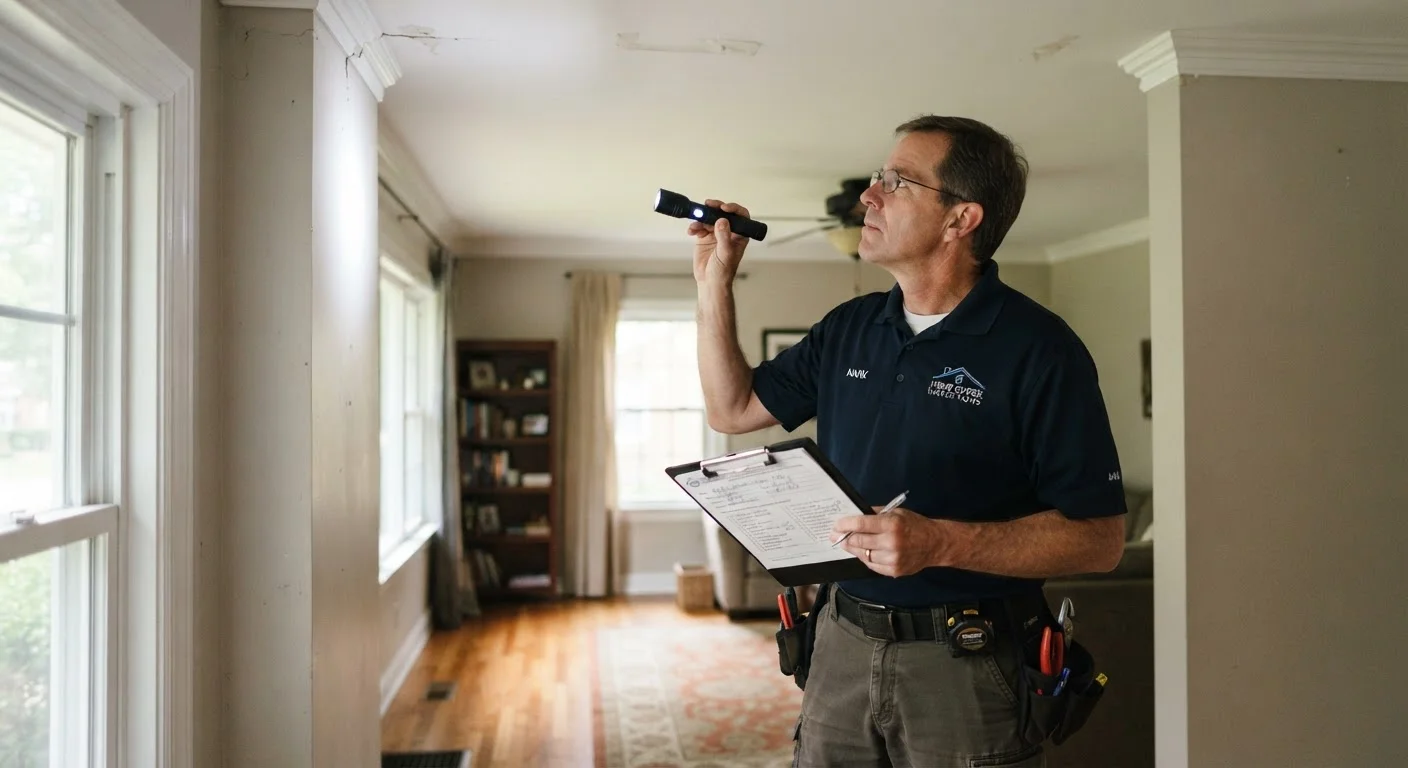
What a Home Inspector Actually Evaluates
A standard home inspection is a systematic, visual examination of a property's accessible components. Inspectors work through a defined checklist covering the home from top to bottom-literally. Here's what falls within typical scope:
- Roof: Shingle condition, flashing, gutters, chimneys, and visible signs of wear or damage.
- Structure: Foundation, framing, floors, walls, ceilings, and signs of settling or movement.
- Exterior: Siding, grading, drainage, driveways, decks, and porches.
- Electrical: Main panel, wiring type, outlets, grounding, and GFCI protection in kitchens and bathrooms.
- Plumbing: Water supply lines, drainage, water heater age and condition, and visible pipe materials.
- HVAC: Heating and cooling systems, ductwork, filters, and age of equipment.
- Insulation and ventilation: Attic insulation, vapor barriers, and exhaust systems.
- Interior: Windows, doors, stairs, railings, and any visible water stains or damage.
Inspectors document what they can see-they do not open walls, move furniture, or test systems under conditions they cannot safely replicate. This visual limitation is important to understand: the report reflects observed conditions, not a guarantee of hidden defects.
Inspections Are Visual, Not Invasive
Home inspectors evaluate only what is visible and safely accessible on the day of the inspection. They do not move personal belongings, open walls, or operate systems under conditions that could cause damage. This means hidden defects-inside walls, under insulation, or beneath finished flooring-may not be detected. Understanding this limitation helps set realistic expectations for what the report can and cannot tell you.
How to Read the Report: Severity vs. Volume
Inspection reports can run 30 to 80 pages and flag dozens of items. First-time buyers often feel alarmed by the sheer volume-but quantity rarely signals catastrophe. The key is distinguishing severity from noise.
Most findings fall into three categories:
- Safety hazards: Issues that pose immediate risk, such as missing handrail guardrails, exposed wiring, or carbon monoxide concerns. These warrant prompt attention regardless of who addresses them.
- Significant defects: Problems that affect the home's major systems or structural integrity-a failing roof, cracked foundation, or aging HVAC. These carry real repair costs and deserve careful consideration.
- Maintenance items: Deferred upkeep like worn caulking, minor grading issues, or aging appliances. Expected in most homes and generally manageable over time.
A skilled buyer's agent can help interpret which findings are negotiating leverage and which are simply part of homeownership. For context on how inspection findings fit into the broader purchase process, see how to read a seller's disclosure-disclosures and inspection reports often complement each other.
Attend the Inspection in Person
Buyers who walk through the home alongside the inspector gain far more than the written report alone. Inspectors can show you exactly where a concern is located, explain its severity in plain language, and answer your questions on the spot. This firsthand context makes the written report much easier to interpret and act on.
Using the Inspection Report in Negotiation
The inspection contingency in a purchase contract gives buyers a defined window-typically five to ten days-to review findings and respond. Buyers generally have several options:
- Request repairs: Ask the seller to fix specific items before closing. Sellers may agree, decline, or offer partial remedies.
- Request a price reduction: Rather than having repairs done under seller oversight, buyers can negotiate a lower purchase price and handle repairs themselves.
- Request a closing credit: Similar to a price reduction, but structured as cash applied at closing. This can help fund repairs without requiring seller involvement in the work.
- Walk away: If findings are severe enough and the seller won't negotiate, buyers under a properly structured contingency can withdraw and recover their earnest money.
Focus negotiation energy on significant defects, not cosmetic items. Asking sellers to repaint or replace carpet rarely advances the conversation productively. Structural issues, major system failures, and safety hazards are where the report becomes real financial leverage. Understanding which requests are realistic also depends on local market conditions-key housing market metrics can reveal how much leverage buyers hold in a given area.
One common mistake is waiving the inspection entirely to compete in a tight market. This removes a critical layer of due diligence. For a broader look at how such decisions derail purchases, see why buyers lose deals.
When to Consider Specialized Inspections
A general home inspection has defined boundaries. For certain properties or concerns, additional specialized testing is worth the added cost:
- Radon: A colorless, odorless gas that is the second leading cause of lung cancer in the U.S. Testing is inexpensive and particularly important in regions with elevated radon levels.
- Mold: Visible mold is flagged in a standard inspection, but testing for airborne spores or hidden growth requires a separate assessment.
- Sewer scope: A camera inspection of the lateral sewer line from the home to the street. Recommended for older homes, especially those with mature trees near sewer lines.
- Pest/termite: Some lenders require this; others leave it to buyer discretion. Active infestations or prior damage can be costly.
- Well and septic: For properties on private systems, these are critical-testing water quality and assessing septic capacity and condition goes well beyond a standard inspection's scope.
Buyers purchasing older homes or properties with known environmental history should discuss the full menu of available inspections with their agent before the inspection contingency window closes. Proper home maintenance starts with knowing exactly what you're inheriting.
This article is for informational purposes only. Consult a licensed real estate professional, attorney, or inspector for guidance specific to your transaction and jurisdiction.
Frequently Asked Questions
Most standard home inspections take between two and four hours, depending on the size and age of the property. Larger or older homes with more complex systems naturally require more time. Buyers are encouraged to attend so they can ask questions in real time.
The buyer almost always pays for the home inspection, and costs typically range from roughly $300 to $500, though this varies by region, property size, and inspector. Because the buyer commissions the inspection, the report belongs to them.
Yes. Sellers are not legally required to repair every item flagged in an inspection report. Negotiation is common-buyers can request repairs, a price reduction, or a closing credit, but the seller may counter or decline. Your purchase contract terms determine your options.
Standard inspections do not typically include testing for mold, radon, lead paint, asbestos, pests, or sewer line condition. These require separate specialized inspections. Cosmetic issues like paint and minor landscaping are also generally outside scope.
A home inspection is rarely required by law, but most real estate professionals strongly recommend it. Some lenders may require certain inspections (like well and septic) depending on the property type. Waiving an inspection to compete in a hot market carries meaningful financial risk.
Significant structural issues, evidence of active water intrusion, failing roofs, outdated or unsafe electrical panels, and compromised foundations are among the most serious findings. These can involve costly repairs and may affect insurability or lender approval.
The content on this site is provided for informational purposes only and should not be considered a substitute for professional advice. While we strive to provide accurate and up-to-date information, we make no guarantees regarding its completeness or accuracy. Always consult a qualified professional for advice specific to your circumstances before making any decisions