

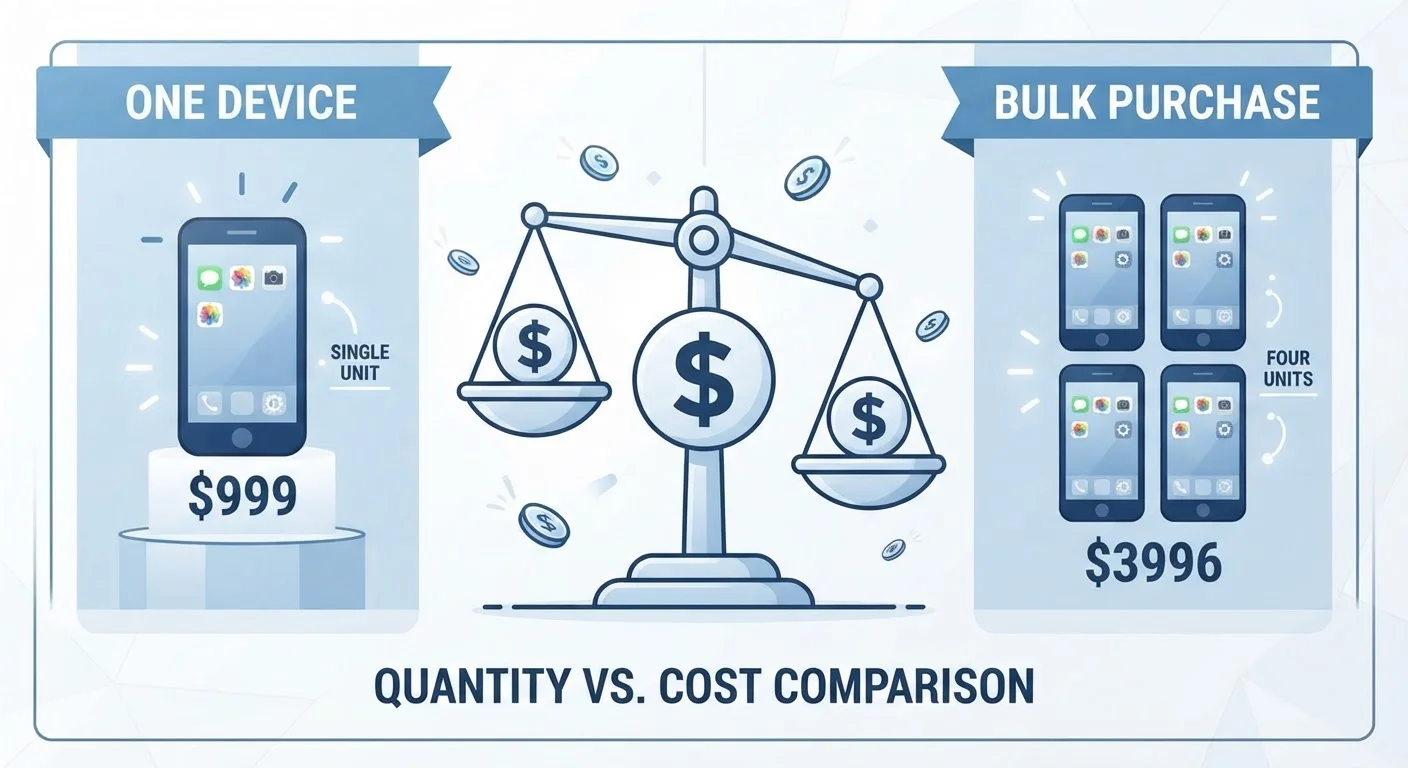
Option A
Single-Line Plan
The straightforward, no-compromise solo option.
Best for: Individuals who want full control over their plan without being tied to others' usage or billing.
Option B
Family Plan
The multi-line option built on shared per-line discounts.
Best for: Households with two or more people who can consolidate billing and share the same carrier without friction.
How Carrier Pricing Is Structured
Wireless carriers price their plans to encourage multi-line accounts. The per-line rate on a family plan almost always drops as you add lines - a pattern designed to make the math look compelling in advertising. But that advertised per-line figure typically assumes a specific number of lines, autopay enrollment, and sometimes paperless billing. Miss one condition and the price changes.
Single-line plans are simpler: one account, one price, one bill. But that simplicity comes at a higher monthly cost per line because you're not benefiting from the bulk-line discount. Understanding this structure is the starting point for any honest comparison. For a deeper look at what's actually included beyond the headline rate, see what a phone plan actually includes.
| Criterion | Single-Line Plan | Family Plan |
|---|---|---|
| Monthly cost per line | Higher - no bulk discount | Lower at 3+ lines |
| Billing simplicity | Simple - one person, one bill | Complex - shared account |
| Flexibility to switch carriers | Easy - affects only you | Requires group coordination |
| Account responsibility | You alone | Primary holder liable for all lines |
| MVNO/prepaid competitiveness | Strong alternatives available | Fewer MVNO multi-line options |
| Best break-even point | 1-2 people | 3 or more people |
When Family Plans Deliver Real Savings
The economics of a family plan generally start to work in your favor at three or more lines. At that point, the per-line discount is usually substantial enough to outpace what you'd pay on competitive single-line options. A household of four sharing a plan can see per-line costs that are meaningfully lower than any comparable individual rate from the same carrier.
Two-line plans tell a different story. The discount is real but narrower, and in many cases a pair of well-chosen prepaid or MVNO (Mobile Virtual Network Operator - carriers that lease network access from major carriers at lower overhead) plans can match or come close to the two-line family price. It's worth running the numbers on both before assuming sharing is cheaper.
~40%
Typical per-line discount at 4 lines vs. 1
Carrier pricing structures generally show per-line rates dropping by roughly 35-45% when comparing a four-line family plan to a comparable single-line postpaid plan from the same provider.
~$5-$15
Monthly taxes and fees added per line
State and local wireless taxes vary widely across the US; these charges apply on top of the advertised plan price regardless of plan type.
One often-overlooked variable: whose credit is on the account. Family plans typically require one account holder who is responsible for the entire bill. If one line's usage triggers overage charges or the account falls behind, the primary holder carries that exposure.
Hidden Costs That Change the Equation
Both plan types carry costs that don't appear in the advertised price. Taxes and regulatory fees typically add $5-$15 per line per month depending on your state and city. Device payment installments, insurance add-ons, and international features layer on top of that. These apply regardless of whether you're on a single or family plan - but they scale with the number of lines.
Family plans also introduce coordination costs that aren't financial but are real: agreeing on a carrier, a tier, and a billing date across multiple people. If someone wants to switch carriers or upgrade a device mid-cycle, it affects the whole account. Common assumptions about phone plans that lead to overpaying covers this dynamic in more detail, including the myth that more lines always means more savings.
Autopay Discounts Are Often Baked In
Most major carrier advertised rates - for both single and family plans - assume you're enrolled in autopay with a debit card or bank account. Paying by credit card or skipping autopay can add $5-$10 per line per month, which can meaningfully shift the comparison. Always confirm the full price under your preferred payment method before deciding.
Single-Line Alternatives Worth Knowing About
The solo-plan market has expanded significantly. MVNOs - carriers like Consumer Cellular, Mint Mobile, and Visible that run on major network infrastructure - frequently offer single-line pricing that competes directly with family plan per-line rates. If you're a light data user, the gap narrows further, since you're not paying for unlimited capacity you don't need. Wireless plans for light users explores this territory in detail.
Prepaid plans are another lever. Because they don't involve credit checks or contracts, they give single users flexibility that postpaid family plans don't. The tradeoff is that some premium features - certain international options, device financing, priority network access - may be limited or unavailable. If you're new to evaluating these options, a practical starting point for first-time shoppers walks through the core concepts before you commit.
The content on this site is provided for informational purposes only and should not be considered a substitute for professional advice. While we strive to provide accurate and up-to-date information, we make no guarantees regarding its completeness or accuracy. Always consult a qualified professional for advice specific to your circumstances before making any decisions