

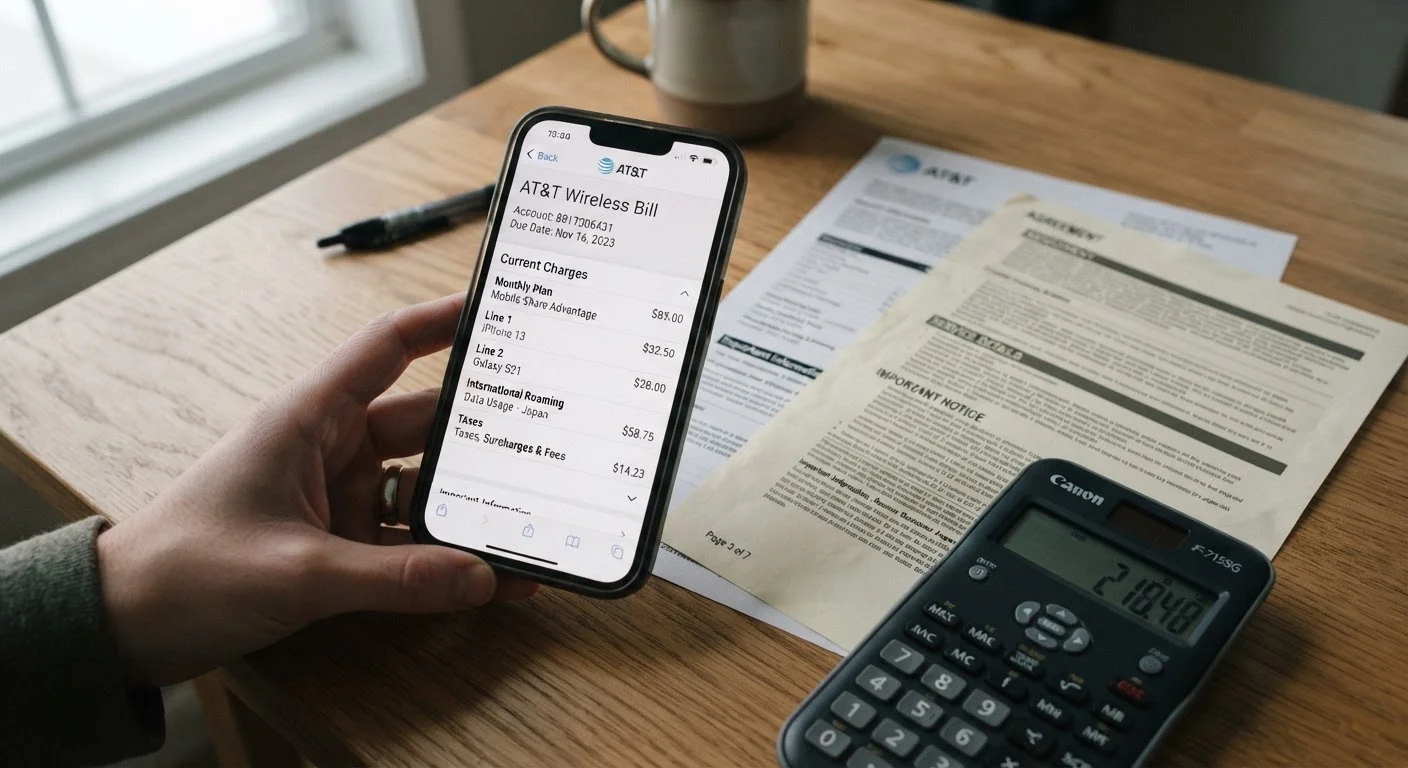
The Gap Between the Ad and Your Bill
Carrier advertisements lead with a single number - say, $35 per line per month. That figure is engineered to be as attractive as possible, which means it usually assumes autopay enrollment, paperless billing, and sometimes a qualifying trade-in or existing account. Before you've made a single call, the real monthly number is likely higher.
Taxes and government fees are applied on top of the base rate. These include federal Universal Service Fund (USF) charges, state and local taxes, and 911 fees. The exact amount varies by location, but $5 to $15 per line per month is a realistic range for many U.S. consumers. On a family plan with four lines, that's potentially $60 in fees that never appeared in the ad.
Carriers also add their own surcharges - line access fees, network maintenance fees, or regulatory cost recovery fees - that are separate from government-mandated taxes. These are legal but often confusing. See our plain-language guide to phone plan terminology for definitions of the terms you'll encounter on your bill.
$5-$15
Typical taxes and fees added per line monthly
State, local, and federal fees vary by location but routinely add this range on top of the base plan rate for U.S. consumers.
~76%
U.S. adults on smartphone plans with data caps or throttling
According to Pew Research Center data, a large majority of U.S. smartphone users are on plans that include some form of data limitation.
15-30GB
Common hotspot cap on mid-tier unlimited plans
Many carriers separate hotspot data from phone data allowances, with mid-tier plans frequently capping full-speed tethering in this range.
What "Unlimited" Actually Limits
Most plans marketed as unlimited include restrictions that only appear in the fine print. There are two mechanisms worth understanding: throttling and deprioritization.
Throttling means your data speed is reduced - sometimes to 1.5 Mbps or slower - after you reach a certain usage threshold. Streaming video and video calls become noticeably degraded at those speeds. Deprioritization is different: your speeds aren't automatically reduced, but during times of network congestion, customers on lower-tier plans get bumped to the back of the line. The result can feel the same - slow service - but the trigger is network load rather than your personal usage.
Hotspot data is another frequent limitation. Many plans include mobile hotspot access but cap it at a lower data amount than your phone data, throttle it to slower speeds from the start, or do both. A plan might advertise 50GB of data but limit hotspot use to 15GB at full speed. For anyone who relies on tethering a laptop to their phone, this distinction matters significantly. Our article on why unlimited plans aren't truly unlimited breaks down these restrictions in detail.
Check the Plan Details Page, Not the Ad
Every carrier is required to publish full plan terms, including throttling thresholds and hotspot limits, on their website. Before choosing a plan, navigate to the plan details or terms page - not the promotional landing page - to find the actual data policies. A few extra minutes of reading can prevent months of frustration.
Hidden Conditions That Affect Your Price
Autopay discounts are nearly universal among major carriers, typically saving $5 to $10 per line per month. But that discount is conditional - miss a payment or switch to manual billing and the rate adjusts. The advertised price assumes you'll meet every condition, every month.
Device payment plans add another layer. Carriers frequently bundle phone financing into monthly plan costs, making a plan appear cheaper than a competitor's when the phone subsidy is actually built into the total. To compare plans accurately, you need to separate the plan cost from any device installment payments.
International roaming, premium streaming add-ons, and device protection are often presented as bundled perks on higher-tier plans - but those same perks can quietly push you toward a more expensive tier than you actually need. If you don't use international data or don't want a specific streaming service, you may be paying for features that have no value to you. Reviewing common assumptions that lead to overpaying can help you identify where your money is going unnecessarily.
How to Compare Plans on Real Terms
To make an honest comparison between plans, collect a few specific data points for each option:
- Total monthly cost after taxes and fees - ask the carrier for an estimate in your ZIP code, not just the base rate
- Data threshold before throttling or deprioritization - listed in the plan details, not the advertisement
- Hotspot data amount and speed - separate from your main data allotment
- Autopay and paperless billing requirements - to reach the advertised price
- Contract terms or early termination conditions - especially relevant if you're leaving another carrier
If you're weighing whether a single line or a multi-line family plan fits your household better, the math can be less obvious than it appears. Our breakdown of when single lines versus family plans actually save money walks through realistic cost comparisons.
For a thorough look at everything involved in selecting a wireless plan - from network types to contract traps - the complete guide to understanding wireless plans in the U.S. is a useful reference. And if you want to work through carrier terms of service before signing up, how to read a wireless carrier's fine print explains what to look for and where to find it.
Frequently Asked Questions
Carriers advertise base rates before taxes and fees. Government taxes, regulatory fees, and carrier surcharges are added on top - typically $5 to $15 per line per month. Autopay or paperless billing requirements may also mean you're not qualifying for the lowest rate.
Throttling automatically reduces your data speed after you hit a usage threshold, regardless of network conditions. Deprioritization only slows your speeds during network congestion - your data isn't reduced automatically, but you're lower in line when the network is busy. Both can result in noticeably slower service.
Not exactly. Most unlimited plans include a high-speed data threshold, after which speeds are throttled. Hotspot data is also usually capped separately at a lower amount. The term "unlimited" generally means there's no hard cutoff that stops your service, but speed restrictions still apply.
Look for federal USF charges, state and local taxes, 911 fees, and carrier-specific surcharges like network or regulatory recovery fees. Ask the carrier for a full cost estimate using your ZIP code, since taxes vary significantly by location.
For most major carriers, yes. The lowest advertised per-line price typically requires both autopay and paperless billing enrollment. If you opt out of either, the per-line rate is usually $5 to $10 higher.
Navigate directly to the plan's terms or details page on the carrier's website - not the promotional ad page. Look specifically for the high-speed data threshold, the hotspot data allowance and speed, and the deprioritization policy. These are required to be disclosed but are rarely featured in advertising.
The content on this site is provided for informational purposes only and should not be considered a substitute for professional advice. While we strive to provide accurate and up-to-date information, we make no guarantees regarding its completeness or accuracy. Always consult a qualified professional for advice specific to your circumstances before making any decisions