

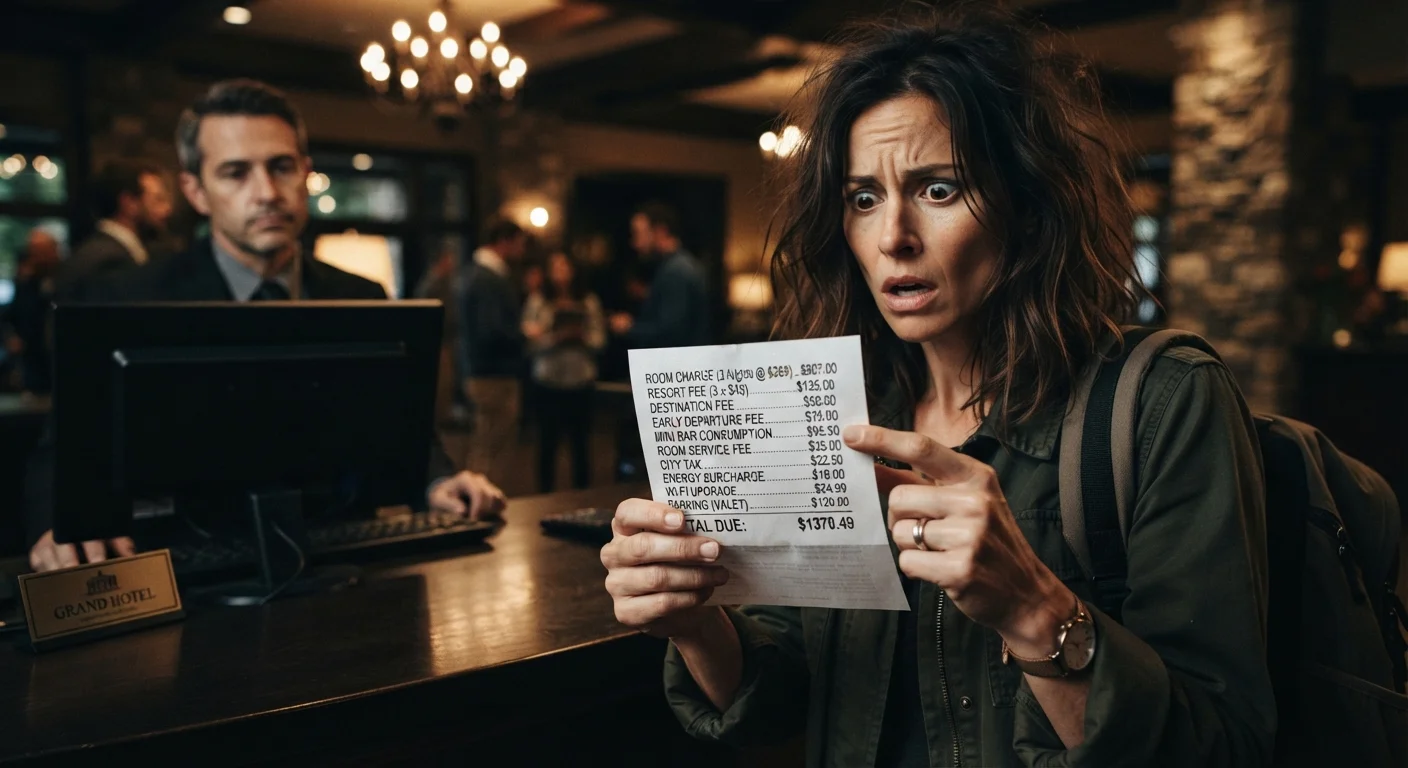
The Costs Nobody Mentions at Checkout
Booking a trip feels straightforward - until the receipts start rolling in. The advertised price of a flight, hotel room, or rental car rarely reflects what you'll actually pay. A growing layer of ancillary charges, surcharges, and conversion markups has quietly reshaped the economics of travel, and most travelers only notice them after the damage is done.
Understanding these fees isn't about paranoia - it's about control. When you know what to watch for, you can budget accurately from the start and make informed decisions rather than reactive ones. Our travel budgeting breakdown covers the broad cost categories; this article drills into the specific charges that fall through the cracks of even careful planning.
Resort and Destination Fees
Hotels - particularly in Las Vegas, Hawaii, and major U.S. beach destinations - routinely charge mandatory resort or destination fees that don't appear in the nightly rate shown during booking. These fees, which can range from $20 to over $50 per night, are typically disclosed only during checkout or in fine print, and are charged regardless of whether you use the amenities they supposedly cover.
Always search the hotel's own policy page or call directly to ask whether a mandatory daily fee applies beyond the displayed room rate. Factor this into your comparison shopping, since a cheaper-looking room may cost more in total than a higher-listed alternative without the surcharge.
Resort fees can add $50 or more per night - even if you never touch the pool.
Airline Baggage and Seat Selection Charges
Base airfares - especially on budget carriers - often exclude checked baggage, carry-on bags, and seat assignments. What looks like a $79 ticket can climb past $150 once you add a carry-on and choose a seat that isn't a middle row in the back of the plane. Even legacy carriers have restructured fare classes so that the cheapest booking tier strips away benefits that travelers once assumed were standard.
Before booking, check the airline's fee schedule for the specific fare class you're purchasing. Add the relevant baggage fees to your mental price tag before comparing across carriers. If you travel frequently, note that some travel credit cards include checked baggage credits - but verify the terms rather than assuming.
A cheap base fare can more than double once baggage and seat fees are added.
Foreign Transaction Fees
Many standard U.S. credit and debit cards charge a foreign transaction fee - typically 1% to 3% of each purchase - whenever a transaction is processed through a non-U.S. bank network. On a two-week international trip with $3,000 in card spending, a 3% fee quietly adds $90 to your bill without a single line item explaining it.
Review your card agreement before traveling internationally. Cards designed for travel use frequently waive this fee, though the specific terms vary by issuer. This is general information - consult your card provider's current terms for details specific to your account. For a broader look at how money moves across borders, our currency exchange explainer is a useful reference.
Foreign transaction fees of 1-3% silently accumulate across every overseas card swipe.
Dynamic Currency Conversion
At many international payment terminals and ATMs, a prompt offers to charge your card in your home currency (U.S. dollars) rather than the local one. This is called dynamic currency conversion (DCC), and it typically comes with a markup of 3% to 7% above the interbank exchange rate - benefiting the merchant or terminal provider, not you.
When given the option, always choose to pay in the local currency and let your own bank or card network handle the conversion. The rate your card applies is almost always more favorable than the one embedded in DCC. Our currency exchange guide explains in detail why local currency is generally the right call.
Choosing to pay in local currency almost always beats dynamic currency conversion rates.
ATM and Cash Withdrawal Fees
Withdrawing cash abroad typically triggers two separate fees: one from your home bank (often $3-$5 per transaction, or a percentage of the withdrawal), and a separate fee from the ATM operator, which can run $3-$8 or more. Combined, these charges can consume a noticeable share of a small withdrawal - making frequent small pulls far more expensive than fewer, larger ones.
Research your bank's international ATM policy before departure. Some accounts reimburse ATM fees or belong to global ATM networks that waive certain charges. Using bank-affiliated ATMs in your destination country, rather than standalone kiosks in tourist areas, generally carries lower operator fees. Verify all terms with your bank directly, as policies change.
Combining bank and ATM operator fees can cost $10 or more per cash withdrawal abroad.
Travel Insurance Add-Ons You Didn't Opt Into
When booking flights, rental cars, or package trips, pre-checked boxes for travel insurance, damage waivers, or roadside assistance are common. These opt-in-by-default add-ons can add $15 to $80 or more to a booking if not manually deselected during checkout - and many travelers don't notice until after payment is confirmed.
Read each screen carefully during the booking process and uncheck any pre-selected products you haven't deliberately chosen. If you do want travel insurance, compare it separately against standalone policies rather than defaulting to whatever the booking platform pre-selects. See our related overview on hidden costs that blow travel budgets for more overlooked charges across the booking process.
Pre-checked insurance boxes at checkout can silently inflate your booking total by $80 or more.
Build Awareness Into Your Budget From Day One
The travelers who stay on budget aren't the ones who get lucky - they're the ones who ask the right questions before spending a dollar. Call ahead to confirm whether a resort fee applies. Check your card's foreign transaction policy before you land. Decline dynamic currency conversion at every terminal. These aren't complicated steps, but they require knowing the fees exist in the first place.
A Simple Pre-Trip Fee Audit
Before finalizing any booking, run a quick mental audit: Does this hotel charge a daily resort or destination fee? Does this airline charge for carry-ons at this fare level? Does my card charge foreign transaction fees? Will I face DCC prompts at ATMs? Answering these four questions upfront - not after arrival - keeps surprises off your statement.
For a structured approach to accounting for these costs before you leave home, see our guide to building a trip budget that survives reality. And if you want to understand the broader patterns behind vacation overspending, why travelers overspend is worth a read before your next booking session.
The content on this site is provided for informational purposes only and should not be considered a substitute for professional advice. While we strive to provide accurate and up-to-date information, we make no guarantees regarding its completeness or accuracy. Always consult a qualified professional for advice specific to your circumstances before making any decisions