

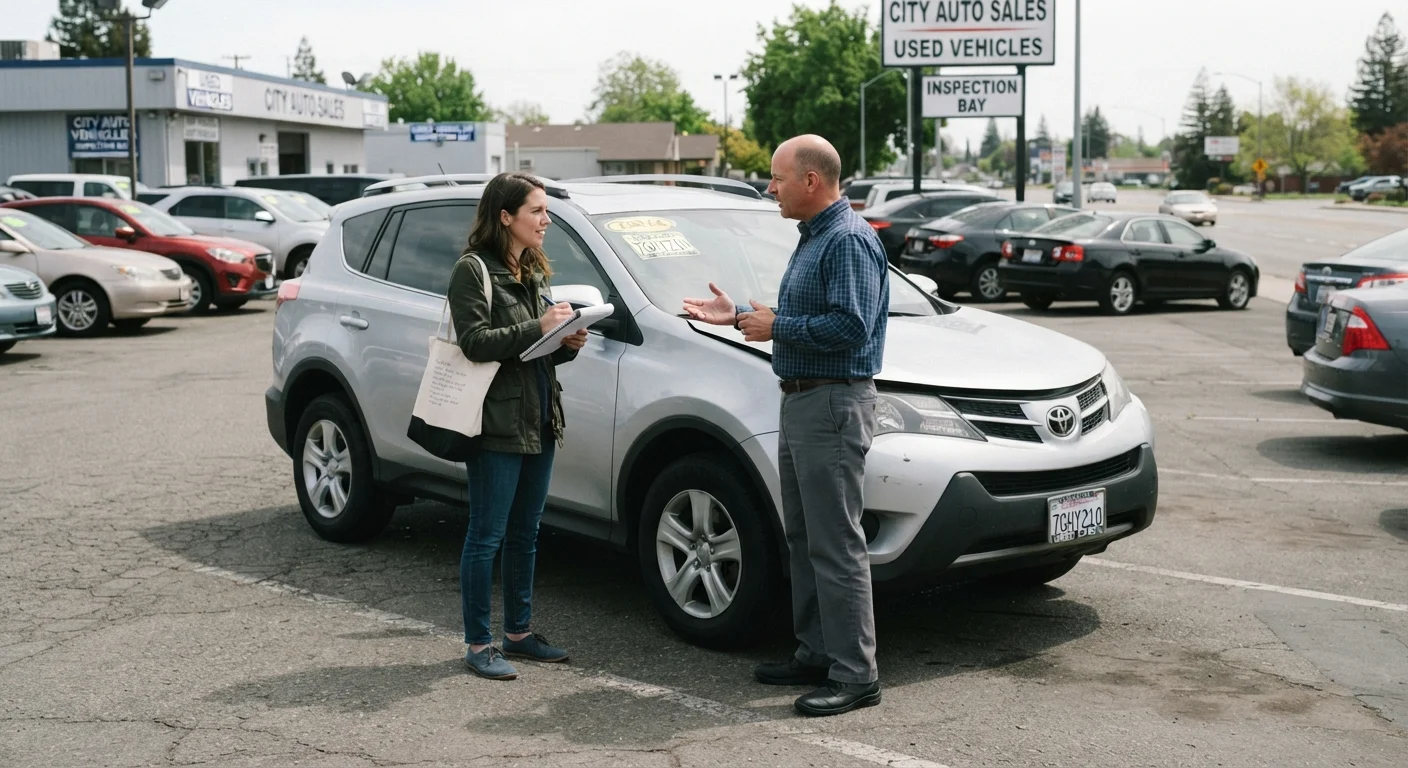
Why the Questions Come Before the Keys
Most buyers treat the test drive as the starting point of due diligence. In reality, a test drive on a car with hidden problems is just a more convincing way to make a bad decision. The questions you ask beforehand - before you sit in the seat, before you smell the interior, before you feel the acceleration - are what separate an informed buyer from one who gets swept up in the moment.
This matters especially in the used-car market, where every vehicle comes with a history the seller may or may not volunteer. Whether you're buying from a private party or a dealership, the same principle applies: information requested upfront costs nothing, while information discovered after signing can cost a great deal. For a broader look at the risk and inspection considerations across different buying channels, see where used cars actually come from.
Below are the questions worth asking before you ever get behind the wheel.
How many previous owners has this vehicle had?
One owner with consistent records is a very different vehicle from one that has passed through four hands in three years. Multiple ownership changes in a short period can indicate recurring mechanical problems, dissatisfaction, or a vehicle that was difficult to sell. Ask for the number of owners and whether they were personal or commercial - fleet vehicles, rentals, and rideshare cars typically accumulate harder use than privately owned ones.
Multiple ownership changes in a short period often signal recurring problems worth investigating.
Can you provide the vehicle history report?
A vehicle history report - available through services that compile data from insurers, DMVs, and repair shops - can surface accident records, title issues, odometer discrepancies, and prior salvage or flood designations. Ask the seller directly whether one is available and review it yourself. Be aware that not every incident appears in these reports; they're useful context, not a guarantee of clean history. Use the report as a starting point for deeper questions, not a final verdict.
A vehicle history report is useful context - but absence of a record doesn't mean absence of an incident.
What does the maintenance history look like?
Ask whether the seller has service records - oil changes, fluid flushes, tire rotations, brake work, and any major repairs. A car maintained according to the manufacturer's recommended schedule is meaningfully different from one serviced only when something broke. Physical receipts or a dealer service history printout are the most reliable forms of documentation. Gaps in records aren't always disqualifying, but they warrant follow-up questions about what was done during those periods.
Documented maintenance history is one of the clearest indicators of how a vehicle was cared for.
Has the vehicle been in any accidents or had significant repairs?
Ask this directly, even if you have a history report. Sellers sometimes know of incidents that didn't result in an insurance claim and therefore won't appear in any database. Significant collision repairs - particularly those affecting structural components - can affect long-term durability, alignment, and safety system performance. You're not looking to disqualify every car with a minor repair history, but you deserve an accurate picture before you drive and certainly before you negotiate.
Not every accident generates an insurance claim - ask the seller directly about repairs, not just the report.
Is the title clean, and are there any outstanding liens?
A clean title means the vehicle has no branded designations - salvage, rebuilt, flood, or lemon law buyback - and that ownership can transfer without legal complications. A lien means a lender has a financial interest in the vehicle, which must be resolved before you can receive a clear title. Ask to see the title if the seller has it, and verify lien status through your state's DMV if there's any ambiguity. Purchasing a car with an unresolved lien can result in serious legal and financial complications.
An unresolved lien can follow the car - not the seller - creating serious complications for a new buyer.
Why is the vehicle being sold?
This question won't always yield a completely candid answer, but patterns in the response are informative. A straightforward explanation - upgrading, downsizing, relocating - differs from vague or shifting answers. Pay attention to whether the reason aligns with observable details: a seller claiming they simply want something newer but who has owned the car for only eight months is worth questioning further. The question also opens a natural conversation where sellers sometimes voluntarily share useful details about the car's condition or quirks.
A seller's reason for selling won't always be candid, but how they answer is often as revealing as what they say.
Will you allow an independent pre-purchase inspection?
This is arguably the most diagnostic question you can ask. A seller who is genuinely confident in the vehicle's condition will generally have no objection to an independent mechanic examining it before purchase. Hesitation, outright refusal, or pressure to decide quickly without an inspection are red flags worth taking seriously. An independent inspection - arranged through a mechanic of your choosing, not one recommended by the seller - is one of the most cost-effective ways to surface problems that neither you nor the seller may be aware of.
A seller who resists an independent inspection is telling you something important about the vehicle.
Turning Answers Into Action
The goal of these questions isn't to interrogate - it's to build a clear picture before your emotions engage with the vehicle. Vague answers, irritation at basic questions, or an unwillingness to provide documentation are meaningful signals, not just inconveniences.
Keep a Written List With You
Bring these questions written down, not just committed to memory. In the moment, it's easy to get distracted by the car itself - how it looks, how it smells, whether it feels like a good fit. A written list keeps the conversation structured and signals to the seller that you're a prepared, informed buyer. Prepared buyers tend to receive more straightforward treatment.
If the answers hold up, the test drive becomes far more focused: you're confirming what you already believe rather than hoping for the best. After the drive, your next step is a pre-purchase inspection by an independent mechanic - arguably the single most protective step a used-car buyer can take. And when you're ready to commit, the pre-purchase checklist will walk you through paperwork, financing terms, and add-ons before you sign anything.
The content on this site is provided for informational purposes only and should not be considered a substitute for professional advice. While we strive to provide accurate and up-to-date information, we make no guarantees regarding its completeness or accuracy. Always consult a qualified professional for advice specific to your circumstances before making any decisions