

Our Verdict
No single used-car channel is universally superior - each suits a different buyer profile and risk tolerance. Dealerships favor buyers who prioritize convenience and recourse; private party sales reward patient, mechanically savvy shoppers; auctions appeal to experienced buyers comfortable with limited information. Matching the channel to your knowledge, budget, and timeline is the real decision.
| Best for | Recommended |
|---|---|
| Buyers who want financing options and some post-sale recourse | Dealership |
| Experienced buyers willing to do their own due diligence for a lower price | Private Party |
| Knowledgeable buyers comfortable with limited inspection access and higher uncertainty | Auction |
Why the Source of a Used Car Matters
Most used-car shoppers focus on the vehicle - the mileage, the color, the CarFax report. But the channel through which a car is sold shapes almost everything else: how much you'll pay, what protections you have, and how much you actually know about the car's history before you hand over money.
The three primary routes are dealerships (both franchised and independent), private party transactions, and auctions (including public auto auctions and online auction platforms). Each operates under different rules, and each shifts the risk-reward balance differently. Understanding the distinctions before you start shopping puts you in a far stronger position. For a broader view of the overall purchase process, see the full car-buying process.
Buying from a Dealership
Franchised dealerships - those affiliated with a specific automaker - and independent used-car dealers operate somewhat differently, but both share key characteristics that separate them from private sellers.
What works in your favor: Dealers are subject to state and federal consumer protection laws, including the FTC's Used Car Rule, which requires them to display a Buyers Guide disclosing warranty coverage on every vehicle. Many dealer sales include some form of limited warranty, and franchised dealers often offer certified pre-owned (CPO) programs with additional inspections and extended coverage. Financing is typically available on-site, and you can trade in a vehicle to offset the price.
The trade-offs: Dealership pricing generally reflects overhead - staff, facilities, and reconditioning costs - which tends to make their inventory more expensive than comparable private party listings. Independent dealers vary widely in quality; some operate with lean overhead and competitive pricing, others with minimal vetting of incoming inventory.
If the CPO distinction matters to you, our article on certified pre-owned vs. standard used breaks down what those programs actually cover.
| Dealership | Private Party | Auction | |
|---|---|---|---|
| Typical price vs. market | At or above market | At or below market | Variable; can be below market |
| Buyer protections | FTC Buyers Guide required; state lemon law may apply | Mostly as-is; minimal protections | Typically as-is; very limited recourse |
| Financing available | Yes, on-site options common | Must arrange separately | Typically must arrange separately |
| Test drive allowed | Yes, standard practice | Usually yes, by arrangement | Rarely or never |
| Independent inspection feasible | Yes, dealer usually allows it | Yes, seller must agree | Difficult; often not permitted |
| Negotiation flexibility | Moderate | High | Bid-based; no direct negotiation |
| Warranty or CPO option | Often available | Almost never | Almost never |
Buying from a Private Party
Private party sales - where an individual sells directly to another individual, typically through classified listings - are the oldest form of used-car transaction. They remain common precisely because they can work well for both parties when approached carefully.
Price advantage: Without dealer overhead, private sellers often price vehicles below what a dealer would charge for the same car. There's also more room to negotiate directly with the owner.
What you give up: Private sales in most states are treated as "as-is" transactions. Once the title transfers, recourse is extremely limited. There's no Buyers Guide requirement, no mandated disclosure form in most jurisdictions, and no financing arranged for you. You're also relying on the seller's honesty about the vehicle's history.
This is why a pre-purchase inspection becomes especially important in a private sale. An independent mechanic can identify problems the seller may not disclose - or may not even know about. See our guide on arranging a pre-purchase inspection for practical steps. Before the inspection, make sure you're asking the right questions - our piece on questions to ask before a test drive covers what to request from any seller upfront.
Always Verify the Title Before You Pay
In a private party sale, confirm the seller's name matches the name on the title before any money changes hands. A mismatch can complicate or even void the transfer. Also check whether there's an outstanding lien - if a bank holds interest in the vehicle, that obligation doesn't automatically disappear when ownership changes. Your state's DMV website can often help you understand the title transfer process and what to look for.
Buying at Auction
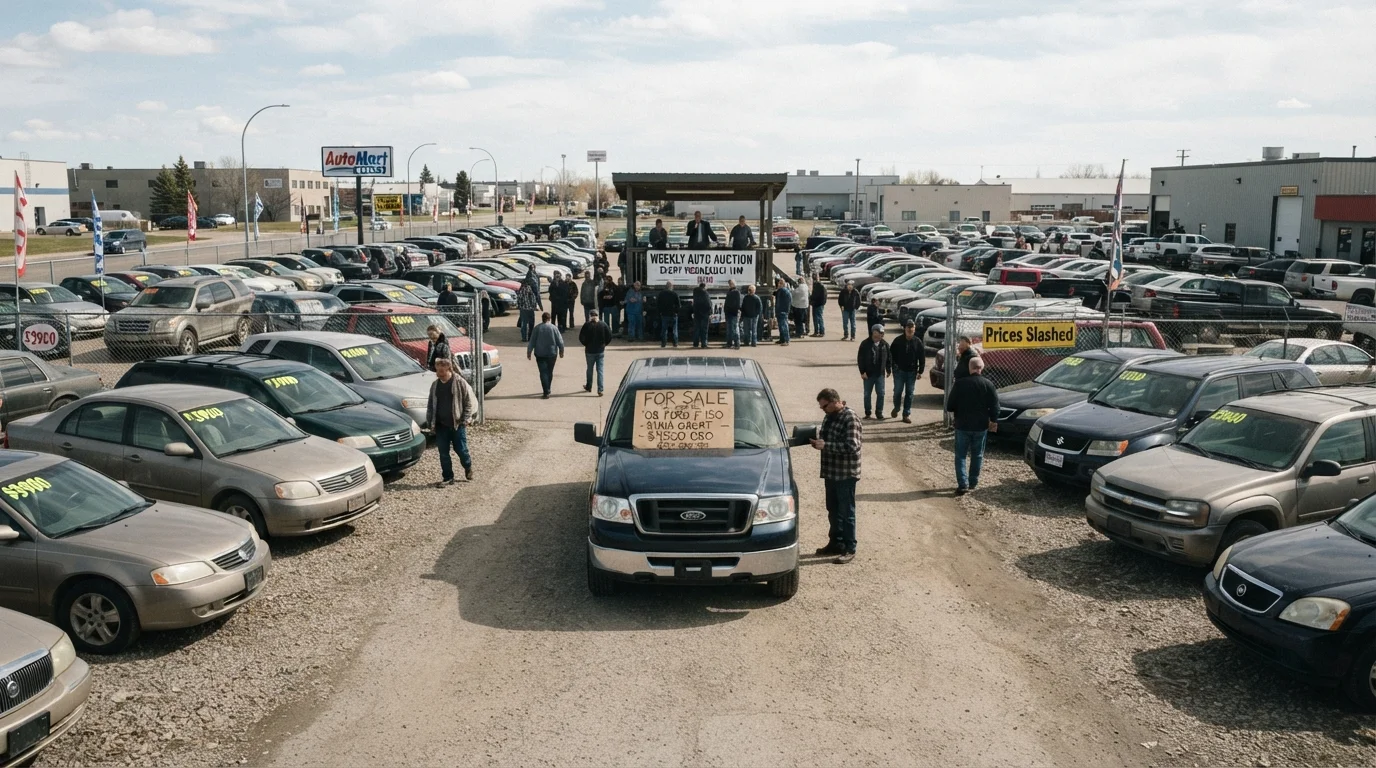
Auto auctions range from dealer-only wholesale events to public auctions and online platforms that allow individual buyers to bid on vehicles. They've grown more accessible in recent years, but they carry a different risk profile than either of the other channels.
The potential upside: Auction vehicles sometimes sell below market value, particularly at public sales where competition is lighter or a vehicle attracts less interest. You may encounter fleet vehicles, bank repossessions, or estate cars that haven't been reconditioned and marked up.
The significant constraints: Most auctions prohibit pre-sale test drives. Some allow a brief visual inspection; others sell vehicles as-is with no inspection access at all. Vehicle history reports may be available, but independent mechanic inspections are often impractical. If you win a bid and discover a problem afterward, options for recourse are generally very limited or nonexistent.
Auctions tend to suit buyers who have experience evaluating vehicles by sight and mechanical knowledge, or who are purchasing for resale or parts rather than daily use. First-time buyers or those without mechanical confidence are generally better served by channels that allow fuller due diligence.
For context on how all of these decisions fit into the broader choice between new and used vehicles, new car vs. used car trade-offs lays out the full picture.
Auction Bidding Is Binding
At most auto auctions, a winning bid is a binding commitment to purchase. Unlike a private sale where you can walk away before signing, backing out of a winning auction bid typically results in forfeiting a deposit or facing other penalties. Know your ceiling price and the vehicle's market value before you raise your hand - and factor in any buyer's fees, which can be substantial and are often added on top of the winning bid.
The content on this site is provided for informational purposes only and should not be considered a substitute for professional advice. While we strive to provide accurate and up-to-date information, we make no guarantees regarding its completeness or accuracy. Always consult a qualified professional for advice specific to your circumstances before making any decisions