

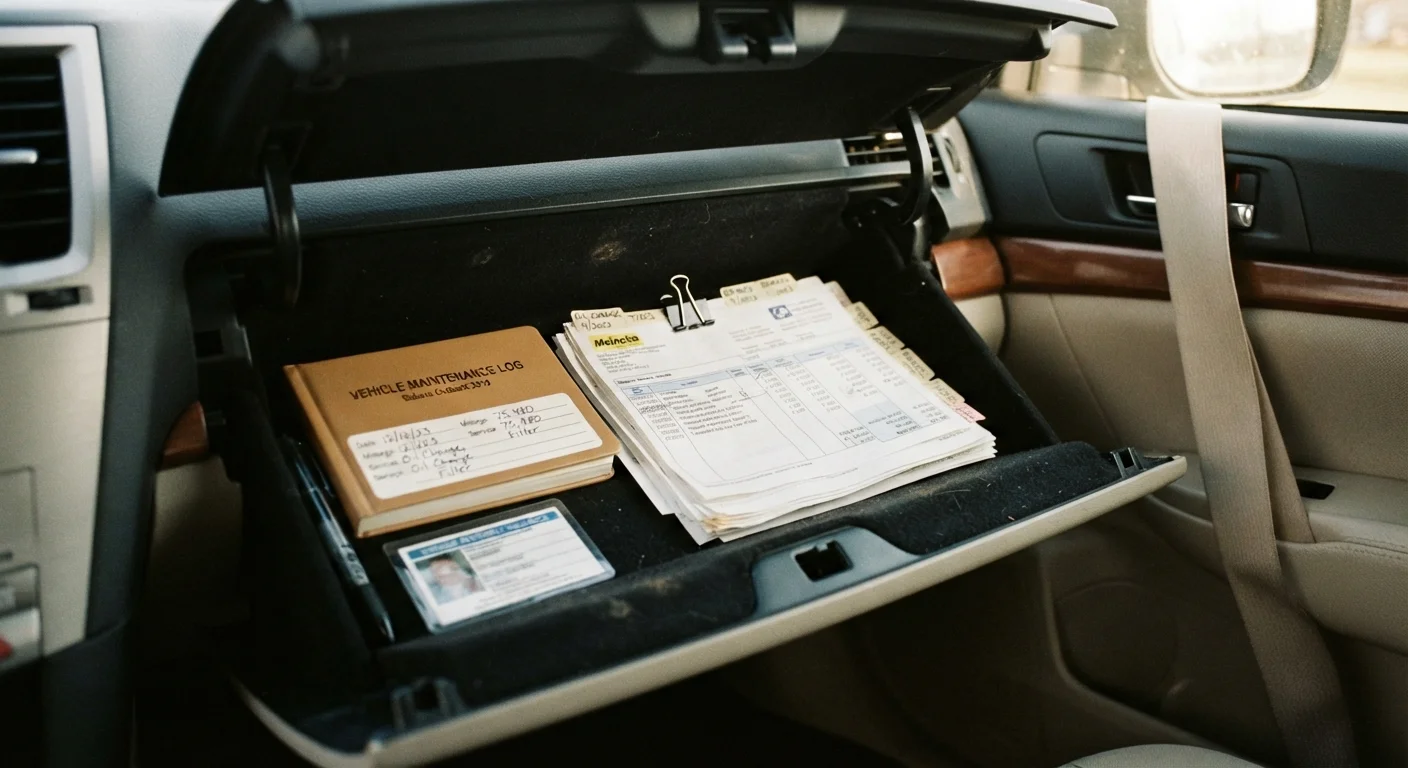
Why Maintenance Records Are Worth the Effort
Most drivers handle oil changes, tire rotations, and brake inspections without thinking twice - but far fewer write any of it down. That gap between doing maintenance and documenting it is where a lot of vehicle value quietly disappears.
A complete service history does three concrete things for you. First, it gives a mechanic immediate context when diagnosing a problem - knowing when the transmission fluid was last changed or whether the timing belt is overdue can shortcut hours of diagnostic guesswork. Second, it demonstrates to a future buyer or dealer that the vehicle has been properly cared for, which can support its resale value. Third, it protects you: if a repair shop claims a part was never serviced, your records say otherwise.
For drivers still building their maintenance habits, our practical starting guide for new drivers covers the foundational upkeep tasks worth tracking from day one.
Up to $500
Potential resale value added by complete service records
Industry estimates from used-car market analysts suggest documented maintenance history can meaningfully influence private-sale negotiations, though results vary by vehicle and market conditions.
1 in 3
Drivers who keep no written maintenance log
Consumer surveys in the automotive sector consistently indicate a significant share of drivers rely on memory alone to track service history, increasing the risk of missed intervals.
What to Record - and How to Structure Each Entry
A useful maintenance log doesn't need to be elaborate. Every entry should capture three core pieces of information: the date, the odometer reading, and a brief description of the work performed. If a shop did the work, attach or note the invoice number and the shop's name.
Beyond those basics, useful additions include:
- Parts replaced (including brand if relevant for warranty purposes)
- The technician's name or shop certification number for major repairs
- Any notes on what the mechanic observed - even if no repair was made
- Next recommended service interval (in miles or months)
Your vehicle's owner's manual maintenance schedule is the authoritative source for what needs tracking and when. If you haven't read that section carefully, our article on reading the maintenance schedule section of your owner's manual breaks it down clearly.
Log every service at the point of completion, not days later.
Memory fades quickly, and details like exact mileage or specific parts replaced are easy to misremember. Immediate logging ensures accuracy and prevents gaps in your history.
Keep all original receipts - even for routine services like oil changes.
Receipts serve as verifiable proof of service, which matters both for warranty claims and future resale. A log entry without supporting documentation is harder to substantiate.
Note the next service interval on every entry.
Recording what comes next turns your log into a proactive reminder system, not just a backward-looking record. This reduces the chance of missing a scheduled service.
Record observations, not just completed repairs.
A mechanic's note that brake pads are at 30% remaining - even if no repair was done yet - gives you a valuable reference point for planning ahead and verifying future recommendations.
Transfer records to the new owner when selling the vehicle.
A complete service history can support the vehicle's perceived value and give the buyer confidence. It also demonstrates transparency, which can make private sales smoother.
Choosing Your Record-Keeping Format
There's no universally superior format - the right system is one you'll actually use. Here are the main options, each with trade-offs worth considering.
Paper Logbooks
A dedicated maintenance logbook kept in the glove compartment is low-tech and always accessible. Physical receipts can be folded in alongside it. The downside: paper can be lost, damaged by moisture, or left behind when you sell the vehicle.
Spreadsheets
A simple spreadsheet (stored in cloud storage so it's backed up) works well for drivers who are comfortable with digital tools. You control the columns, and it's easy to sort entries by date or mileage.
Dedicated Apps
Several smartphone apps are designed specifically for vehicle maintenance logs. Many allow photo uploads of receipts and can send service reminders. Evaluate any app's privacy policy before entering vehicle identification or personal details.
Back Up Your Records in Two Places
Treat your maintenance log the same way you'd treat an important financial document. Store a physical copy in the vehicle and a digital backup - whether that's a cloud folder, email archive, or dedicated app. If the car is stolen or damaged, your records survive. When you sell, you can share a digital copy instantly without handing over originals.
Whatever format you choose, store a backup. If you use paper, photograph each receipt and save it to a cloud folder. If you use an app, periodically export your data.
Making Documentation a Consistent Habit
The most common reason maintenance records fall apart is timing - drivers intend to log a service but forget before the receipt gets buried in a pile. Building the habit into the moment of service eliminates that gap.
Understanding how maintenance costs evolve as a vehicle ages can also motivate more consistent record-keeping: as a car accumulates mileage, the service history becomes an increasingly important asset - both for managing costs and for any eventual sale.
Drivers who stay skeptical about which services are actually necessary can cross-reference records against our look at common car maintenance myths to separate routine requirements from upsells.
This article is for general informational purposes only. Always consult a qualified mechanic for advice specific to your vehicle's condition and repair needs.
The content on this site is provided for informational purposes only and should not be considered a substitute for professional advice. While we strive to provide accurate and up-to-date information, we make no guarantees regarding its completeness or accuracy. Always consult a qualified professional for advice specific to your circumstances before making any decisions