

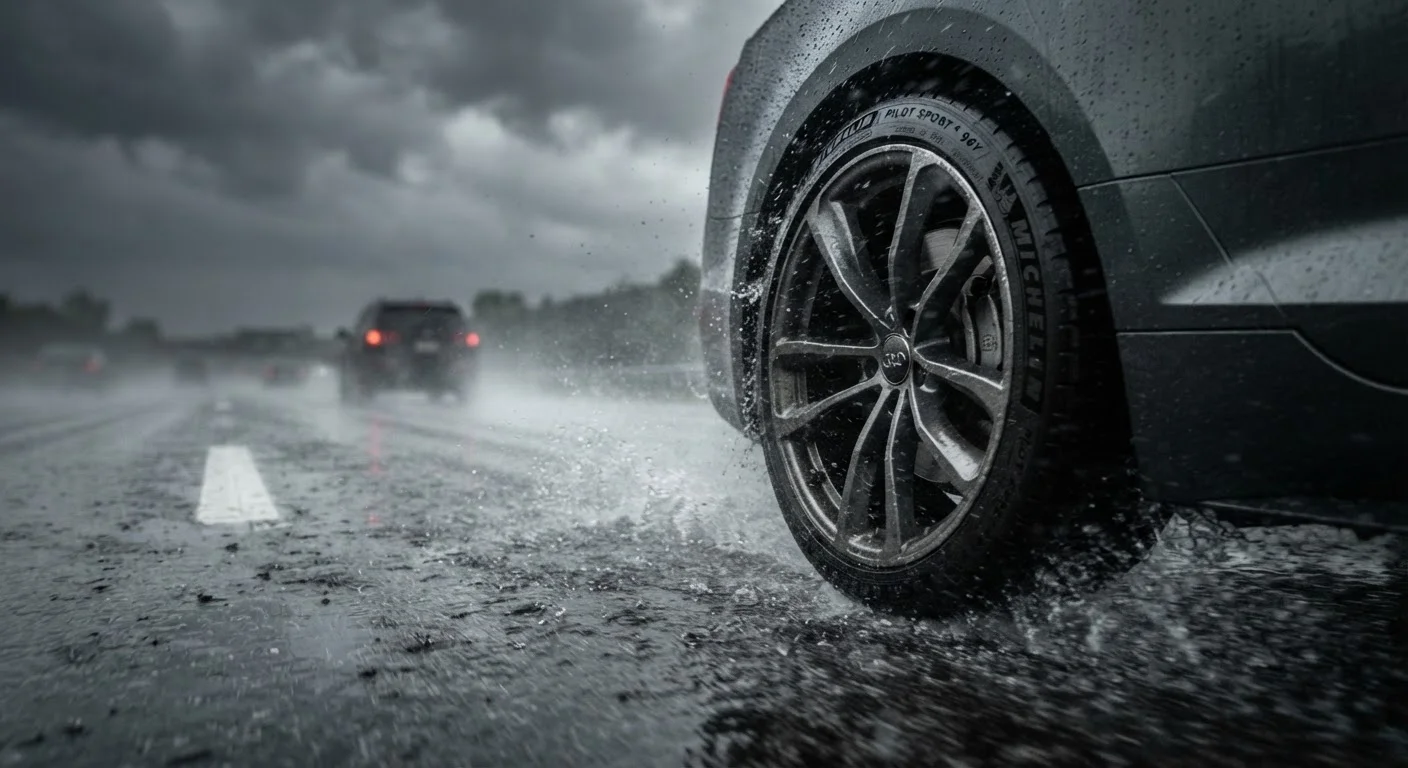
What Hydroplaning Actually Is
Hydroplaning - also called aquaplaning - occurs when a layer of water builds up between a vehicle's tires and the road surface faster than the tires can push it away. At that moment, the tire is no longer gripping pavement; it's floating on water. Steering, braking, and acceleration inputs become partially or completely ineffective.
It can happen in less than a second. Drivers often describe the sensation as a sudden lightness or floatiness in the steering wheel, sometimes paired with a feeling that the car is drifting sideways even though the wheel is straight.
Three factors determine whether hydroplaning occurs: vehicle speed, water depth on the road, and the condition of the tires. All three interact. A car traveling at 35 mph on tires with adequate tread depth may grip just fine through a shallow puddle - but that same car traveling at 55 mph with worn tires through an inch of standing water is at serious risk.
Road geometry matters too. Highways with poor drainage, low-crowned lanes, and rutted surfaces from heavy truck traffic are especially prone to pooling water. For a broader look at how water accumulates and why certain surfaces hold it, our guide to driving in severe weather conditions explains how rain interacts with different road types.
What Puts You at Greatest Risk
Understanding the risk factors helps drivers make smarter decisions before they encounter standing water.
- Speed: The faster a vehicle travels, the less time a tire has to channel water through its tread grooves. Most hydroplaning incidents occur above 45 mph, though it can happen at lower speeds with severely worn tires.
- Tire tread depth: Tread grooves exist specifically to redirect water away from the contact patch. When tread wears below 4/32 of an inch, wet-weather performance drops measurably. At 2/32 of an inch - the legal minimum in most U.S. states - wet-road traction is significantly compromised. Regular tire checks are a basic part of ongoing vehicle maintenance.
- Tire pressure: Under-inflated tires deform and reduce the tread's ability to channel water efficiently. Always maintain manufacturer-recommended pressure, which is listed on a sticker inside the driver's door jamb.
- Water depth: Even a thin film of water can be dangerous at highway speeds, but deeper puddles - even an inch or more - significantly increase the chance of losing contact with the road.
- Road surface: The first 10-15 minutes of rainfall are often the most slippery, as water mixes with oil residue on the surface before it washes away.
The First Rain After a Dry Spell Is the Most Dangerous
When rain falls after a long dry period, it lifts accumulated motor oil, tire rubber, and road grime to the surface before washing it away. This creates an especially slick film during the first 10-20 minutes of rainfall. Reduce your speed more than you think necessary during these initial minutes, and increase your following distance significantly.
How to Regain Control When It Happens
If you feel your vehicle start to hydroplane, the instinct to brake hard or yank the wheel is natural - and wrong. Here's the correct sequence of responses:
Ease off the accelerator gradually
Lift your foot from the gas pedal smoothly - do not stomp the brakes. Reducing speed allows the tires to regain contact with the road surface. Sudden deceleration can make the skid worse, especially if the rear tires are also affected.
Hold the steering wheel straight
Resist the urge to jerk the wheel. Keep it pointed in the direction you want to travel and hold steady. If the vehicle begins to yaw (rotate sideways), make only small, controlled corrections - not sharp turns.
Brake gently if needed - and only after slowing
Once your speed has dropped and you feel traction returning, you can apply the brakes lightly. In vehicles with anti-lock braking systems (ABS), firm steady pressure is acceptable - the system will modulate to avoid lockup. In vehicles without ABS, use gentle, threshold braking to avoid locking the wheels.
Guide the vehicle to a safe path
As control returns, steer gently toward a clear, safe lane position. Avoid making sudden lane changes or sharp turns until you're confident all four tires are fully engaged with the road again.
Practicing defensive driving habits year-round makes these responses easier to execute under pressure, because you're already accustomed to reading road conditions and managing space around your vehicle.
Prevention: The Most Reliable Strategy
No response technique replaces the value of not hydroplaning in the first place. Several habits meaningfully reduce your exposure:
- Reduce speed in wet conditions. Give yourself extra margin before curves, intersections, and known low spots in the road.
- Avoid cruise control in rain. When cruise control is engaged, the system may not react quickly enough to loss of traction. Disengage it whenever roads are wet.
- Follow tire wear closely. Inspect tread depth regularly using a tread depth gauge or the penny-test method. Replace tires before they reach the legal minimum.
- Stay out of standing water when possible. Choose lanes with better drainage. On multi-lane roads, avoid lanes with visible water pooling.
- Increase following distance. Wet roads extend stopping distances significantly. Following too closely in rain removes your margin to react if the car ahead slows or swerves.
Check Tire Condition Before Every Long Trip
Before any extended highway drive in rainy season, take two minutes to walk around the vehicle and visually check each tire. Look for uneven wear patterns, low tread depth, and proper inflation. A small habit before departure can prevent a much larger problem at highway speed.
The content on this site is provided for informational purposes only and should not be considered a substitute for professional advice. While we strive to provide accurate and up-to-date information, we make no guarantees regarding its completeness or accuracy. Always consult a qualified professional for advice specific to your circumstances before making any decisions