

Our Verdict
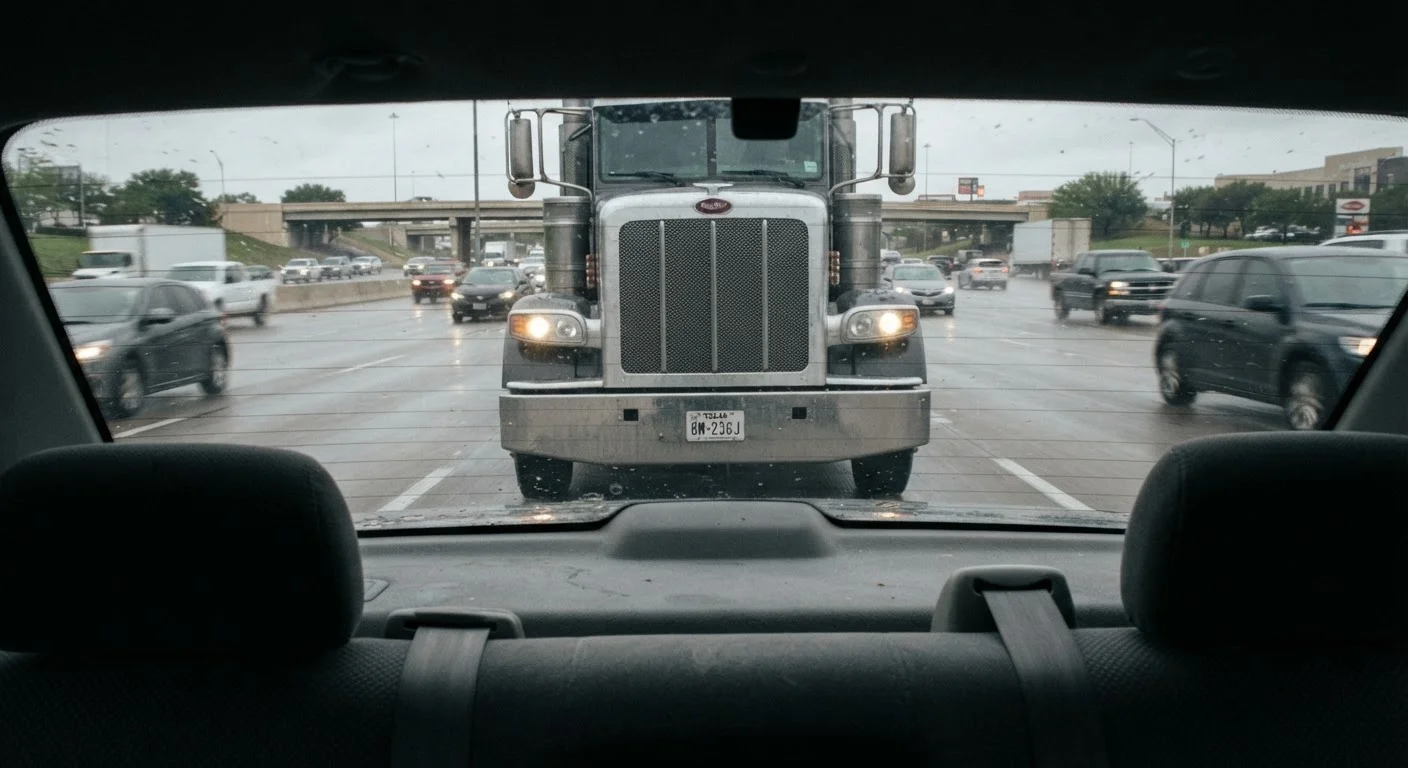
Tailgating offers no meaningful benefit to the driver doing it - time savings are negligible, and the crash risk is real. Whether it stems from impatience, habit, or simple unawareness, closing the gap unnecessarily puts everyone on the road in danger. Maintaining a proper following distance is one of the lowest-effort, highest-impact safety habits any driver can build.
Any driver who wants to reduce their crash risk and make roads safer - particularly those who commute frequently, drive in heavy traffic, or are newer to highway driving.
Why Drivers Follow Too Closely
Tailgating - following another vehicle more closely than conditions safely allow - is one of the most common driver errors on American roads. Yet most drivers who do it aren't thinking of themselves as reckless. Understanding the psychology behind the habit is the first step to changing it.
The most common driver behind tailgating is simple impatience. When a driver ahead is moving slower than expected, the instinct for many is to close the gap as a form of pressure. Research in traffic psychology consistently shows this approach rarely works - it almost never causes the lead driver to speed up - and it dramatically increases collision risk for both parties.
Distraction plays a role too. A driver whose attention drifts - whether to a conversation, a navigation screen, or mental fatigue - may not notice how much distance they've lost until they're already dangerously close. See our full breakdown of driving distractors for a broader look at what pulls focus off the road.
Speed perception is another factor. At highway speeds, the gap that feels comfortable to the eye is often far smaller than the stopping distance actually requires. Drivers routinely underestimate how fast they're traveling and overestimate how quickly they can stop.
Tailgating as Aggressive Driving
In some contexts, deliberate tailgating is classified as aggressive driving under state traffic laws and can result in a traffic citation. While most tailgating is unintentional, intentional close-following - particularly paired with flashing lights or horn use - can escalate to road rage incidents. If you're being tailgated, the safest response is to safely move out of the way rather than brake-check or engage with the other driver.
The Real Physics of Stopping Distance
At 60 mph, a vehicle travels roughly 88 feet per second. Factor in the typical human reaction time of 1.5 seconds before the brakes are even applied, and a driver is already 132 feet down the road before braking begins. Add actual braking distance on top of that, and the total stopping distance can exceed 240 feet under normal conditions - and considerably more on wet or slick roads.
~29%
Of all U.S. crashes are rear-end collisions
According to the National Highway Traffic Safety Administration, rear-end crashes are consistently among the most common crash types on American roads.
240+ ft
Total stopping distance at 60 mph
Combining average reaction time and typical braking distance on dry pavement, a passenger vehicle traveling at 60 mph may need over 240 feet to come to a full stop.
When a vehicle is following just one or two car lengths behind at that speed, there is simply no physics-based path to avoiding a collision if the lead driver brakes hard. This is why rear-end crashes are so frequent and why they cause serious injuries even at seemingly moderate speeds.
The 3-second following distance rule exists precisely to account for this reality. By picking a fixed point and ensuring the vehicle ahead passes it at least three seconds before you do, drivers create a buffer that accounts for both reaction time and braking distance. In wet weather, low visibility, or heavy traffic, that gap should increase to four or five seconds.
Pros and Cons of Maintaining a Safe Following Distance
Framing following distance purely as a rule misses why it matters. Here's a balanced look at what drivers gain - and what they sometimes feel they give up - by keeping proper space.
Dramatically reduces rear-end collision risk
A proper following gap gives the driver time to perceive, decide, and brake before impact. At highway speeds, even half a second of extra time translates to dozens of feet of additional stopping room.
Improves driver awareness of surroundings
More distance from the car ahead means a wider field of view, allowing drivers to see hazards - debris, brake lights further ahead, merging vehicles - before they become emergencies.
Reduces stress and promotes calmer driving
Drivers who maintain adequate space report less reactive braking and fewer tense moments. The buffer acts as a buffer not just physically but psychologically.
Protects against chain-reaction crashes
On congested highways, a driver with space can absorb a ripple of braking without panic-stopping, reducing the risk of triggering a multi-vehicle pileup behind them.
Other drivers may exploit the gap
Leaving a visible space ahead can invite lane-changers, particularly in dense city traffic. While manageable, some drivers find this frustrating enough to unconsciously close the gap again.
Can feel counterintuitive at low speeds
In stop-and-go urban traffic, maintaining several seconds of following distance feels excessive when the car ahead is barely moving - leading many drivers to abandon the habit in the conditions where it matters most.
Requires consistent active attention to maintain
Following distance degrades naturally as attention shifts, speed changes, or traffic thickens. Without deliberate monitoring, drivers frequently drift back into unsafe gaps without realizing it.
The perceived downside of leaving space - that other vehicles will cut in - is real but manageable. A gap of three seconds is rarely large enough to invite aggressive lane-changers, and even when it happens, simply easing back slightly restores the buffer. The safety math is clear: the minor inconvenience of another car merging in front of you is far preferable to a rear-end collision.
New and younger drivers are especially worth mentioning here - the habits formed early tend to stick. Our guide on what new teen drivers need to understand addresses following distance alongside other habits that driver's ed doesn't always cover thoroughly.
When Conditions Demand Even More Distance
The 3-second rule is a baseline for ideal conditions - dry pavement, good visibility, alert driver. Many everyday situations require extending that gap further.
- Rain and wet roads: Water reduces tire grip and significantly extends stopping distances. Hydroplaning can happen suddenly even at moderate speeds, stripping a driver of steering control with no warning.
- Following large vehicles: Trucks and SUVs block sightlines and stop more slowly than passenger cars. Drivers behind them need extra space simply to see what's ahead.
- Heavy traffic and highway merging: Stop-and-go conditions are where rear-end crashes cluster. Traffic ripple effects - where one brake tap cascades backward - are a leading cause of freeway pile-ups. See our coverage of where highway accidents begin for more on how merging plays into this.
- Night driving: Reduced visibility shrinks the driver's effective response window, making the default 3-second gap insufficient on unlit roads.
Speed limits are also worth putting in context here. As our piece on speed limits vs. safe speed explains, the posted number is a maximum under ideal conditions - not a target. Slowing down and increasing following distance in suboptimal conditions go hand in hand.
Building the Habit That Sticks
Knowing the rule and applying it consistently are two different things. Most drivers have absorbed the 3-second standard somewhere in their education but drift away from it under pressure or routine.
A few practical anchors help. Picking an obvious roadside marker - a sign, a bridge, an overpass - and counting off seconds after the car ahead passes it takes less than five seconds of attention and delivers immediate feedback. Drivers who do this regularly report that it recalibrates their sense of what a safe gap actually looks like.
Cruise control, where appropriate, also reduces the speed creep that often causes unintentional tailgating on highways - when drivers aren't actively monitoring throttle, they tend to drift toward the vehicle ahead over time.
Finally, awareness of blind spots around your vehicle matters here too. Following too closely limits not just stopping distance but the driver's ability to see around the vehicle ahead - compounding the hazard. Safe highway driving is a system of habits, each reinforcing the others. Following distance is one of the most foundational.
For a broader look at the routines that experienced drivers maintain on high-speed roads, see our guide to safe highway driving habits.
The content on this site is provided for informational purposes only and should not be considered a substitute for professional advice. While we strive to provide accurate and up-to-date information, we make no guarantees regarding its completeness or accuracy. Always consult a qualified professional for advice specific to your circumstances before making any decisions