

Our Verdict
Each budgeting framework addresses a different root challenge. The 50/30/20 rule suits beginners wanting a low-maintenance structure; envelope budgeting works best for those who overspend on discretionary categories; Pay Yourself First is powerful for building savings automatically; and zero-based budgeting rewards detail-oriented planners. Understanding your own spending patterns before choosing a method significantly increases your odds of sticking with it.
| Best for | Recommended |
|---|---|
| Beginners or those who want a simple, flexible structure | 50/30/20 Rule |
| People who struggle with overspending on discretionary items | Envelope Budgeting |
| Those focused on building savings or reaching long-term goals | Pay Yourself First |
| Detail-oriented planners who want full visibility into every dollar | Zero-Based Budgeting |
Why the Method You Choose Actually Matters
A budget only works if you use it. That sounds obvious, but it explains why millions of Americans start a budgeting system in January and abandon it by March - they chose a method that didn't fit their lifestyle, income pattern, or personality. Before picking a framework, it helps to have an honest picture of where your money currently goes. Our guide to auditing your own spending is a good starting point.
The four methods covered here - envelope budgeting, Pay Yourself First, the 50/30/20 rule, and zero-based budgeting - represent the most widely used personal finance frameworks. Each has a distinct philosophy, real strengths, and genuine limitations. This article is general financial education, not personalized financial advice. For decisions tailored to your situation, consider consulting a licensed financial professional.
| Envelope Budgeting | Pay Yourself First | 50/30/20 Rule | Zero-Based Budgeting | |
|---|---|---|---|---|
| Core philosophy | Spend within fixed category limits | Save first, live on the rest | Split income across three broad buckets | Assign every dollar a specific job |
| Effort level | Medium - ongoing category tracking | Low - automate savings, then spend freely | Low - minimal tracking required | High - detailed monthly planning needed |
| Best income type | Steady, predictable income | Steady, predictable income | Steady, predictable income | Variable or irregular income |
| Savings emphasis | Low - savings is one envelope | High - savings is the priority action | Moderate - 20% allocated to savings | High - savings built into zero allocation |
| Flexibility | Low - categories are fixed | High - remaining spend is unrestricted | High - broad categories allow adjustment | Low - deviations require replanning |
| Biggest limitation | Rigid; hard to adapt mid-month | Doesn't control how remainder is spent | Broad buckets can hide problem spending | Time-intensive; easy to abandon |
The Four Methods: How Each One Works
Envelope Budgeting
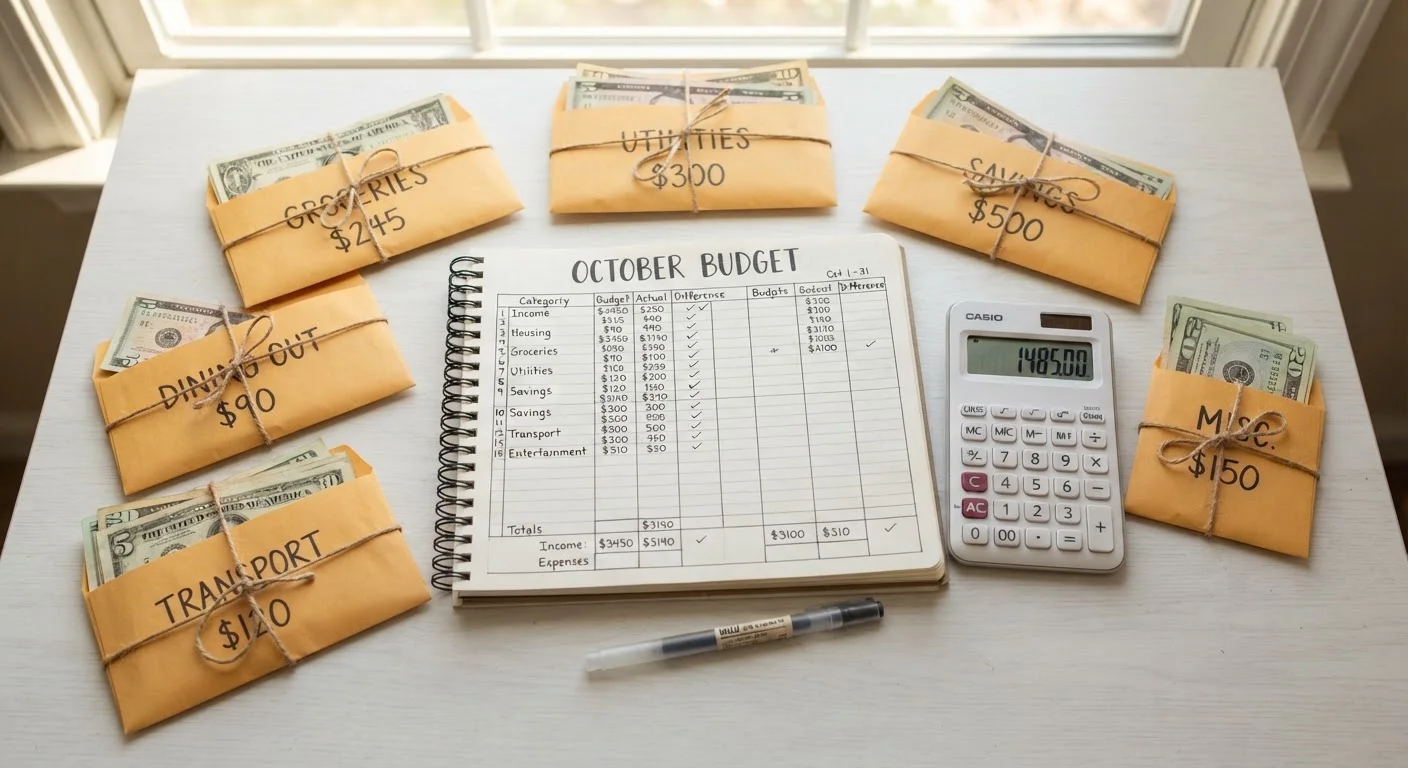
Originally a cash-based system, envelope budgeting divides your income into physical (or digital) envelopes labeled by spending category - groceries, dining out, gas, entertainment. Once an envelope is empty, spending in that category stops for the month. The tactile friction of handling cash makes overspending immediately visible. Digital apps now replicate the envelope concept without requiring physical cash.
Best for: Chronic overspenders in specific categories, or anyone who benefits from concrete, physical cues to manage behavior.
Pay Yourself First
This method flips the traditional budgeting sequence. Instead of spending first and saving what's left, you automate a savings or investment contribution the moment your paycheck arrives - then live on what remains. It removes willpower from the equation by making saving the default action rather than the afterthought. It pairs naturally with goals like building an emergency fund or contributing to a retirement account. See how this connects to saving and debt strategies more broadly.
Best for: Those with consistent income who struggle to save because they spend everything available.
The 50/30/20 Rule
Popularized in personal finance circles, this guideline divides after-tax income into three buckets: 50% for needs (housing, utilities, groceries, minimum debt payments), 30% for wants (dining out, subscriptions, hobbies), and 20% for savings and extra debt repayment. It requires no line-item tracking, making it low-maintenance and approachable for beginners. If you're unfamiliar with terms like discretionary spending or sinking funds, our budgeting glossary defines the vocabulary you'll encounter.
Best for: Beginners or those with relatively straightforward finances who want structure without spreadsheets.
Zero-Based Budgeting
In zero-based budgeting, income minus all allocated expenses, savings, and debt payments equals exactly zero. Every dollar receives a specific assignment before the month begins. This demands more upfront effort - you're essentially writing a detailed financial plan each month - but it creates total visibility into cash flow. It's especially useful when income is irregular or when you're aggressively paying down debt. For guidance on building and maintaining this kind of detailed plan, see making a budget that holds up when life gets complicated.
Best for: Detail-oriented people, those with variable income, or anyone in an active debt-payoff phase.
Start Simple, Then Add Detail
If you're new to budgeting, resist the urge to build an elaborate system from day one. Begin with the 50/30/20 rule or Pay Yourself First for one to two months to establish the habit. Once tracking feels routine, layer in more granular controls - like envelope limits on high-spend categories - where you need them most.
Trade-Offs, Limitations, and Common Pitfalls
Every system has friction points. Envelope budgeting can feel rigid when unexpected expenses arise - crossing envelope funds requires deliberate decision-making, which is the point, but can feel punishing. Pay Yourself First, while powerful for savings, doesn't address how the remaining money is spent, meaning you could still overspend on wants. The 50/30/20 rule's broad categories can mask problem spending within the 30% bucket. Zero-based budgeting demands consistent monthly effort; skipping even one month's planning can derail the whole approach.
A practical consideration: budgeting as a couple or shared household adds another layer of complexity to any of these methods. Keeping a budget when two people share one household explores how to coordinate finances across different spending styles and priorities.
Don't Ignore Irregular Expenses
One of the most common reasons budgets fail is forgetting to account for irregular but predictable costs - car registration, annual insurance premiums, holiday gifts, or medical co-pays. Whichever method you choose, build in a category or "sinking fund" for these expenses by setting aside a small amount each month. Ignoring them leads to blown budgets and discouragement.
Also worth noting: budgeting doesn't replace goal-setting. Once you have a method in place, it's worth mapping how your monthly plan connects to both near-term and longer-term objectives. Balancing short-term and long-term financial goals covers how to structure that thinking.
Mixing Methods and Finding Your Fit
In practice, many people combine elements from multiple frameworks. You might use Pay Yourself First to automate savings, apply a rough 50/30/20 split to the remaining income, and use envelope-style limits on a few categories where you know you tend to overspend. There's nothing wrong with this hybrid approach - the goal is a system you'll actually maintain, not textbook purity.
If you're unsure whether you even need a full budget structure versus a simpler tracking habit, spending tracker vs. full budget can help you evaluate what level of structure genuinely serves your situation.
Start with the method that addresses your biggest pain point. If saving feels impossible, try Pay Yourself First. If discretionary spending spirals, try envelope limits. If you want a simple overview, start with 50/30/20. Give any new system at least 60 to 90 days before judging whether it works - behavior change takes time, and early friction is normal.
This article is for general informational and educational purposes only and does not constitute personalized financial, investment, or tax advice. Consult a qualified financial professional for guidance specific to your circumstances.
The content on this site is provided for informational purposes only and should not be considered a substitute for professional advice. While we strive to provide accurate and up-to-date information, we make no guarantees regarding its completeness or accuracy. Always consult a qualified professional for advice specific to your circumstances before making any decisions