

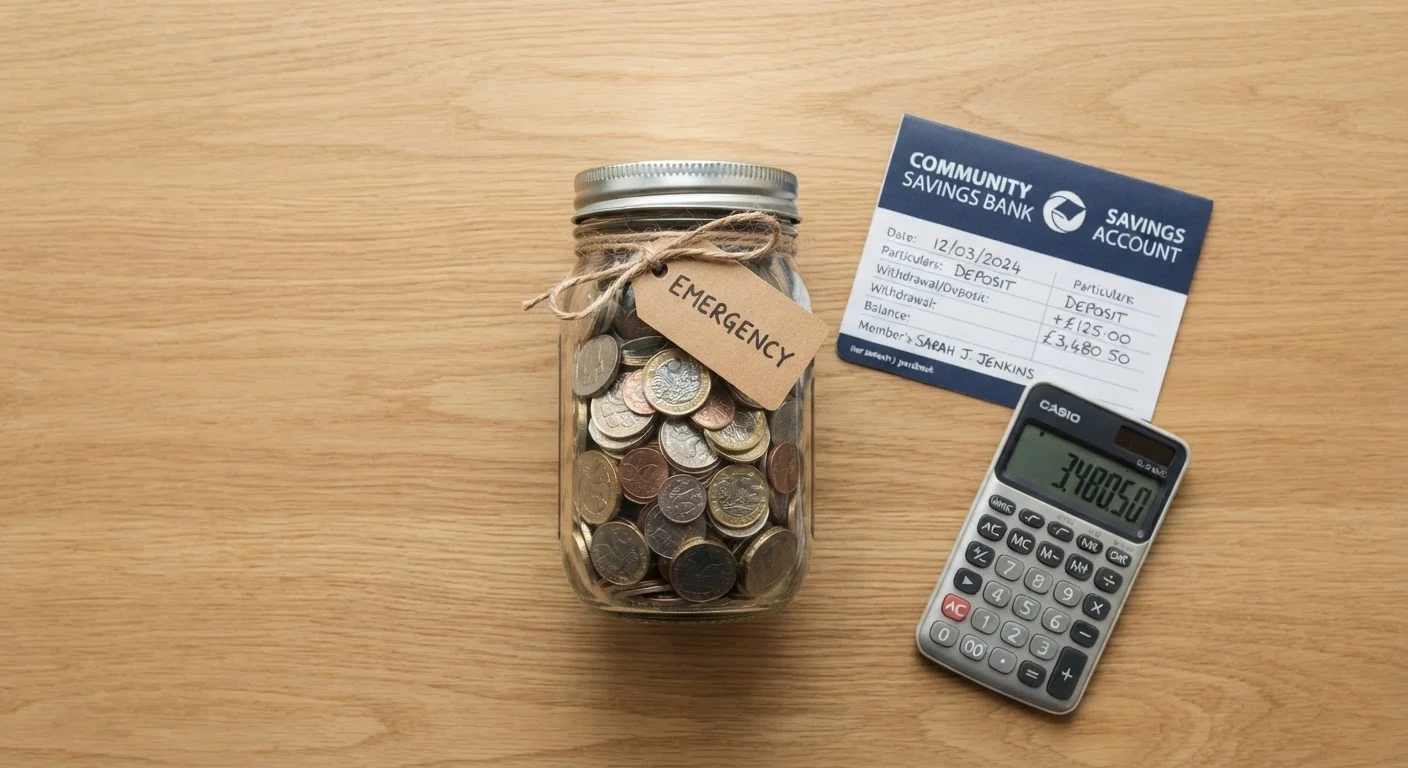
Option A
Emergency Fund
Your financial firewall against life's unexpected disruptions.
Best for: Anyone who wants a dedicated cash reserve to cover unplanned expenses without derailing their budget or going into debt.
Option B
Savings Account
The flexible, interest-earning home for money with a purpose.
Best for: People building toward specific financial goals - a vacation, a down payment, a new car - over a defined or open-ended timeline.
Why the Distinction Actually Matters
Many Americans use the terms "emergency fund" and "savings account" interchangeably - and that's an understandable mix-up. Both involve setting money aside. But confusing the two can quietly undermine your financial security.
An emergency fund is a financial strategy: a designated pool of money held in reserve for genuine, unplanned crises. Think sudden job loss, an unexpected medical bill, a major car repair, or a broken furnace in January. It's money you're committed to leaving untouched unless a true emergency forces your hand.
A savings account is a banking product - a place to deposit money that earns interest over time. It's the container, not the strategy. Your emergency fund can absolutely live inside a savings account, but simply having a savings account doesn't mean you have an emergency fund.
Understanding this distinction is foundational to sound financial planning. For a broader look at building and managing both savings and debt, explore the Saving & Debt hub.
| Criterion | Emergency Fund | Savings Account |
|---|---|---|
| What it is | A financial strategy / designated reserve | A banking product / deposit account |
| Primary purpose | Cover unplanned, urgent financial crises | Store and grow money for any goal |
| Typical target amount | 3-6 months of essential expenses | Varies by goal; no standard target |
| Access to funds | Reserved for true emergencies only | Flexible - withdraw as needed |
| Where it's held | Often in a savings or money market account | At a bank or credit union |
| Earns interest? | Yes, if placed in interest-bearing account | Yes, at the account's stated rate |
| Risk of misuse | High if not kept separate from other funds | High without a clear, committed purpose |
What Makes an Emergency Fund Different
The defining feature of an emergency fund is its purpose restriction. The money is set aside for one reason: to absorb financial shocks without disrupting your normal cash flow or forcing you into debt.
Most financial guidance - from the Consumer Financial Protection Bureau to nonprofit credit counseling organizations - points to three to six months of essential living expenses as a reasonable target. "Essential" means the basics: rent or mortgage, utilities, groceries, insurance, and minimum debt payments. It doesn't include dining out, subscriptions, or vacations.
~57%
Americans unable to cover a $1,000 emergency
A Bankrate survey found that a majority of U.S. adults could not pay for an unexpected $1,000 expense from savings alone.
3-6 months
Recommended emergency fund coverage
The Consumer Financial Protection Bureau and many nonprofit financial counselors cite three to six months of essential living expenses as a broadly accepted emergency fund target.
Crucially, an emergency fund is not a rainy-day fun fund. A planned trip, a holiday gift budget, or even a predictable annual expense like car registration aren't emergencies - they're just expenses you haven't planned for yet. That distinction matters: mixing purposes erodes the fund and can leave you exposed when a real crisis arrives.
If you're starting from zero, our guide on building your first emergency fund from zero walks through realistic targets and a step-by-step approach for getting there.
How a Savings Account Fits the Picture
A savings account is a deposit account offered by banks and credit unions that earns interest - typically at a higher rate than a checking account. It's designed for money you don't need immediate, daily access to, but want available within a few days when needed.
Savings accounts are flexible by nature. You might open one to save for a home down payment, an upcoming trip, a new appliance, or simply to build a financial cushion. The account itself doesn't restrict how you use the funds - that's up to you.
This flexibility is both a strength and a risk. Without a clear purpose attached to the account, it's easy to dip into savings for non-essential spending. That's why financial planners often recommend keeping separate accounts for separate goals: one for your emergency fund, one for vacation savings, one for home repairs, and so on. Labeling money by its job makes it harder to accidentally spend it on the wrong thing.
For a deeper look at how high-yield options compare to standard accounts, see our High-Yield Savings Accounts Explained guide. You may also find it helpful to understand the difference between a savings account and an emergency fund in greater detail.
Building Both Into Your Financial Plan
The goal isn't to choose between an emergency fund and a savings account - it's to use both deliberately. A common approach is to open a dedicated high-yield savings account specifically for your emergency reserve, keep it separate from goal-based savings, and automate regular contributions until you reach your target.
Once your emergency fund is funded, any additional saving can flow toward specific goals in separate accounts. This structure keeps your safety net intact while still letting your money grow.
It's also worth distinguishing your emergency fund from a monthly spending buffer - a smaller cushion that smooths out irregular income or timing gaps in bills. Those serve different functions. For a clear breakdown of that distinction, see Emergency Fund vs. Monthly Buffer.
Financial circumstances vary widely - income level, family size, debt obligations, and job stability all affect how much you need and how quickly you can build it. This article provides general educational information. For guidance tailored to your situation, consider speaking with a licensed financial adviser or certified financial planner.
This article is for general informational and educational purposes only and does not constitute personalized financial, tax, or investment advice. Consult a qualified financial professional before making decisions specific to your circumstances.
The content on this site is provided for informational purposes only and should not be considered a substitute for professional advice. While we strive to provide accurate and up-to-date information, we make no guarantees regarding its completeness or accuracy. Always consult a qualified professional for advice specific to your circumstances before making any decisions