

How the Envelope Method Works
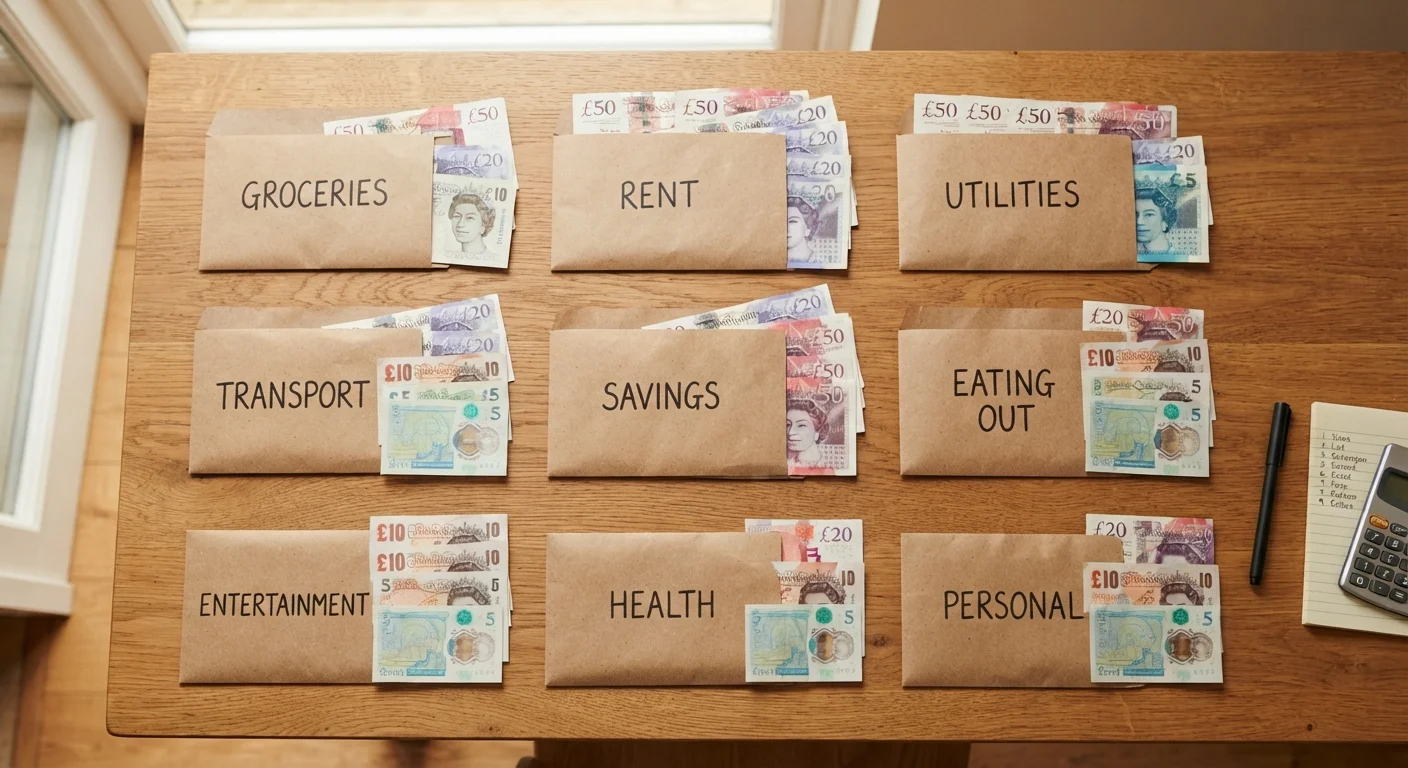
The process starts before the month begins. You estimate how much you plan to spend in each variable category - groceries, eating out, gas, clothing, entertainment - and withdraw that total in cash. Each amount goes into a labeled envelope. That envelope is the budget for that category.
During the month, you spend only from the appropriate envelope. Buy groceries? Cash comes from the grocery envelope. Want takeout? The dining envelope covers it. When an envelope hits zero, spending in that category stops until the following month's cash is loaded.
Fixed expenses - rent, utilities, insurance, loan payments - typically stay outside the envelope system and are paid through automatic transfers or checks. The envelope method is designed for the variable, discretionary spending that's hardest to control.
Start With Just Two or Three Envelopes
You don't need to envelope every spending category on day one. Identify the one or two categories where you consistently overspend - groceries and dining out are common culprits - and start there. Adding more categories over time is far easier than abandoning the system because it felt overwhelming from the start.
For a broader look at how this method stacks up against other frameworks, the comparison of major budgeting strategies covers the trade-offs in detail.
Why the Physical Constraint Actually Changes Behavior
Most overspending doesn't happen because people don't know their limits - it happens because abstract limits are easy to ignore. A credit card balance or a bank account number doesn't feel like a finite resource in the moment. A near-empty envelope does.
Behavioral research consistently shows that paying with cash leads to more deliberate spending. The psychological weight of handing over physical money differs from tapping a card. The envelope method weaponizes that friction on purpose.
“A budget is telling your money where to go instead of wondering where it went. The envelope method makes that conversation impossible to ignore.”
— Dave Ramsey, Personal finance author and longtime advocate of cash-based envelope budgeting
It also creates a natural pause before impulse purchases. If the entertainment envelope is thin, you feel that before spending - not three weeks later on a bank statement.
That real-time awareness is what separates it from passive tracking. Tracking and budgeting serve different functions - tracking tells you what happened, while the envelope method constrains what happens next.
When the Envelope Method Still Makes Sense
The method isn't universally ideal - but it's particularly well-suited to specific situations:
- Chronic overspenders in discretionary categories. If dining out or impulse shopping derails your budget month after month, a cash envelope creates a ceiling that's hard to breach accidentally.
- People new to budgeting. The simplicity removes barriers. No apps, no formulas - just envelopes and cash. Understanding where your money goes is the foundation for everything else, and a spending audit pairs naturally with setting up initial envelope amounts.
- Those building an emergency fund or paying off debt. A strict cash-only system on discretionary spending can free up surprising amounts of money redirected to financial goals.
- Anyone who finds digital budgets abstract. Some people simply think better with physical objects. There's no shame in that - the best budget is one you'll actually follow.
It's worth noting the real limitations too. The envelope method requires regular cash withdrawals, makes online purchases awkward, and doesn't suit households where most spending is subscription-based or automated. It also doesn't solve problems rooted in income insufficiency - a budget method can allocate money effectively but can't create money that isn't there.
For people who want the same discipline without the cash, digital envelope apps simulate category limits using debit or bank accounts. The core logic - spend only what you've pre-allocated - travels across formats. Whether you're managing a monthly household budget or setting aside funds for a trip, travel budgeting uses the same category-based logic to keep vacation spending on track.
If you're building or refining a fuller financial plan, see how to build a budget that holds up when life gets complicated for guidance that goes beyond any single method.
This article is for general informational and educational purposes only and does not constitute personalized financial advice. Consult a qualified financial professional for guidance specific to your situation.
Frequently Asked Questions
No. While physical cash reinforces the limits most powerfully, digital budgeting apps replicate the same category-based constraints using virtual envelopes. The discipline comes from the rule - stop spending when the allocation runs out - not the paper.
Variable, discretionary categories benefit most: groceries, dining out, entertainment, clothing, and personal care. Fixed expenses like rent, insurance premiums, and loan payments are better handled outside the envelope system through automatic transfers.
You have two choices: stop spending in that category until next month, or consciously move cash from a lower-priority envelope. The act of physically moving money - rather than swiping a card - is where the learning happens.
It's one of the most beginner-friendly methods available because the rules are simple and feedback is immediate. There's no spreadsheet to maintain or app to learn - just labeled envelopes and a set amount of cash.
They share the same core philosophy: every dollar gets assigned a job before the month starts. Zero-based budgeting typically includes all income and expenses on paper or digitally, while the envelope method uses cash to enforce those limits physically. See our <a href="/finance/budgeting-basics/the-503020-rule-vs-zero-based-budgeting-which-approach-fits-your-life">comparison of popular budgeting frameworks</a> for more detail.
Carrying large amounts of cash does carry loss and theft risk that debit or credit cards don't. Many people use the envelope method only for specific high-risk categories like dining or entertainment, keeping larger amounts secure at home.
The content on this site is provided for informational purposes only and should not be considered a substitute for professional advice. While we strive to provide accurate and up-to-date information, we make no guarantees regarding its completeness or accuracy. Always consult a qualified professional for advice specific to your circumstances before making any decisions