

Our Verdict
Pressure washing is one of the most effective exterior cleaning tools available to homeowners, capable of transforming the look of driveways, decks, and siding in a single afternoon. However, it demands respect for surface material, appropriate pressure settings, and a willingness to slow down and test before committing to a full wash. Done correctly, it protects your investment; done carelessly, it accelerates deterioration.
Pressure washing is best suited for homeowners comfortable with tools who are cleaning durable surfaces like concrete driveways, brick, or newer vinyl siding - and who are willing to learn proper technique before starting.
Where Pressure Washing Genuinely Delivers
Pressure washing earns its reputation on the right surfaces. Concrete driveways, poured walkways, and patio pavers respond exceptionally well - years of oil stains, embedded dirt, and biological growth like moss or algae can be stripped away with relatively little effort. Brick and masonry siding, when in sound condition, also clean up dramatically with the right nozzle and a moderate pressure setting (typically 1,500-2,500 PSI).
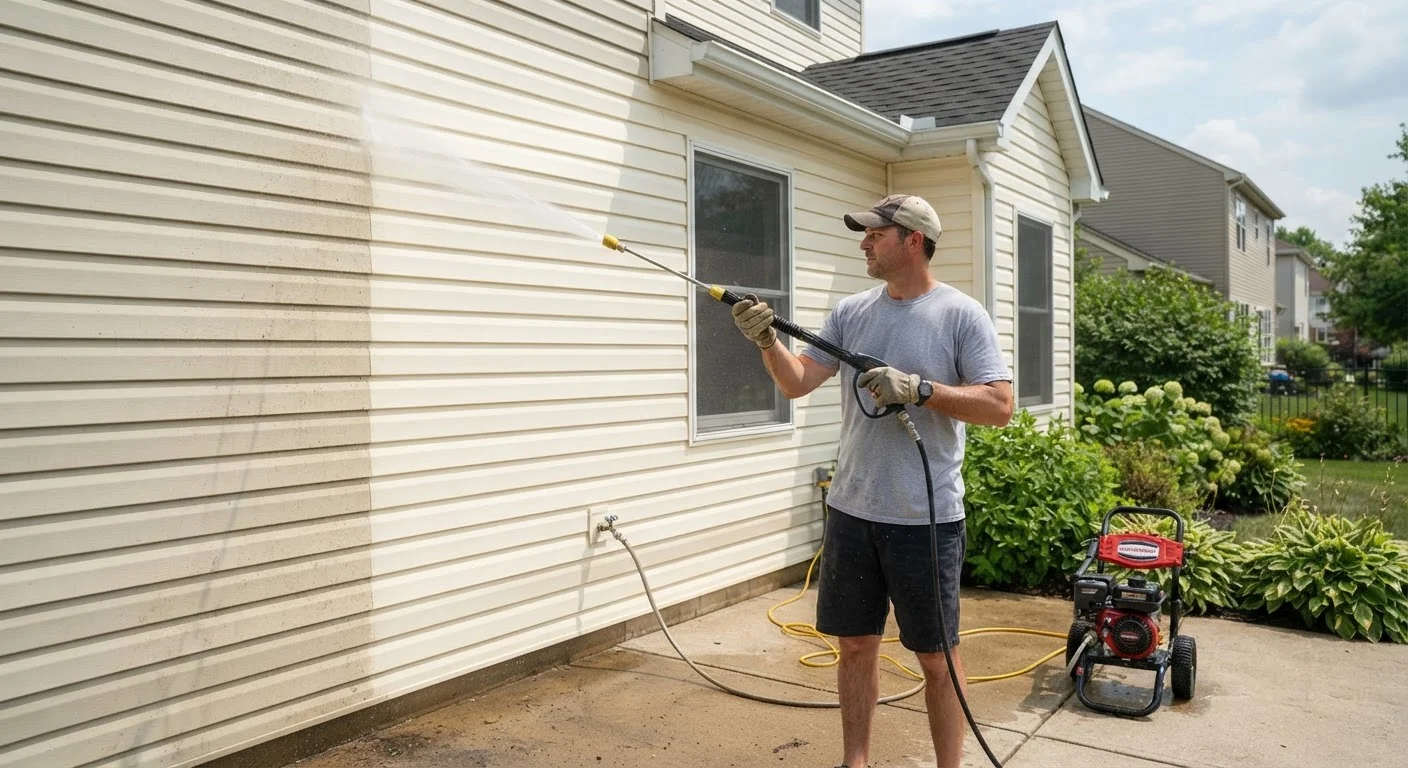
Vinyl siding is another strong candidate. Because it's non-porous and water-resistant by design, it handles a wide-fan nozzle at lower pressure without risk of moisture intrusion - provided the spray is directed downward, not up under the panels. Composite and PVC decking surfaces tolerate pressure washing well too, though wood decks require a lighter touch and lower PSI.
From a maintenance standpoint, regular cleaning removes the biological growth - mold, mildew, algae - that can trap moisture against your siding or deck boards and accelerate deterioration over time. Pressure washing is often a smart part of a spring exterior checkup. See how it fits into a broader seasonal plan in our spring home maintenance task list.
Removes years of built-up grime quickly
Pressure washing can strip mold, mildew, algae, and embedded dirt from concrete, brick, and vinyl siding in a fraction of the time manual scrubbing would require.
Prevents long-term surface deterioration
Biological growth like algae and mold traps moisture against siding and deck materials; removing it regularly helps prevent the wood rot and material breakdown that follow prolonged exposure.
Improves curb appeal measurably
A clean exterior can make a significant visual difference, which matters whether you're planning to sell or simply want to maintain your home's appearance and neighborhood standing.
Cost-effective as a DIY task on right surfaces
Renting or owning a consumer-grade pressure washer allows homeowners to clean driveways, decks, and siding at a fraction of the cost of professional service, when done safely.
Prepares surfaces for painting or sealing
Paint and sealant adhere far better to a clean surface - pressure washing is a recommended preparation step before repainting siding or applying deck sealer.
The Real Risks: Where Things Go Wrong
The most common mistake homeowners make is treating pressure washing as a universally safe activity. It isn't. Older painted wood siding is highly vulnerable - excessive pressure strips paint, drives water into the wood grain, and can lead to swelling, warping, or rot that's far more expensive to fix than the original grime was to live with.
Stucco is another surface that demands caution. Even small cracks in stucco can admit high-pressure water behind the finish layer, causing it to bubble, separate, or crumble. Similarly, aged or deteriorating mortar joints in brick can be eroded by direct high-pressure spray - a problem that's invisible until you see powdering or loose sections weeks later.
Directing water upward under any horizontal surface - siding laps, roof shingles, soffit panels - is a reliable way to introduce moisture into wall cavities, which can cause mold growth inside your walls. Window seals are also vulnerable; a direct blast at a window frame can compromise weatherstripping or push water past the glazing compound.
Understanding when a job exceeds your skill or equipment level is important. Our guide to DIY vs. hiring a pro covers the decision framework well.
Can permanently damage vulnerable siding materials
Older painted wood, fiber cement, and stucco are all susceptible to surface stripping, cracking, or moisture infiltration when subjected to incorrect pressure settings or nozzle angles.
Risk of driving water into wall cavities
Spraying upward under siding laps or around window frames can force water behind the exterior cladding, creating conditions for hidden mold growth inside wall assemblies.
Erodes mortar joints in older brick
High-pressure direct spray on aging masonry can dislodge or powder mortar between bricks, weakening the wall's structural integrity and creating entry points for water.
Injury risk from equipment misuse
Pressure washers produce enough force to lacerate skin at close range, and wet surfaces combined with ladder use significantly raise the risk of falls.
Equipment setup and learning curve
Selecting the right nozzle, adjusting PSI for each surface type, and understanding spray angle takes time to learn - mistakes made during that process can cause irreversible damage.
Technique and Safety Essentials
Before you start, always check that the surface you're cleaning is structurally sound. Loose siding panels, cracked caulk around windows, or deteriorating wood should be repaired before any water - pressurized or otherwise - is introduced. Use the lowest effective pressure setting and start with a wide-fan (40-degree) nozzle, moving to narrower angles only if needed for stubborn stains on durable surfaces like concrete.
Keep the wand moving - never hold it stationary on one spot, particularly on wood or painted surfaces. Maintain a consistent distance (typically 12-18 inches) and always spray in the direction of the material's natural grain or lap direction. Test on a hidden area first: a corner near the foundation or a back section of deck is ideal.
Gutters and Fascia: Proceed with Care
Gutters sit at the intersection of your roof and siding, making them a sensitive area during exterior washing. High-pressure spray directed into or around gutters can dislodge hangers, push debris into downspouts, or force water behind the fascia board. If you need to clean gutters as part of your exterior maintenance, use a dedicated gutter attachment at low pressure or consider manual removal of debris first.
For gutters and fascia boards adjacent to your roofline, pressure washing requires particular restraint. Direct spray into gutters can displace debris into downspouts or force water behind the fascia. Learn more about proper gutter care in our guide: how gutters work and when to clean them.
Personal protective equipment matters too: wear safety glasses to guard against debris kickback and use non-slip footwear on wet surfaces. If work requires a ladder, consider whether hiring a professional is the safer choice - operating a pressure washer from a ladder significantly increases fall risk.
When to Call a Professional
Multi-story homes, delicate historic materials, and surfaces with existing damage are situations where professional service typically makes sense. Pros bring commercial-grade equipment calibrated for specific surfaces, familiarity with local building materials, and liability insurance if something goes wrong. For first-time homeowners still building their maintenance toolkit, professional service on the first pass can serve as a learning experience too. If you're new to maintaining a home overall, our guide to getting started with home maintenance lays a useful foundation.
1,500-3,000 PSI
Typical consumer pressure washer range
Most residential pressure washers fall in this range; concrete typically tolerates the upper end while wood and vinyl siding should be cleaned at the lower end.
40°
Recommended starting nozzle angle
A 40-degree wide-fan nozzle distributes pressure across a broader area, reducing the risk of surface damage when starting on an unfamiliar material.
The content on this site is provided for informational purposes only and should not be considered a substitute for professional advice. While we strive to provide accurate and up-to-date information, we make no guarantees regarding its completeness or accuracy. Always consult a qualified professional for advice specific to your circumstances before making any decisions